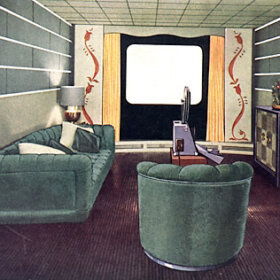
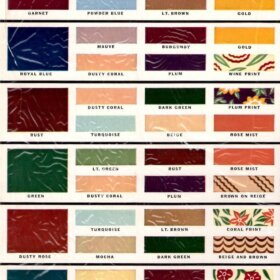
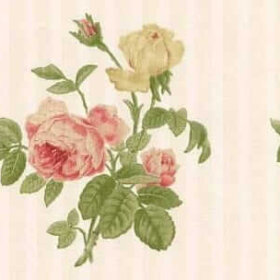
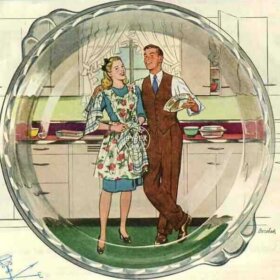
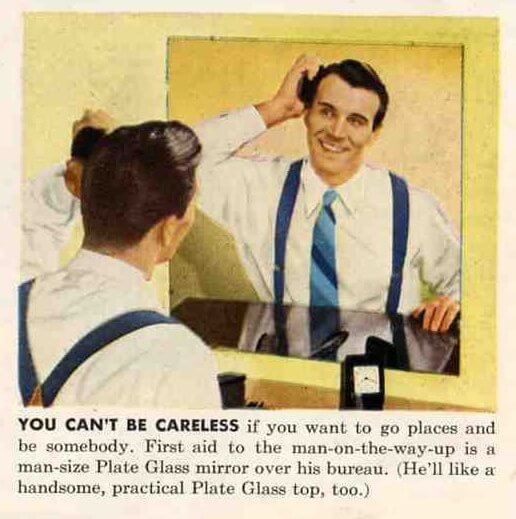
What are the key elements of 1940s interior design? What colors, designs, patterns and “feel” did we generally see? And why? To my mind, based on the advertising illustrations and magazine articles that I’ve seen from the period, typical designs from the immediate postwar 1940s – say, starting with 1946 – through to about 1953, had this variety of characteristics: innocent, sentimental, sunny, sanitary, patriotic, traditional, Hollywood glamour, and carryover streamline-deco-jazz age from the prewar period. Special thanks to: Bradbury & Bradbury, which made this slide for me. It also showcases one of their 1940s reproduction wallpapers. Heck yeah there is more →
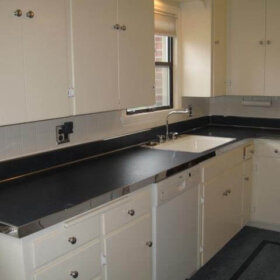
Let me take you on a little stroll though kitchen design history from the 1930s though the 1950s — with this terrific series of images from Kohler. Vicki Hafenstein of the media relations team at Kohler is really helpful and responsive, and quickly supplied these vintage kitchen photos and illustrations to help with the etsy.com video. She is also hunting some pink bathroom illustrations for my talk in Charlotte. I really appreciate your help, Vicki! I also wanted to take this opportunity to remind everyone that Kohler makes two hudee-rimmed porcelain-on-cast-iron sinks still available today — they would be my top choices for a Retro Renovation kitchen. Oh, and have I ever mentioned that when I found my 67 vintage Geneva steel kitchen cabinets, the former cooking-school set also came with four vintage, 42″ wide, double-bowl, hudee-ringed Kohler sinks? One is now installed in my kitchen. Heck yeah there is more →

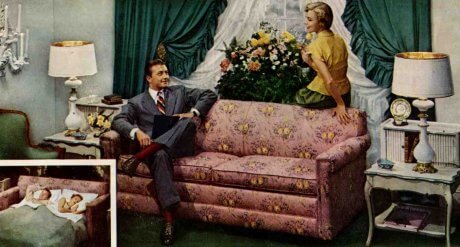
IN 1949, home interiors generally seemed to have a traditional look, and featured a soft and pretty palette, some jewel tones carried over from glamorous Hollywood, and of course, red-white-and-blue in the kitchens. Several of these images also suggest farmhouses and updating of older homes was a marketing focus — the Armstrong “Monowalls,” for example, are meant to cover failing plaster walls, I believe. Also, you don’t see much emphasis on technology — there a very few gizmos in the kitchen. In the bathroom — well, I think that many families were still getting their first bathroom. And in the image above, the happy couple are multitasking that Simmons hide-a-bed, suggesting that this is a one-room apartment — something I think was pretty common due to a severe post-war housing shortage. In 1949 it didn’t take much to make us happy. We were still ramping up to our 1950s frenzy and the true launch of Consumer America. Click through for a slide show of kitchens, bathrooms, bedrooms and more – 18 images in all.

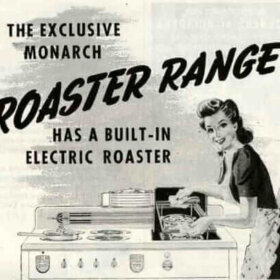
Continuing our mini-series on vintage stoves, ranges and ovens, here’s a 1946 Monarch-Paramount Roaster Range from the Malleable Iron Range Company, Beaver Dam, Wisconsin. The first post-war year….you can see the simple, deco lines still in this stove. Love that roaster. You see the same style of feature – a recessed cooking well – but for soups and casseroele rather than roasts in many other stoves through at least the early ’50s. Vintage Chambers stoves are famous for them, but I’ve seen them on other models as well.

Quickly after World War II ended, Americans plowed right into making a wonderful new life for themselves – starting with building their dream kitchens, dream bathrooms – dream houses. Looking at periodicals from 1946, I can see a few distinct trends – this was a transitional period…you still see many Deco influences…you see a lot of primary colors…and definitely, interiors were “sweet”, although in ‘46 homeowners certainly would have declared them “modern.” Read on for ideas from each of six great interiors, including a bathroom, two living rooms and a bedroom. 1946 was a very good year! Heck yeah there is more →