

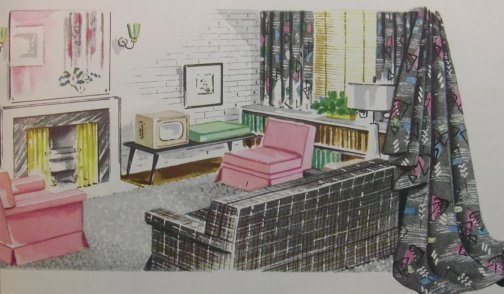
I know that Pottery Barn and the like want you to buy those tabbed draperies, or the ones that simply slide onto decorative poles. But this is definitely not the right answer if you are in a midcentury home and want an authentic vintage look. You need pinch pleat draperies, and that is that! In addition to looking so much better — in fact, I would go so far as to say that they are essential to a mid century interior — pinch pleats provide some insulation against drafts… and, you can actually open and close them every day, with ease. My husband is a real stickler about the open-and-close part, and he is right. Nothing beats traverse rods for functionality. 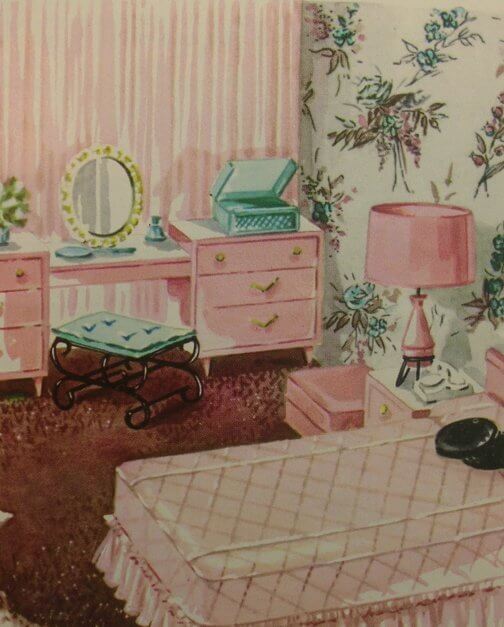
It took me a long time to conquer my fear of traverse rods, but I endured – and triumphed! Now I have beautiful vintage draperies lining my living room walls and get this, they were only $20 — I bought them right off the windows at an estate sale. If you must make up your draperies new, you will have to work hard to find someone at a reasonable cost, the labor charge can be brutal. The cost of fabric can be shocking, too. So choose carefully — and plan on having your pinch pleats for a lifetime.
And, if you are really ambitious, consider pinch pleated sheers underneath heavier cloth pinch pleated draperies. I am going to do this someday, it is such a heavenly look – to have the sun filtering through sheers blowing softly in the breeze.
Some other tips:
- Draperies that go all the way to the floor create a more formal look, a bigger statement. In the 50s you certainly saw drapes that only went to the sill or just below it. That’s fine, especially in bedrooms, but in living rooms and dining rooms, I think that to-the-floor…just brushing the floor, not puddling, is better.
- As in the bedroom photo, draperies also can go along an entire wall, if this works in the room you are dealing with.
- In addition to layering cloth with sheers, you can put horizontal Venetians underneath — see my story on 2″ aluminum blinds — as in the first photo. You can also layer over a roller blind.
- When you’re planning, you need to plan for the ‘stackback’ — look this up online.
- Regarding how high to install draperies, this is an aesthetic decision. You want to balance the height of the perceived window (and the drapery becomes part of the window) with the rest of the room. In general, I think that people make the mistake of installing the draperies too low, rather than too high.
- Finally – I actually spray painted my Kirsch traverse rod to blend in with my grasscloth wallpaper. It turned out Great!


Al says
Oh my gosh, thank you for mentioning spray painting your Kirsch rods! I was tearing my hair out last night looking at their more decorative options – for nearly 10x the cost of the basic ones – and thought the basics would be good candidates for spray paint, but all the design/DIY bloggers are going the Pottery Barn route and not addressing traverse rods. We have pinch pleated drapes on the front picture window of our 1948 house, and they are wonderful but the previous owners put in a heavy box valance right up at the ceiling to cover the pinch pleats and the rod. I’ll be taking the valance down and making new drapes – can’t wait!
Pam Kueber says
Indeed, I don’t think the newest generation knows much about traverse rods. I LOVE THEM.
Tim Baker says
I remember our custom draperies, pitch pleated of course, with a row of custom pinch pleated sheers hanging behind on vintage kirsch traverse rods. They were beautiful and set the style for the living and dining rooms. I have just bought back this house and over the forty years it has been in other hands both the drapes and rods have been ripped out and sent to the dump. The classic pink tile bathrooms have had their original pink tile, nutone heater fans, and light fixtures ripped out and now I have to restore it back to what it was. I will send pictures soon of my 50’s ranch restoration tragedy. It won’t be that way for long!
Pam Kueber says
Wow! Welcome to our community. Dig into all our categories and subcategories (up top) and I think that you will find lots of help to get to all the resources too you need. Stay in touch and update us on how your Retro Renovation is going!
Kathleen says
We just put up our custom grass cloth avocado green pinch pleat draperies in the living room of our 1961 atomic ranch. We found the original traverse rod in the garage and it still works perfectly. You can order custom drapes in great mid century patterns at Lowes for a pretty reasonable price, and they come already buck pleated and the pins installed, making installation a breeze.
pam kueber says
Thanks for the tip!