

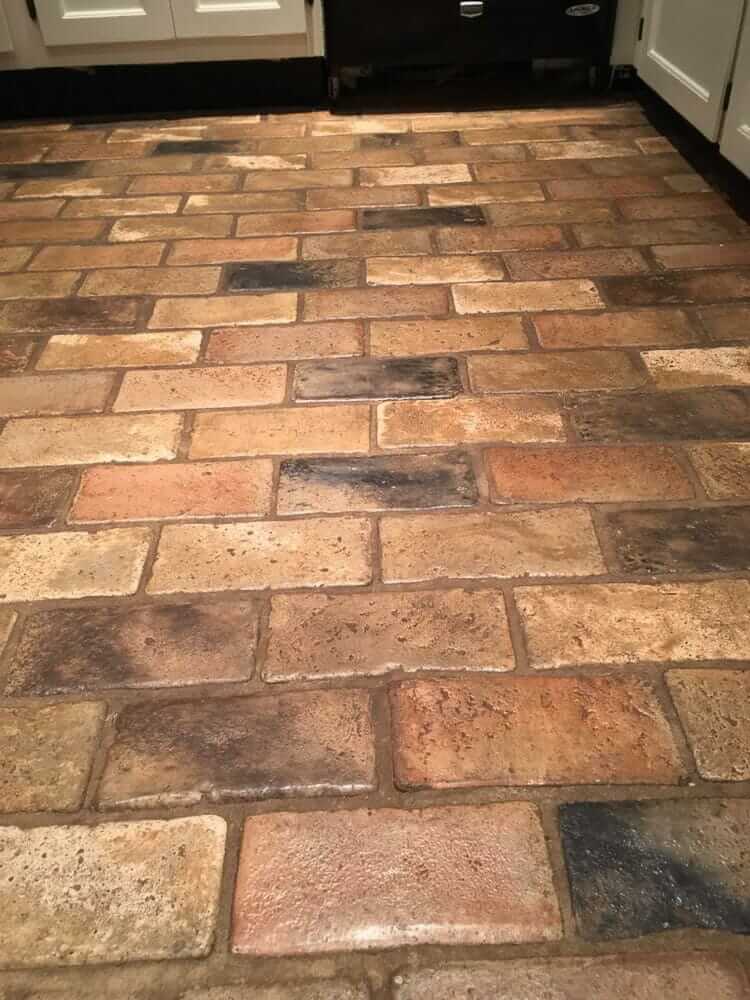
 Brick tile flooring: Is it appropriate for a mid-century home? And… do we like it? Marie writes:
Hi Pam,
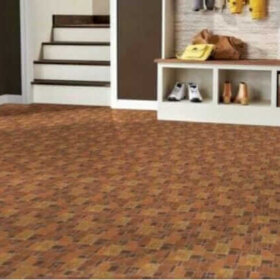
Need to pick your brain. We’re in the process of buying a home from 1950. It’s got a lot of original details. I’m trying to figure out if the kitchen floor is original. It’s a glazed brick tile. To me it looks 90s, and I don’t like it… but maybe it is original? My aunt an uncle live in a house built in the early 60s, and it has a similar glazed brick floor in the entry and kitchen. Was glazed brick a midcentury thing?
Thanks!!
Marie
Congratulations, Marie, on the new/old house, and thank you for sending this question.
My answer:
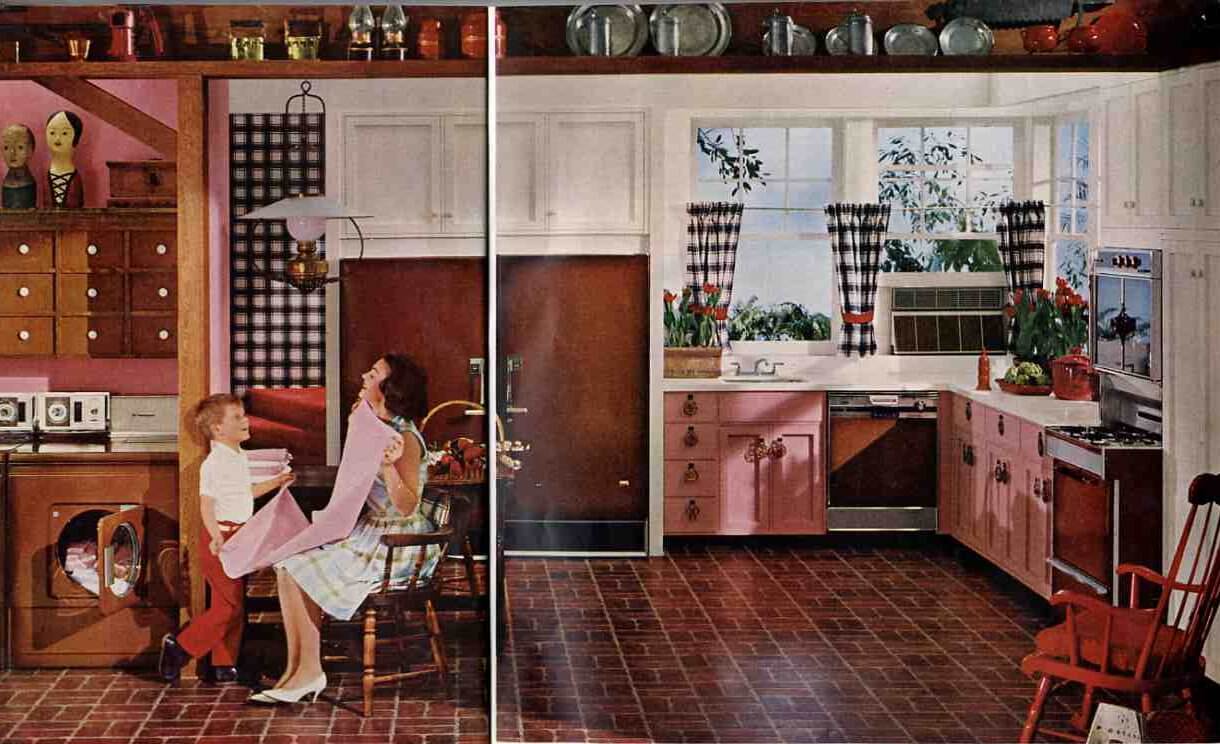
My archives indicate that glazed brick flooring — either with real clay bricks or in a vinyl/asbestos or vinyl/composite resilient floor tile — were used in the midcentury era all the way through to… well, yes, the 1990s. The brick tile flooring in your house could well be original.
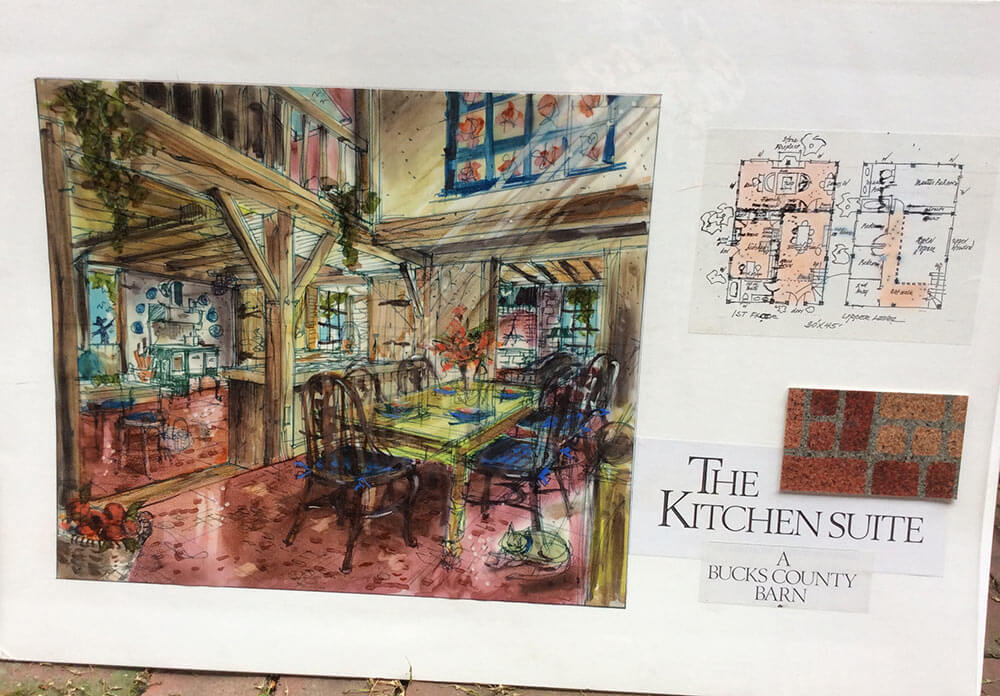
Personally, I adore the look. Brick is warm and inviting, and it’s a neutral that can be matched with ‘most any style of cabinetry.
One downside to clay brick flooring would be that it could be hard on the back, like any ceramic tile would be. On the upside, though, real clay brick flooring is virtually indestructible — and golly, why wouldn’t you want flooring that would last forever and save so much money never needing to be replaced. Note, the old vinyl flooring also lasted a long long long time, I think — this stuff was made back in a time when “planned obsolescence” was still not necessarily a manufacturer’s de facto mode of operation. That is: Folks expected quality. Folks expected stuff that would last a long, long time — and were willing to pay for it.
Should it stay — or should it go? Well, here is my regularly repeated answer: Sometimes we get shocked by an old design, an old look, that we’re not accustomed to seeing anymore. It’s not popular today. It may even be “despised” by the mainstream design world (which wants us to tear out everything old and install the new stuff that They Are Selling.) So because we are are unaccustomed to seeing the old, and because the new is so well-marketed, we decide that we, too, h*** the old.

However, if we hit the pause button, and take the time to learn about it, and see how it was used — and loved — historically, we may come to like, or even love, it ourselves. I suggest: Live with it a while before taking costly and irreversible steps. See: Just bought a mid-century house? My 9 tips before you start remodeling + 21 more tips from readers.



Phil says
I really like the 1964 RCA Whirlpool ad! I have a similar washer/dryer set from that year but mine are white rather than coppertone.
Leigh Ann says
My mom had this in the house we built in 1969, and in the one we built in 1976. My grandmother had it in her kitchen, which she remodeled in the 1960’s. Both of them loved it. I consider it sort of “mid-century country,” which is their style. If you love it, I would leave it. It’s really expensive to lay a quality tile floor.
Scott says
From the color and rounded off shape of the bricks its reading very 1990s to me as well. Had the bricks been more squared-off shapes resembling real bricks and dark red I’d have guessed an early to broadly mid-1960s install but this definitely looks very new to me.
And who knows, you could get lucky and find the original floor underneath! I’ll keep my fingers crossed.
Marie Gamalski says
I think it’s spectacular if it’s not damaged. I’ll quibble w/Pam on two points…it’s not indestructible, if something metal and heavy, say a wrench etc were dropped, it would break, so be a bit careful.
I’ve had polished concrete for years, and never had back problems so… they have gel mats if you’re concerned from that perspective… regardless, I’d live w/it for a period of time before deciding, it will be a bit messy and perhaps costly to remove/replace.
Suzanne Carpenter says
I love the brick floor..keep it.
Beth says
I like it, and if all of it is that good of condition as in picture, I’d say keep it!!
Sarah Middlton says
YES, I love a well installed, original finish that was made to last.
You can soften the feel underfoot by adding washable rag rugs or other anti-fatigue mats, in front of the sink and stove, places where you hover and work the most.
The grout can be scrubbed clean and re-sealed, to freshen up the overall feel.
The colors palette is inclusive, this can look nice with a lot of colors and finishs.
I envision this having been put in in the 59s or 69s, is there a pretty brick chimney or brick siding outside? Is the house style colonial revival in any way? My feeling is that this was a tie-in to the architectural era being referenced by the designer, I hope this is the case!
leslie roes says
i love it. i would keep it.
Larry Murphy says
Heavens no! Get rid of it. Hard brick flooring, especially in that color, and pattern looks so 90s southwest to me. If it were a true red colored brick, laid out in a basket weave or herringbone pattern I would keep it. No point in keeping something that questions it’s mid century pedigree. Congratulations on your new mid century house. 🙂
Henry says
Keep it! That would be very expensive flooring today. I think Pam’s advise is sound, don’t do anything for awhile and live with it to see how it feels. I think we can get too caught up with HGTV type renovations, which many are just passing fads.