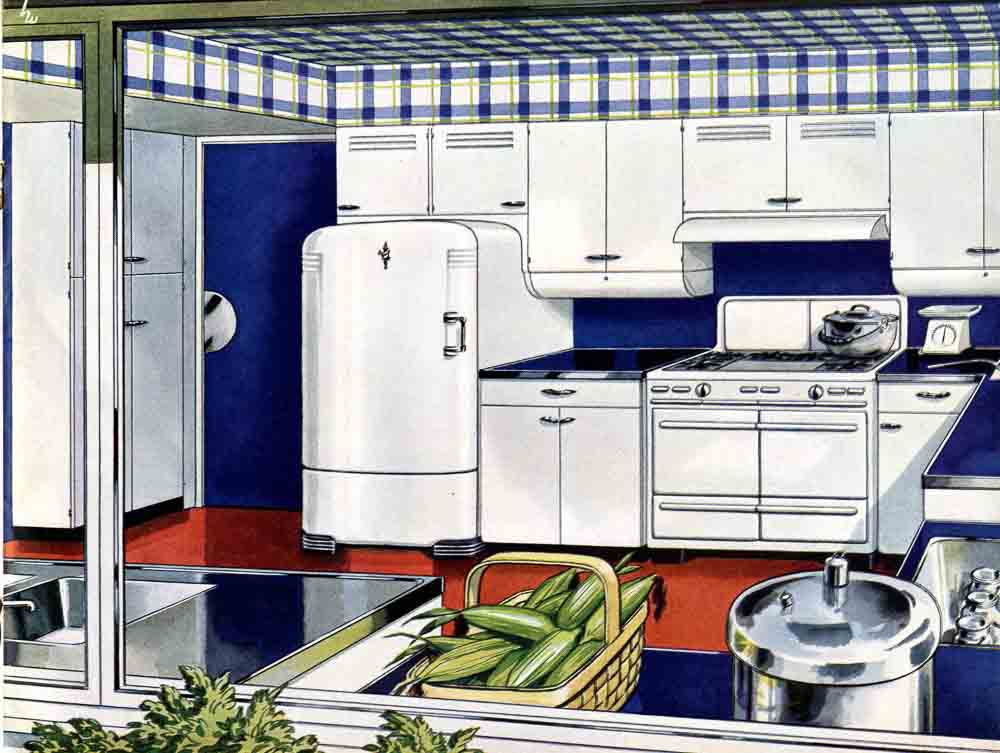
 Servel steel kitchen cabinets were designed to go along with an already-famous refrigerator — the natural gas-powered Servel. And, right up front I will say: These Servel cabinets were remarkable — museum-worthy, even — for one cabinet design in particular: the air-conditioned “Dry Storage” cabinet. Amazing!
So far, I have found that documentation on Servel metal kitchen cabinets is sparse. So, some of my info is preliminary… triangulated:
- The earliest date I can find for these metal cabinets is 1946.
- I tend to believe they were made in Evansville, Indiana, which is where Servel was based and had extensive manufacturing operations.
- And, I don’t know how long Servel made these cabinets, but based on the dearth of marketing materials I can find online, I’d bet they were not on the market for many years. That is, if they’d been sold for many years, we’d have more advertising to show for it.
Designed by Norman Bel Geddes – I think
But more! Continuing my research for the Encyclopedia, I found this: Famed industrial designer Norman Bel Geddes designed the famous Servel refrigerator — see this archival information. I will take the leap and hypothesize: He and his firm also designed the Servel kitchen cabinets in this brochure.
Servel’s gas-powered “Food Conditioning Dry Storage Cabinet”:
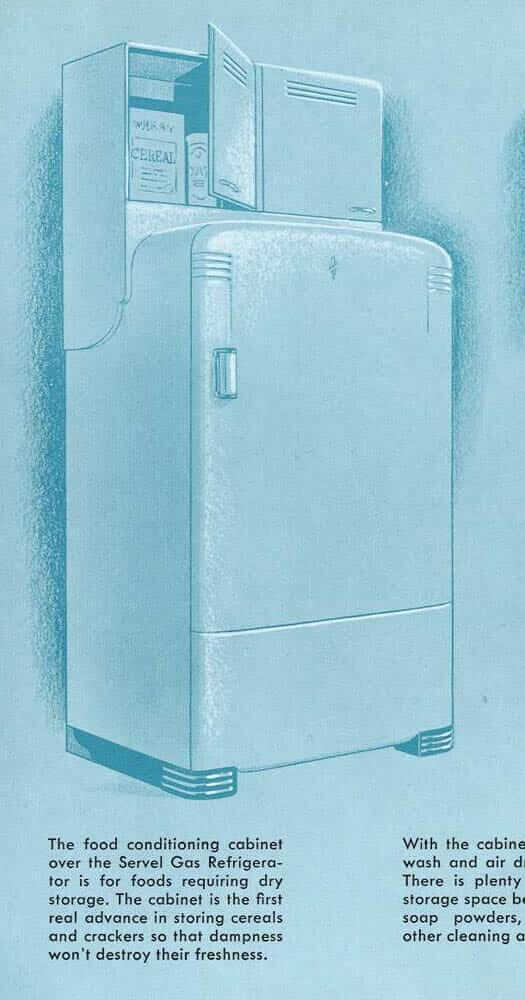 The feature that makes this brand of steel kitchen cabinets so notable is Servel’s special “food conditioning” aka”Dry Storage” cabinet. This was designed to sit atop the Servel refrigerator so that it could receive conditioned air from the fridge below. The brochure in my collection does not explain exactly how the Servel food conditioning dry storage cabinet worked. But, I found another ad online that did: Apparently, warm air from the refrigerator’s condenser is blown up and into the cabinet, keeping the interior of the cabinet warm and dry — and breadstuffs crisp.
The cabinet is the first real advance in storing cereals and crackers so that dampness won’t destroy their freshness.
Wow.
 This Dry Storage cabinet must be super dee duper rare. In situations like this, I would usually say it would be so exciting to see one in the wild BUT BUT BUT NO, BECAUSE >>>
- >>> IMPORTANT SAFETY INFO: The Consumer Product Safety Commission has an active warning out to consumers about the dangers associated with old Servel refrigerators — there have been deaths. Their news release starts, “Government safety experts continue to warn consumers to stop using Servel gas refrigerators manufactured between 1933 and 1957 due to the risk of carbon monoxide leakage in deadly quantities.” >> Click here for the CPSC’s news release.<<
Okay. So let’s get (a non-operational) Servel refrigerator with attached Dry Storage cabinet into a museum. That would be cool.
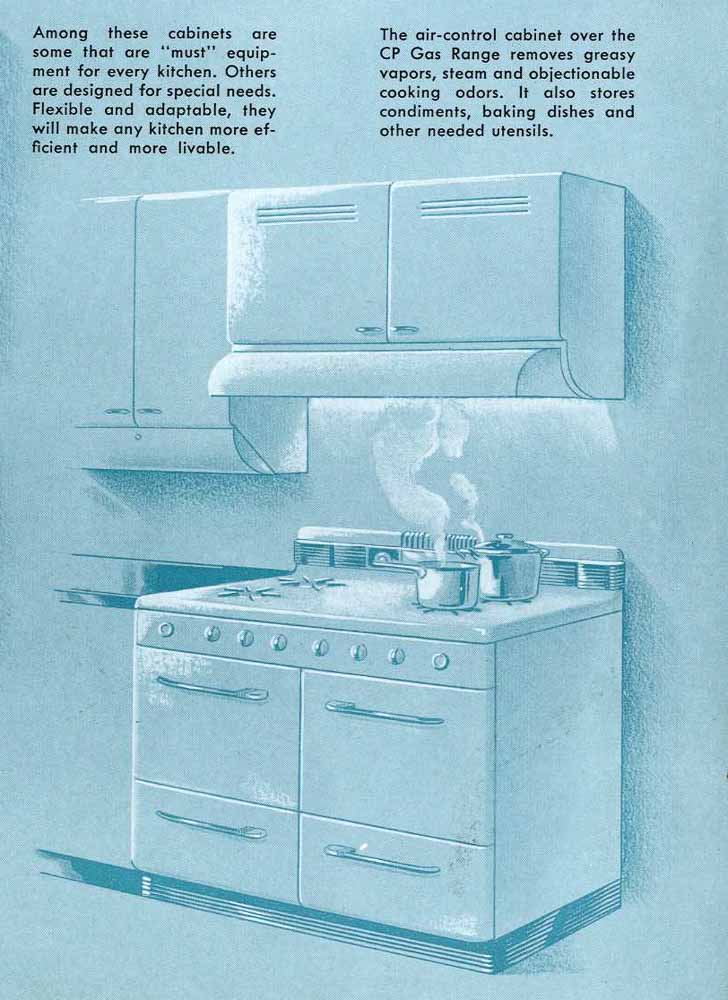 There is also an “air control” cabinet, but best I can tell, this is essentially a range hood with a blower fan that vents air up, and through venting (hidden in the cabinet), then out of the house through venting that continues in the wall. The difference with this Servel design, though, is that the range hood is designed right into the cabinet. It’s not an add-on. I think.
Delightful c.1948 illustrations show how kitchens were expected to look right after WWII
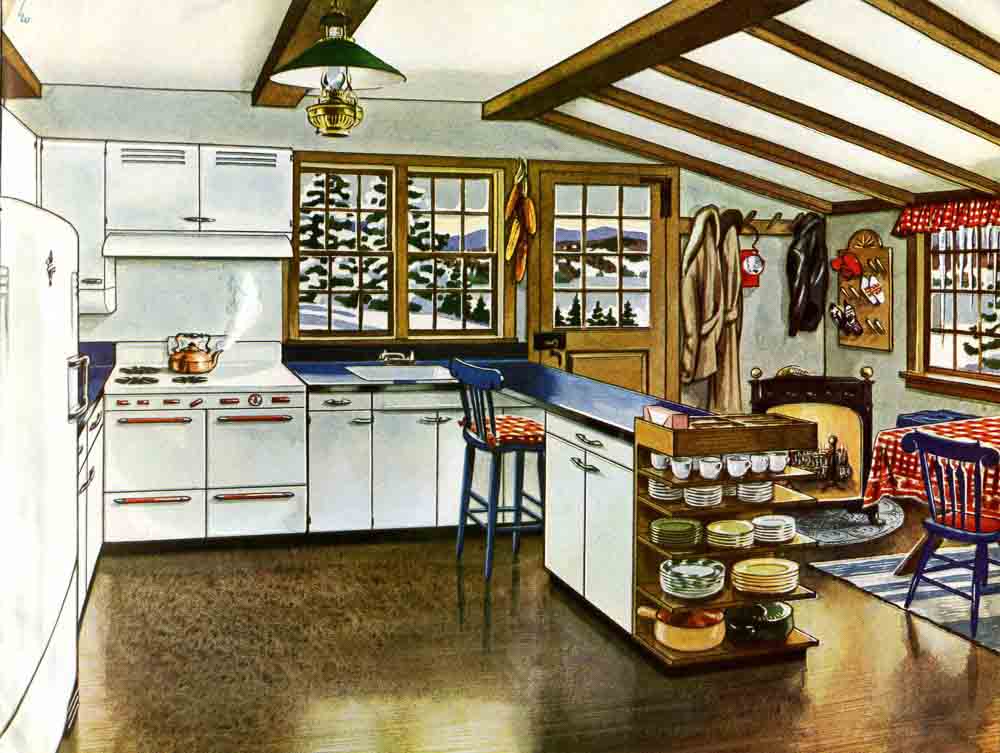 My catalog is chock full of delicious illustrations. There is no date on my catalog. But, these illustrations have the look of… 1946-1955 or so. I’ll say: 1948, because that was a big year for marketing. The year of Mr. and Mrs. Blanding!
And you know I love the kitchen above. So warm and woodsy. That wooden end unit is genius.
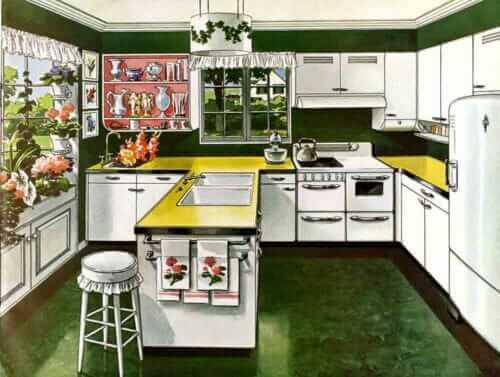 The marketing team gave some of the kitchen designs names based on the specific concept behind their design. As was also typical during this period in history, the marketers used their brochures as an opportunity to give Mrs. America lessons and tips in how to pull together the design of her modern, new, fitted kitchen.
Above: The Servel “Hobby Kitchen.” Love the open-door peachy pink back-painted cabinet with its separate bar sink for flower arranging. Isn’t it amazing what that little blast o-pink does for the kitchen!
 Above: The Servel “Living Kitchen”. Black and white checkerboard floor. We don’t see those too often in postwar kitchens.
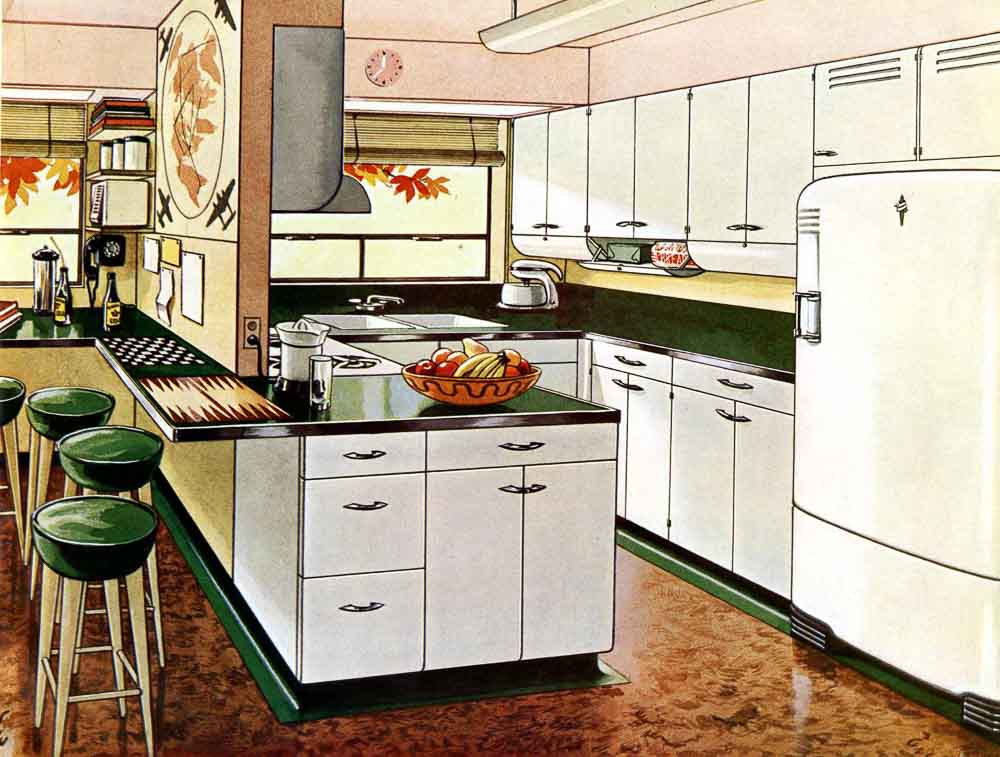 Above: This is kind-a my favorite, because it is the Servel “Teen-Age” kitchen. Dig the backgammon and checkers boards imagined printed right into the linoleum countertop! And eye spy the map with planes and bulletin board too. All the little details in these illustrations are the bees’ knees!
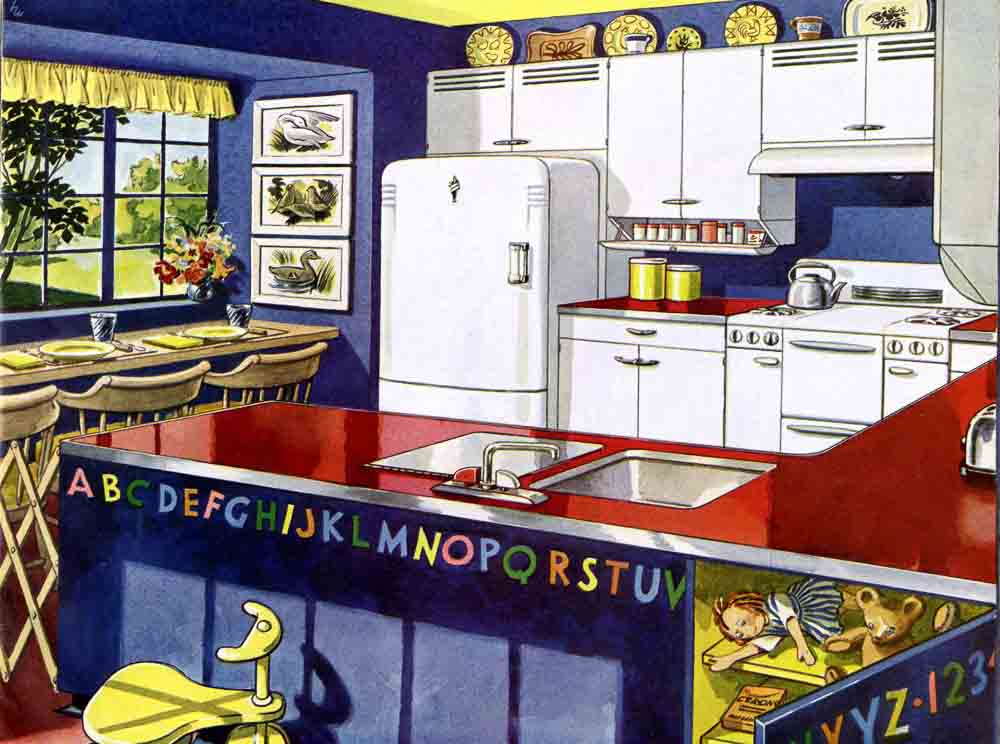 Above: The Servel “Toddler’s Kitchen”.
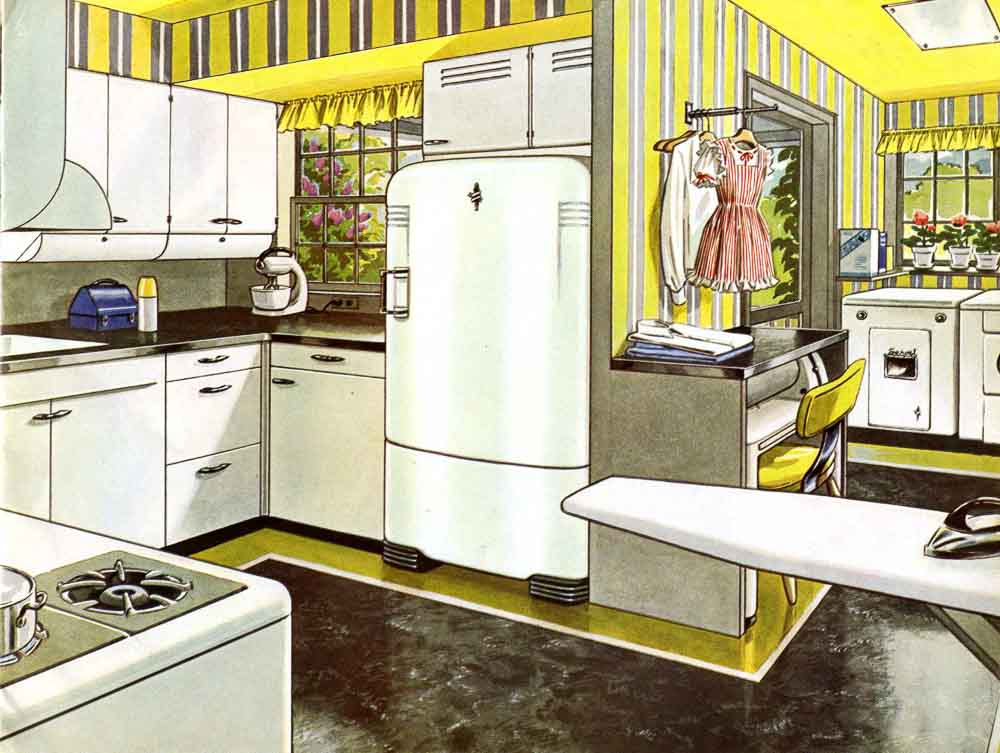 Above: I don’t have the name for this one, but clearly laundry was a priority in this fantasy household. Notice the mangle tucked away to the right of the refrigerator. Mangle mangle mangle! Hi doodle, I miss you << inside “mangle” joke.
 How to identify whether you have a Servel steel kitchen, if there is no visible logo already? Some thoughts:
- All the wall cabinets apparently had the rounded drop down “Finger-Tip Storage” thingies. Kinda like, built-in Cabinettes. This should pretty much nail ’em, I think.
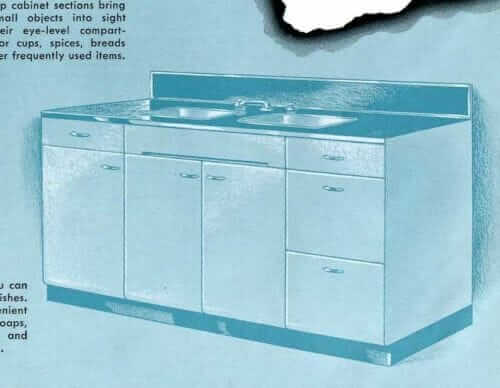
- It also appears that there is either a vent or a notch of some sort on the sink base panel right above the doors.
Countertops were either linoleum on steel (yes!) or linoleum on plywood.
Design is basically modern full-overlay doors and drawers, but then, there is still the streamline moderne feel in the curves at the bottom of the cabinets and of course, on those finger-tip storage cabinets. Methinks there was a bona fide industrial design firm involved in the design of these cabinets. Wouldn’t that be a great question to wrestle to the ground? Dear readers, let me know if you come up with anything!
Just like these kitchen illustrations, Alice White was fictional (I am pretty sure.) #1 in non-fiction, though: Those Dry Storage units, woot!