

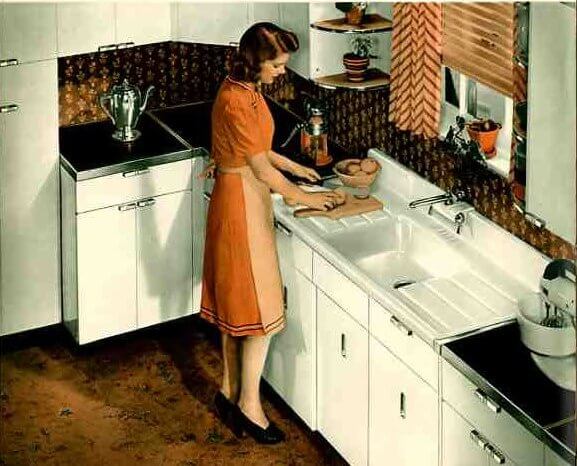
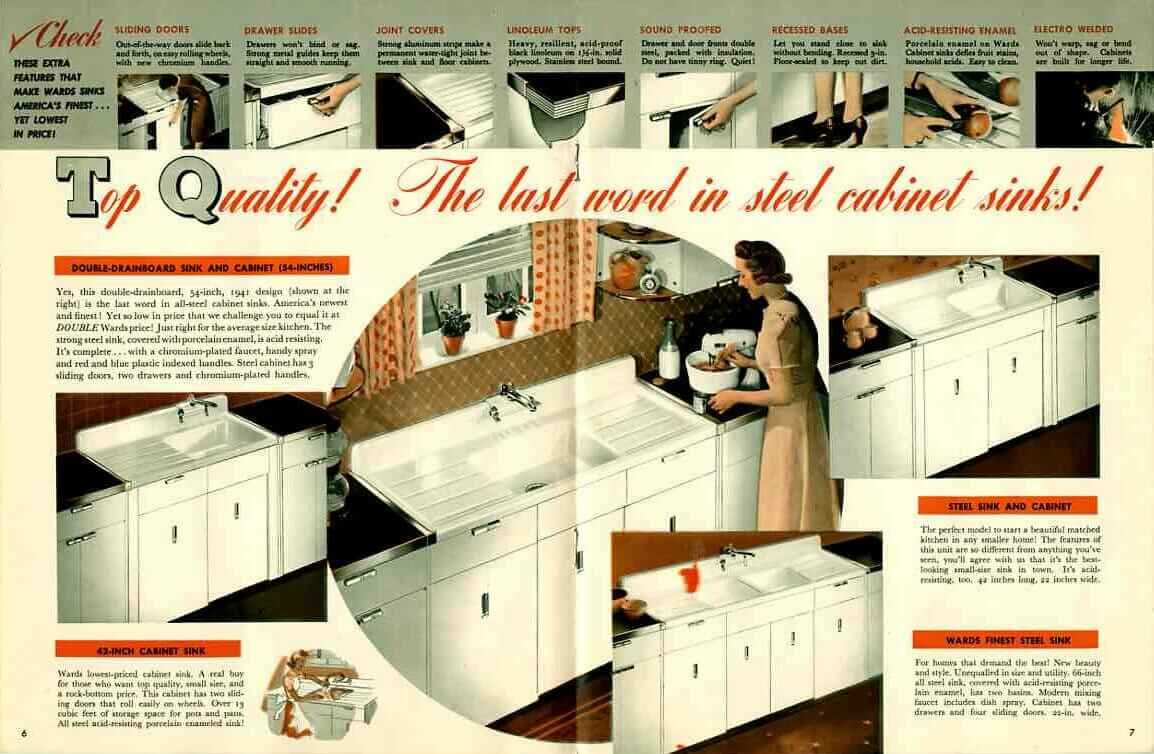
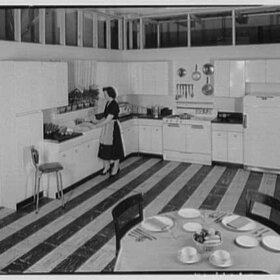
Updated (January 2019): What did a modern kitchen look like in the early 1940s? This 1941 catalog of steel kitchen cabinets from Montgomery Ward gives us a good idea: White cabinets, a big enamel-on-cast iron farmhouse drainboard sink, dark linoleum countertops edged in stainless steel, wallpapered walls and linoleum on the floor, too. You can see from this brochure, how much simpler kitchens were in the pre-war era. Of course, we were still in recovery from the Great Depression. Even a kitchen like this — which would seem so basic today — would have been immensely luxurious in 1941.
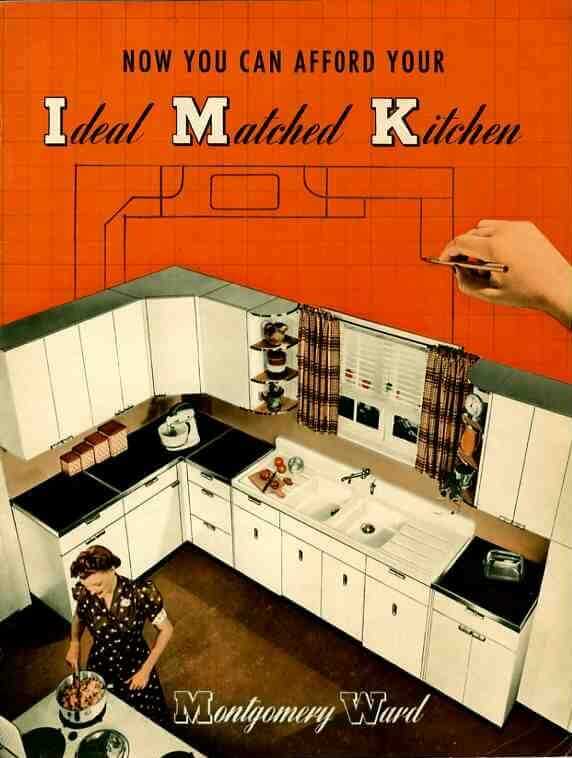 Here we see again, how an average housewife of the era may only have been able to afford and purchase the sink cabinet alone, with its porcelain-enamel-on-cast-iron drainboard sink-top…
 While the catalog is presumably about the full range of cabinets, it is principally marketing the “Modern Cabinet Sink.” This would be the first piece a homemaker would buy — she would then integrate this into her farmhouse kitchen – which may have had homemade wood cabinets or not, or into her apartment kitchen to replace the old wall-hung kitchen sink.
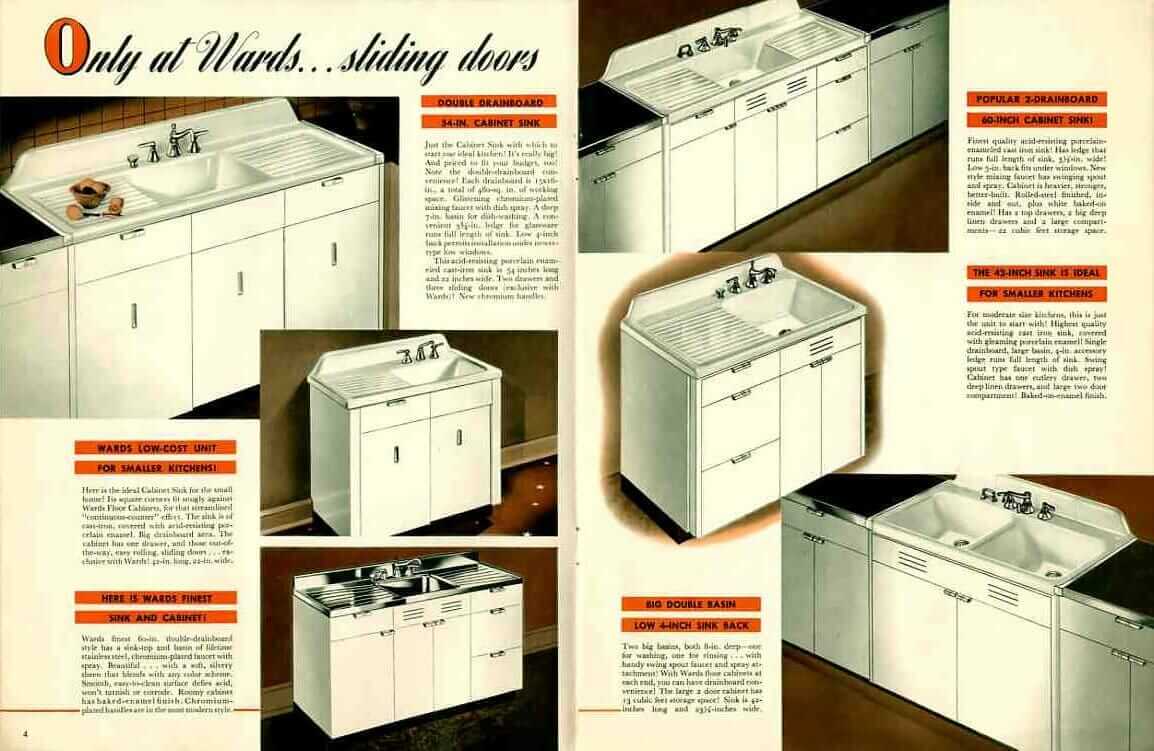
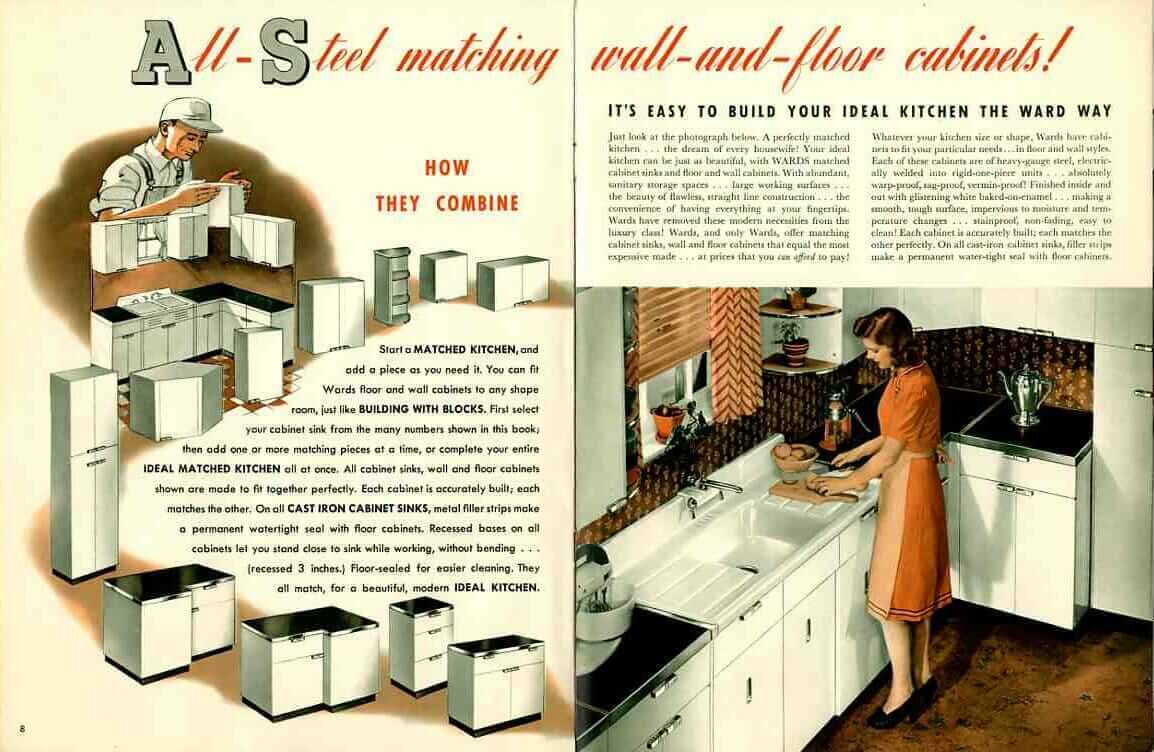
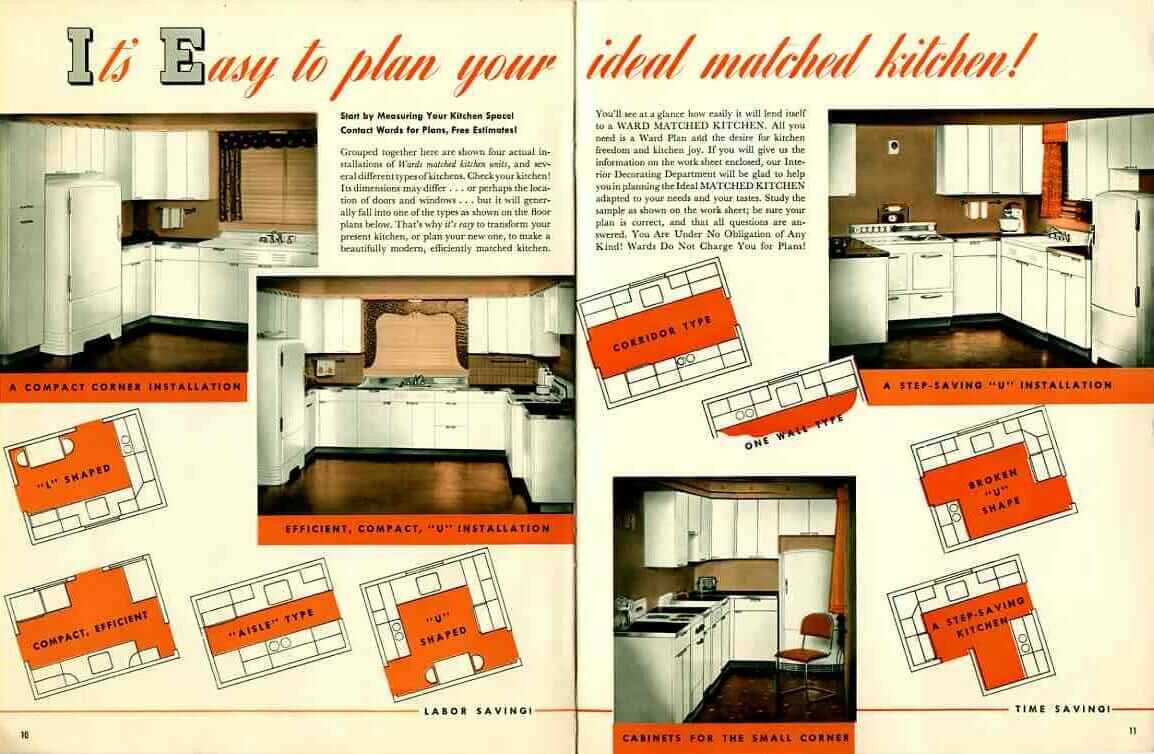
 She could buy the rest of the pieces later. What a move forward: Built-ins, made in a material, steel, that was “vermin-free.”
 Oh, also notice the stainless steel drainboard sink on p. 4 — a look you can replicate with Elkay aluminum drainboard sinks today.
What a lovely set of images that help us understand the evolution of kitchen design in the 20th Century!


Billy Hill says
Looking for the plastic and metal clips that keep the metal doors on a metal signature cabinets sold by Montgomery Ward
pam kueber says
Hi Billy,
I don’t know where to point you on this question. So many brands and so many model years!
ROB BROWN says
Do you have access to the original/higher resolution catalog? I am buying a house with one of these sink cabinets, and thought a framed printout of one of the pages would be a nice decor touch. If you can point me in the right direction, would appreciate it!
Pam Kueber says
Not sure which model year you have, here’s a different one online you may be able to use >> https://archive.org/details/PlanYourNewKitchenWithWardsSinkAndKitchenCabinets
Grama Robin says
I’m surprised at the design of the faucet in the inset on the second page you show. I associate that with modern “antique” faucets!