

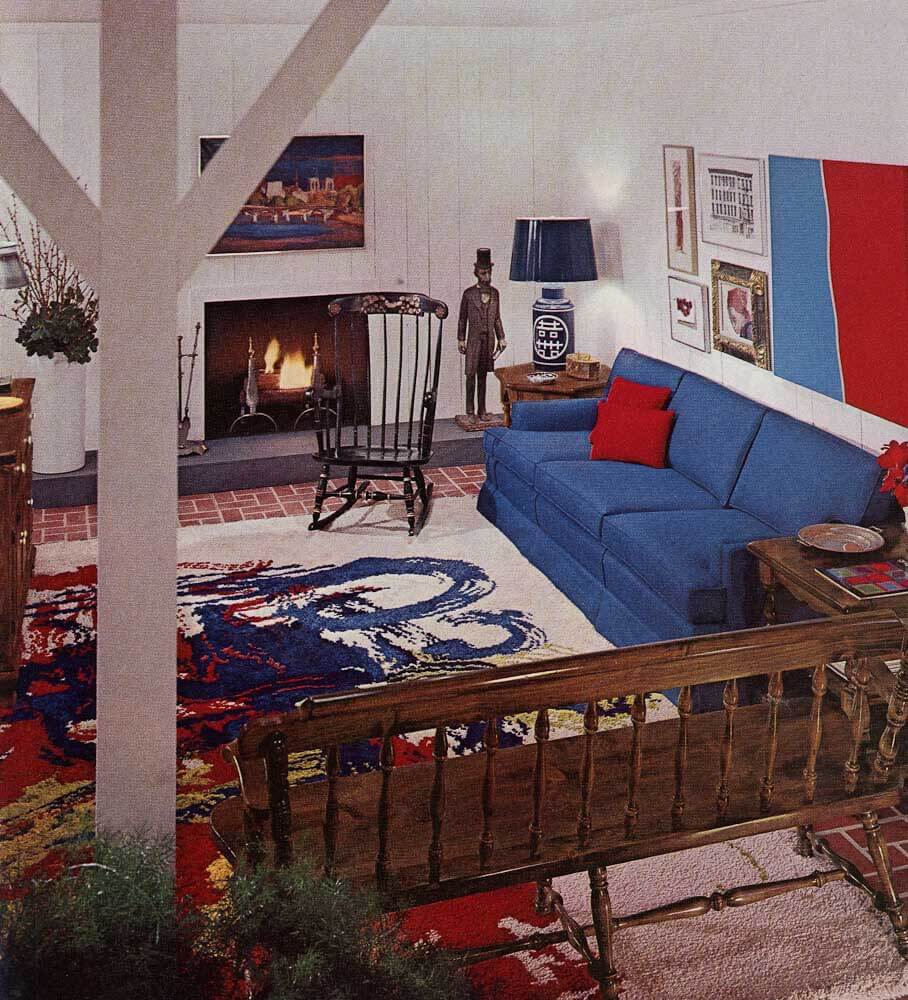
 Upon the most recent celebration of our American Independence, I learned that there is now a design trend called “Bicentennial Chic.” This amuses me to no end. Bicentennial Chic seems to me to be a lovely bit of wordsmithing meant to upmarket “1970s Early American” decor and fashion. Not that I am opposed, whatsoever. If it’s design done well, it’s design done well, an American Eagle by any other name would look so grand, and all that, you know. So how to define “Bicentennial Chic”? I could not find an official definition online, so, calling upon my own experience including the fact that I LIVED THROUGH IT THE FIRST TIME, let’s take a look at this what’s-old-always-comes-back-again trend. Above: Vintage Ethan Allen catalog edition 70 from the 1970s, from my personal collection.
What is Bicentennial Chic?
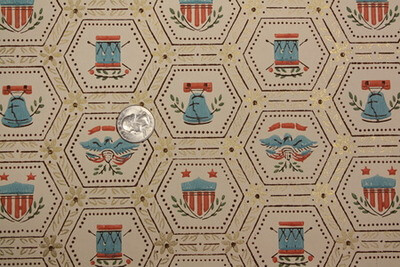
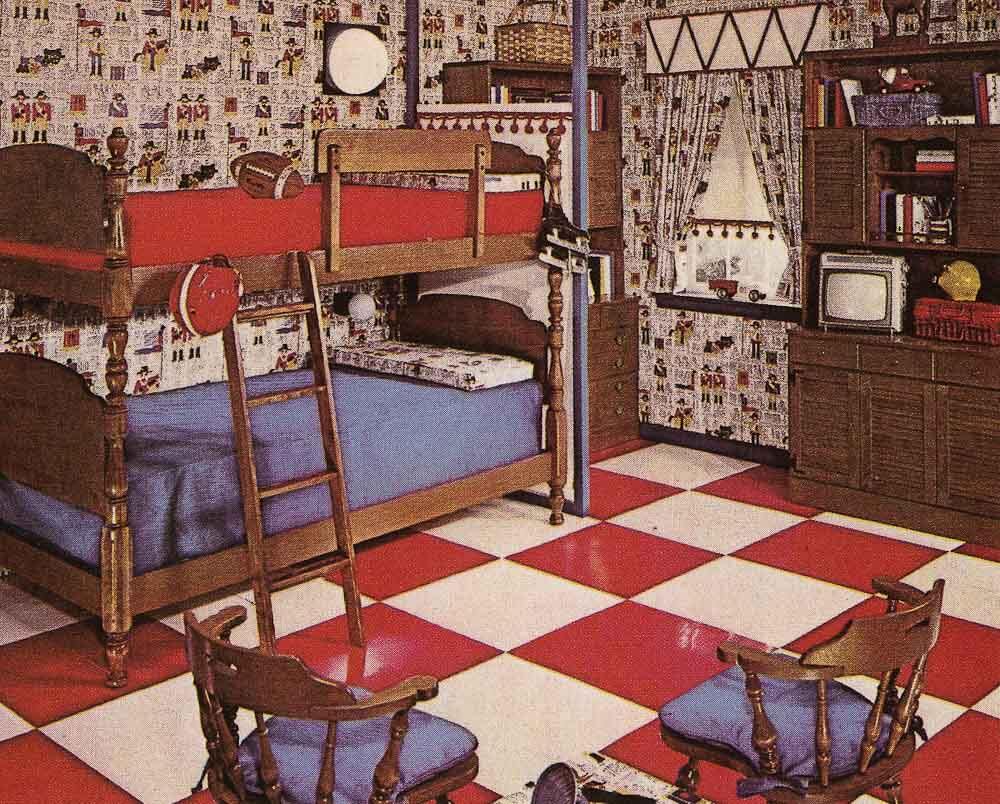
Seems like first and foremost, Bicentennial Chic would most precisely refer to any circa-mid-1970s decor or fashion that includes patriotic American iconography. Yes: Put an Eagle on it, to start. That said, I’ll further broaden “Bicentennial Chic” to include any combination of mid-1970s furniture and decor that gets the colors, scale, patterns, furniture and accessories “right” in evoking a Granny Ranch — circa-mid-70s, of course!
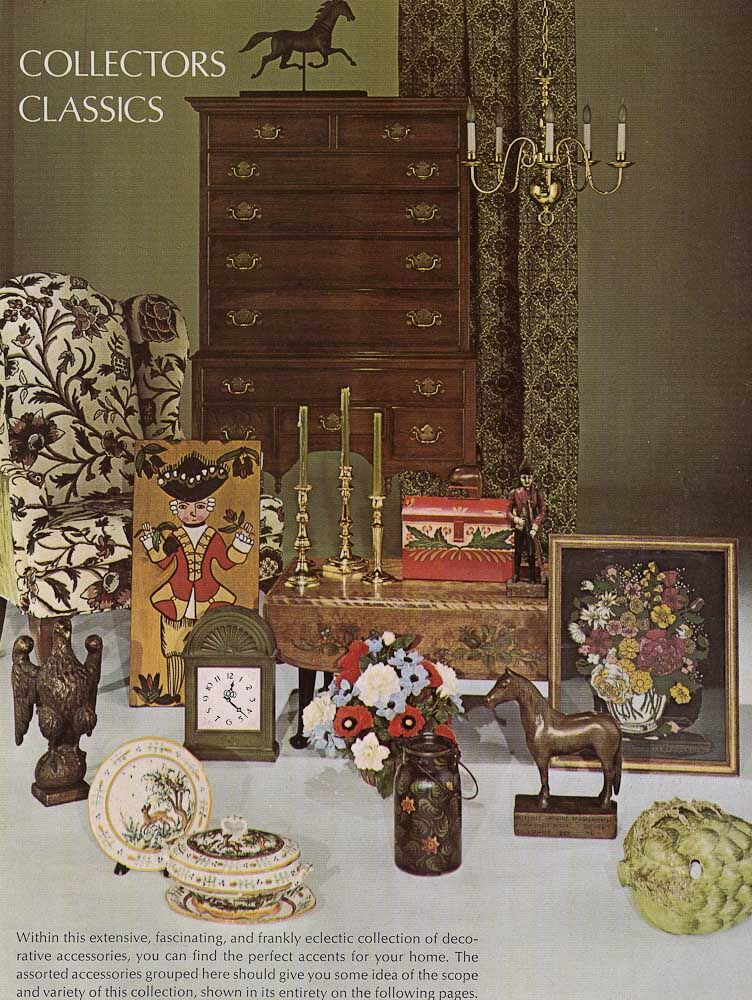
Motifs appropriated into Bicentennial Chic decor celebrating this era would include Early American / Colonial American:
- Soldiers and horses…
- Emblems, flags, the Liberty Bell…
- Spice racks, weathervanes, maize…
- Butter churns and crocks and the like turned into table lamps…
- Spinning wheels plopped into your living room as art…
- Oxen yokes turned into mirrors…
- Braided rugs…
- … Lotsa anything you could imagine the original Patriots having in their homes and lives, but served up as Art.
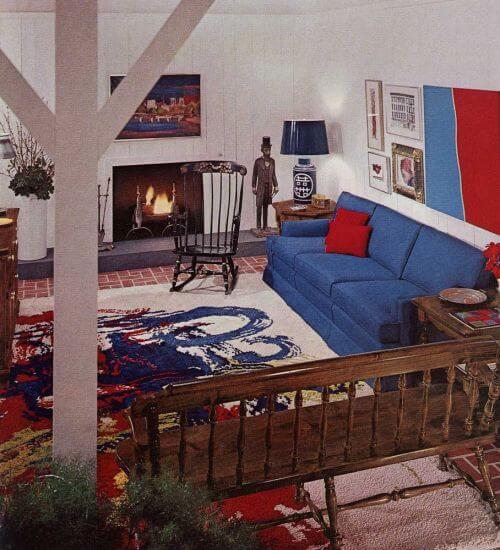
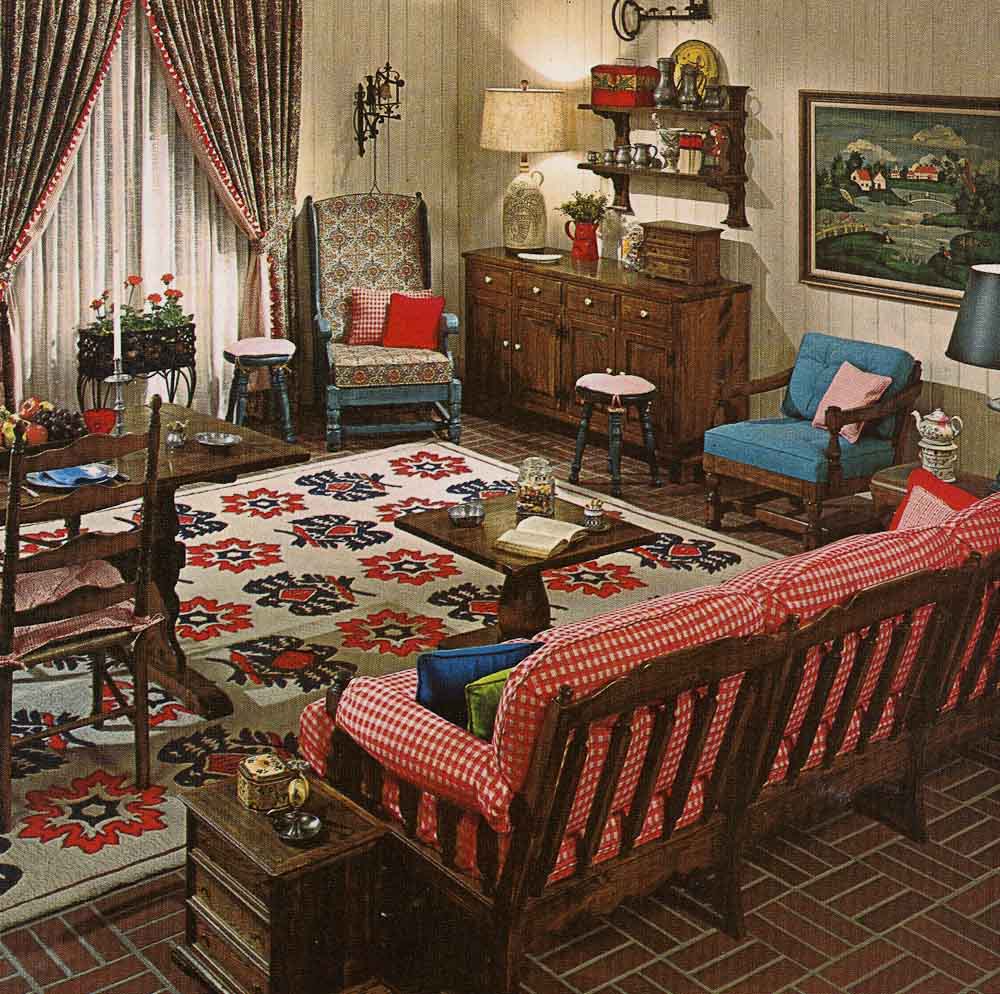
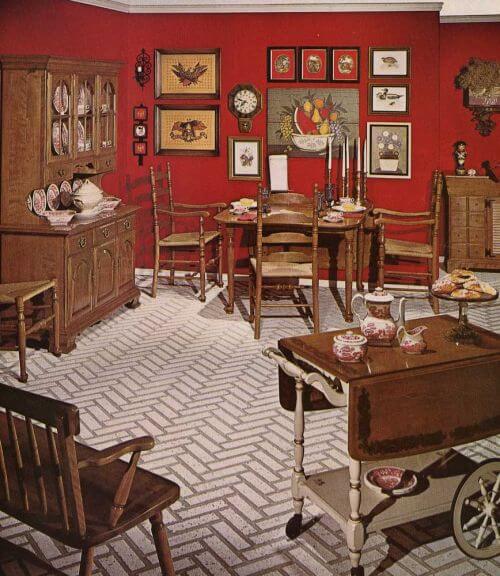
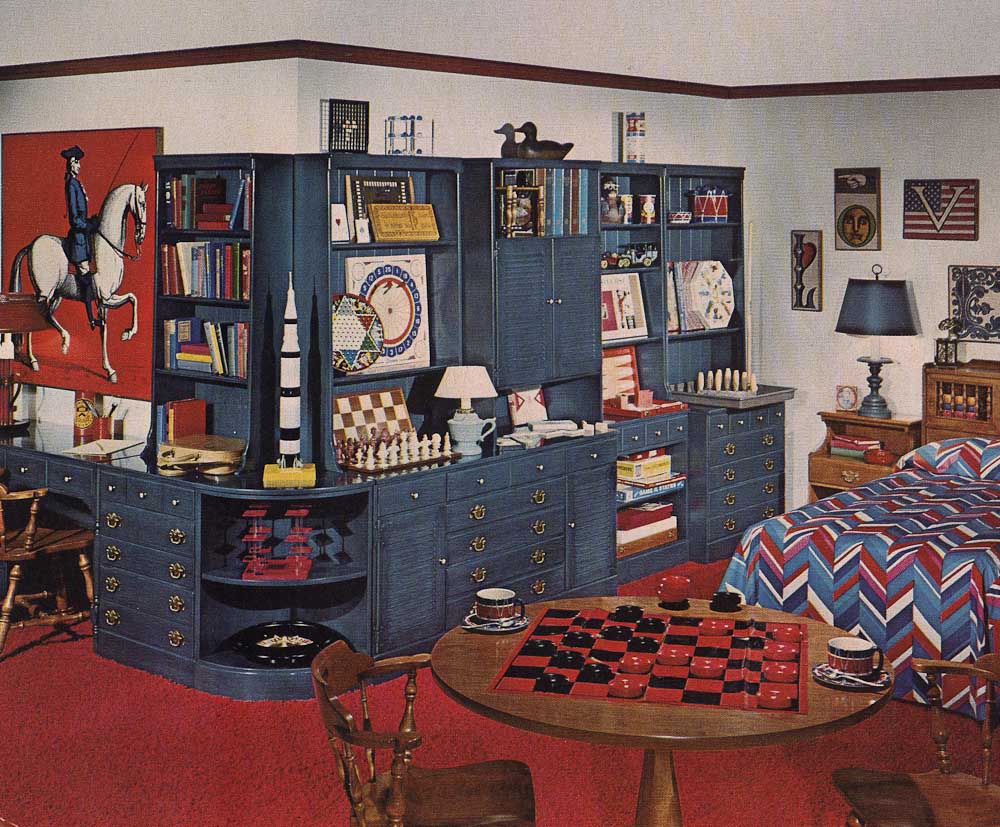
The colors of Bicentennial Chic: Red, white and blue color schemes — but not just….
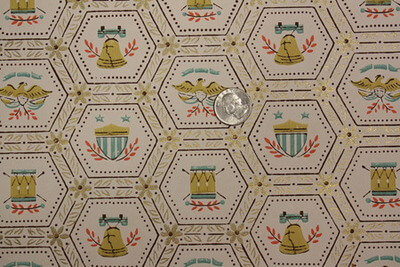
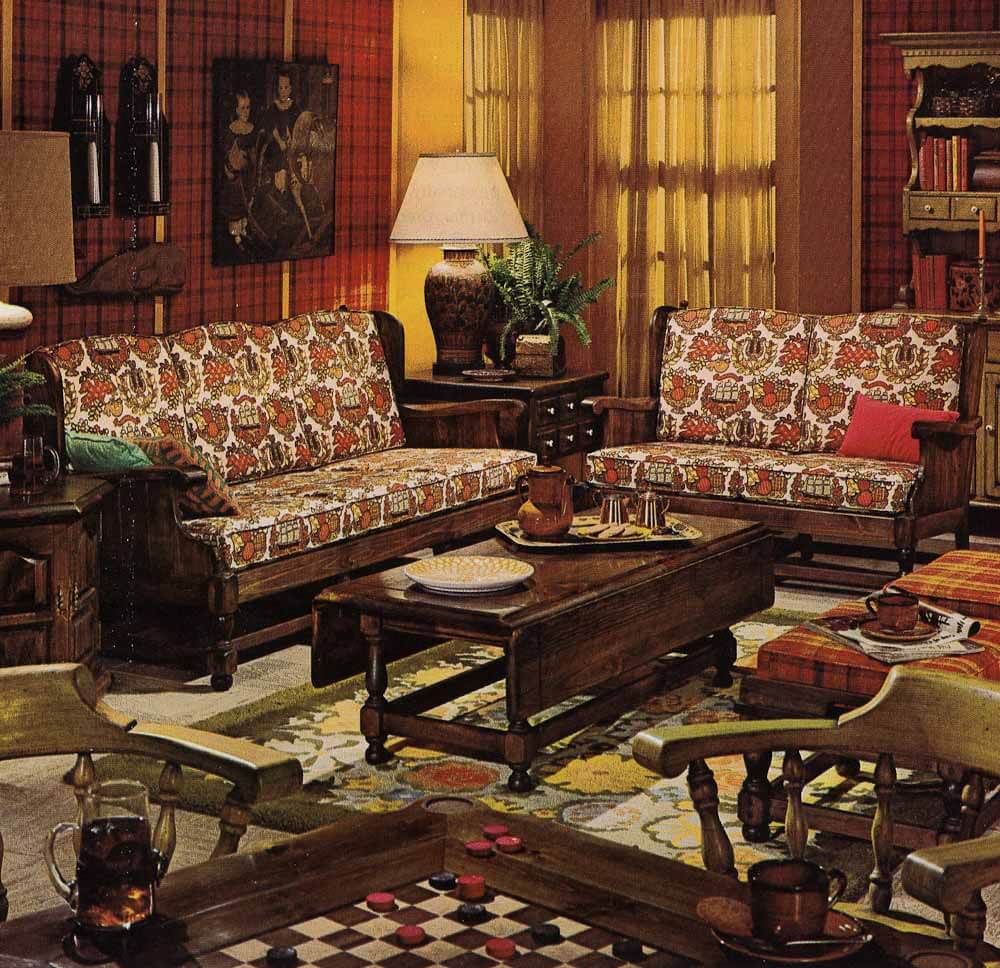
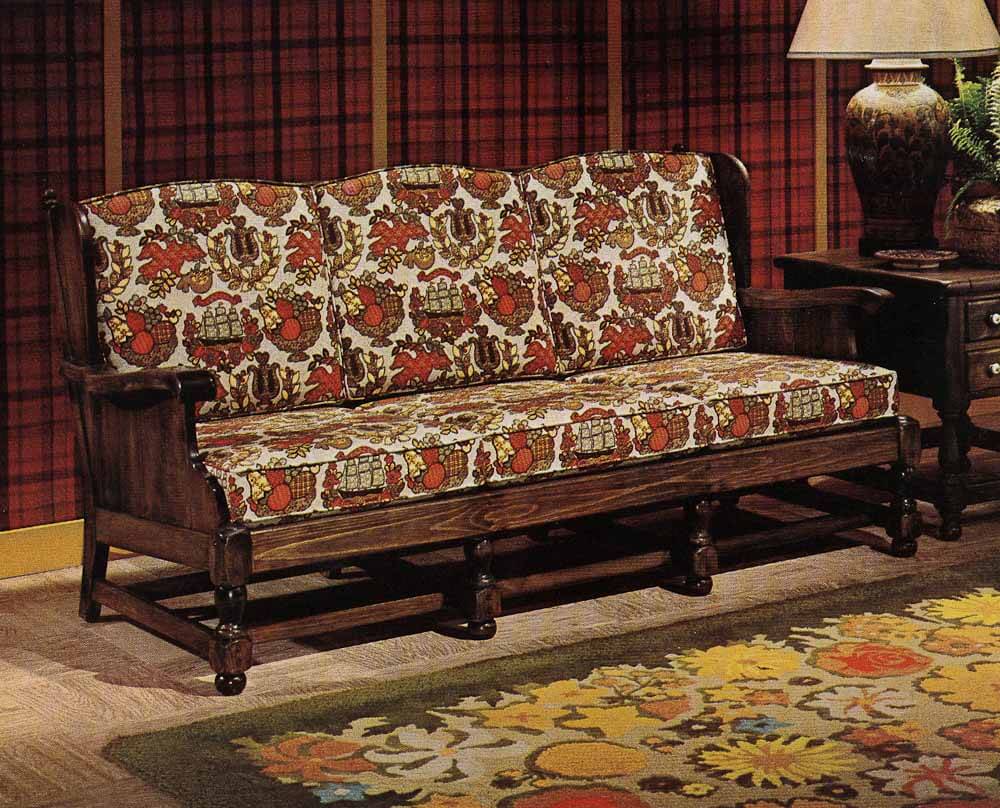
… I’d also include the prevalent decorating colors of the day — the lovely avocado greens, harvest golds, rusty reds and oranges and rich browns and coppertones. These colors would have been even more popular among accessories and fabrics to decorate the home.
Metal finishes: Antique brass, pewter, copper and wrought iron.
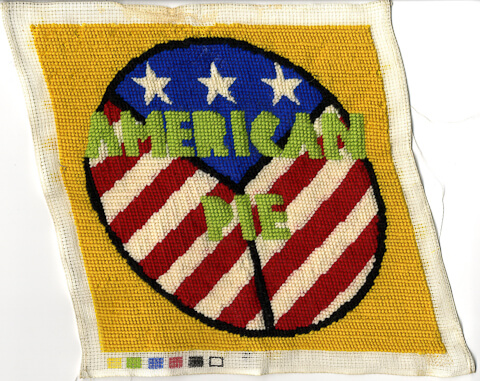
Crewel: Erica Wilson was going strong in the mid-70s.
Wallpaper: Heck to the yeah, here’s where you see Bicentennial Chic at its very finest.
Architectural forebear: Royal Barry Wills. I repeat: The most influential residential architect of the 20th century — and unless you are a longtime reader of this blog (and why aren’t you, pray tell?) you probably never heard of him. His influence was immense, and is still apparent today.
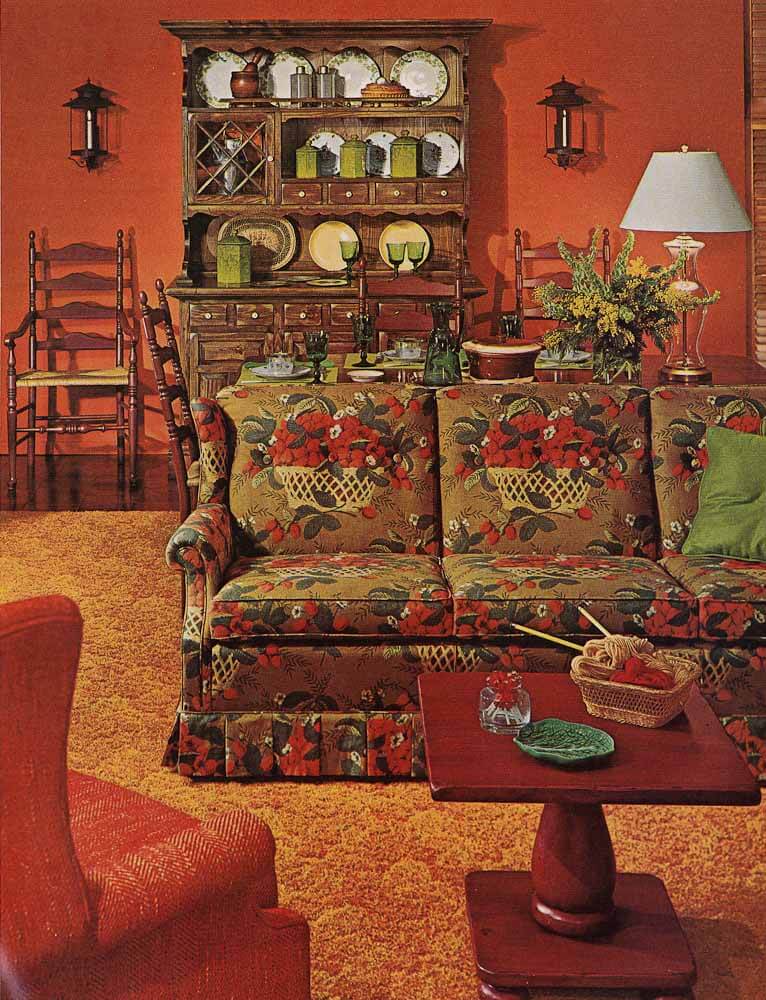
Furniture: Ethan Allen absolutely epitomizes this look! I own several vintage Ethan Allen catalogs. They are marvels. For this story, I went through Edition #70 to find some telling examples. I am not sure of the year of this issue. But I know it’s pre-1979, because I have a later edition that includes that date.
I found plenty of examples in the wonderful Ethan Allen catalog that show us how to pull together a Bicentennial Chic interior. Beautiful rooms!
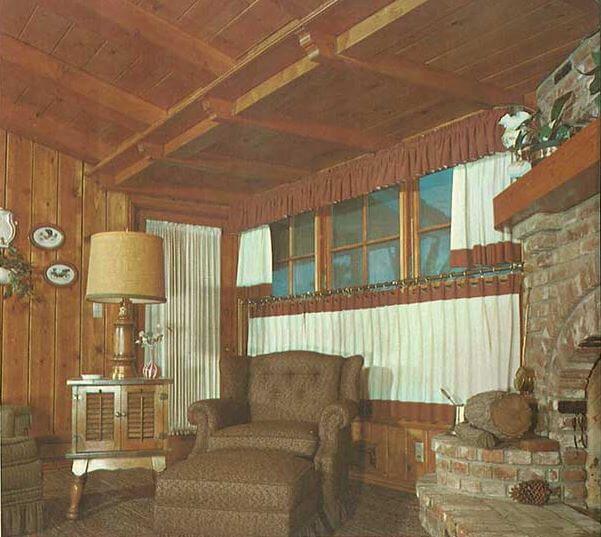
There were many decorating Colonial Revivals in American history…
But here’s the thing: I’m not sure that I can really see much of a fine line between what might be called “true” circa-1976 “Bicentennial Chic” and plain old Early American decor, which had been popular already throughout the mid-century period. In my first story on Early American decor, which I wrote in 2009, I found an academic source which discussed the first Colonial Revival in America. This first revival spanned 1890-1940, it said.
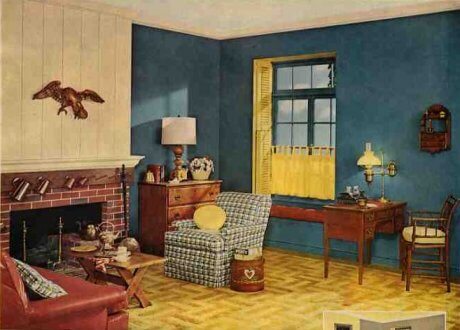
However, from what I’ve seen in American homes and marketing material, the Revival continued pretty darn strong all the way into the 1970s. In fact, call it “Colonial*” or “Early American*” (*I know that I am throwing these terms around very cavalierly; of course, collectors of true antiquities can discern keen differences among the many years of early American design history) … change the wallpaper and the upholstery schemes… but this American traditional style seems to have been in style throughout most of American history.
I’m thinking it really didn’t fall from favor until — ironically — after the 1976 bicentennial, when I’m thinkin’ people just topped out. And of course, the marketeers wanted to dissatisfy us with what we had and sell us something new. Seriously, by the 1979 Ethan Allen catalog, I’m not seeing a single cast iron eagle anywhere in sight. Duck decoys and ceramic chickens are creeping in, and I am just not ready for the small-flower-prints-on-pastel-fields upholstery and wallpaper yet. But no eagles.
So here we are… it took 40 years of visual recovery… and now we are ready to smile again at Bicentennial Chic.
What does Bicentennial Chic look like?
I would think that today’s “Bicentennial Chic” “should” not be subdued — it “should” be eye-popping, much like the 1970s take on the style. Well done, today’s Bicentennial Chic “should” combine lots of color, pattern, contrast, layers and line, pushing right up to that fine line between “genius” and “tacky” then backing off a wee bit to be sure to end up in “genius.” Of course, I put “should” into quotation marks because what the heck do I know, I only learned about this like four days ago. And besides, you can do whatever you like, it’s your retro flashback.
In the 1970s, Colonial Revival interiors got pretty darn bold, it seems. The portrayal of the emblems of colonial America were even heading toward “camp”, in the sense that we already had Andy Warhol showing us how to take bits of American pop culture and make them into art. That said, I’m gonna say the mass of mainstream middle-class Americans who embraced 1970s Colonial Revival styles and decorated their homes thus, did so with zero irony, no tongue-in-cheek at all. They lived through the privations of World War II and took their American iconography very seriously. So even though it’s tempting to look at these 1970s interiors and maybe giggle, at some of them, I ain’t gonna. This was just another style, and style is just fashion, and we’re susceptible to its siren song, to some degree or another. And, these rooms — in the Ethan Allen catalog, in particular — are really put together well! So they get my respect, for sure..
Early American / Colonial Revival decor: I would say it was the single longest running style trend in 20th century America. Way more popular than mid-century modern.

Why is Bicentennial Chic chic again today?
Oh, those wacky youngsters. When what’s hot (mid-century modern and high style Steampunk, today) gets too hot and therefore out of their financial reach, they look for style where others aren’t. They put their own no-baggage eyes on stuff with low price tags, snap up deals at estate sales and thrift shops and grandma’s house, give their new found vintage treasures a fun new name — “Hey, let’s call it Bicentennial Chic,” tee hee — and before you know it, newly made knock-offs begin appearing in the furniture catalogs we get in the mail.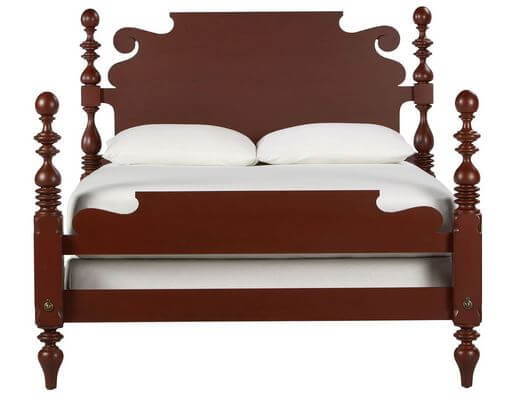 For sure, you can find all the elements of Bicentennial Chic locally, vintage. But for fun, I also jumped over to Ethan Allen’s website to see whether they still had anything to fit the trend. Today, Ethan Allen is most certainly marketing to the large, mainstream market. But, I found a few things that might fit the Bicentennial Chic groove…. For example, I love their Quincy bed, above. This modern take showcases the delicious lines of Early American furniture. This bed comes in a number of colors — you can even get it in aqua!
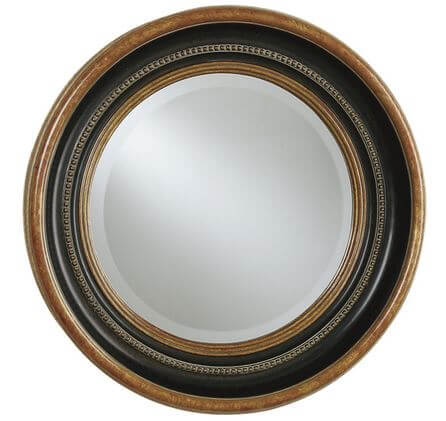
Above: Ethan Allen Deep Profile Classic Mirror.
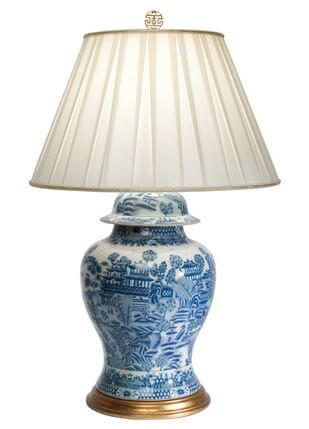 And this might be one of the most timeless table lamp designs ever — Porcelain Ginger Jar table lamp, Ethan Allen.
It always happens: What’s old becomes new again. Heck to the yeah to Bicentennial Chic! Now, I am going to look for my calico maxi dress. I’m pretty sure I saved it. Rock on.
- Also see my story: Renovating 1970s houses — the next big thing


Sid says
Wish I could have lived to see the bicentennial! I’ve heard stories of that summer being CRAZY for everyone involved…neighborhood parties, cookouts, fireworks, music blaring, and who knows what else.
In my home town there are a few houses built in the 60s and 70s that have cast iron bald eagle decorations above the garage door..sometimes with house numbers below them. First thing I thought of when I read this article. I’d love to have one now just to hang on the wall.
Lisa says
Such a memory blast! My uber patriotic parents embraced early American Bicentennial chic warmly and the house I grew up in looks like all of these photos! Although it is not my go to decorating style I do find myself drawn to elements of it probably as a tribute to my 70s childhood.
Cynthia says
Ah Early American memories. Early 1960s we had that style for the rec room: sofa, easy chair, recliner for dad, side tables, coffee table and those all-metal painted lamps (even the shades) and a big braided rug. Rints were the colonial toile type, plaid, and nubby solids. Colors were navy, red, gold, olive green. Big wooden executive desk antiqued in “federal blue”. Distressed walnut panelling for that rustic look. Dark blue pinch pleat lined drapes in a nubby texture. Wall decor included an eagle plaque. A fun room! As kids we mostly lay on the rug to watch tv.
gsciencechick says
Growing up my immediate family and extended family had colonial, and this style was everywhere! I always liked the clean lines of modern, so, no, I am not a fan of this era.
We did have bicentennial 1776 wallpaper, though. I remember that. It was featured previously here on RR.
https://retrorenovation.com/2010/05/25/everyone-tells-gus-rosanne-to-update-their-1960s-time-capsule-but-they-find-us-instead/
pam kueber says
Well, golly, yeah that you remembered that!
nina462 says
while not really my style….it goes with my house. I have the HUGE brick fireplace and wood beams (& hardwood floors). I prefer the 1950’s….or 1940’s version of Americana, than the 1970’s. That being said – don’t forget: John Haymson prints of Colonial Williamsburg, or the catalogues from Yield House and Sturbridge Yankee Workshop.
Great pictures – thanks for sharing!
hannah says
Rooster. It was a rooster lamp. I can’t find one exactly like it for sale on eBay or Esty, but here’s a statue that was pretty much like the one on our lamp. Only ours was bigger, if memory serves.
http://www.ebay.com/itm/BEAUTIFUL-15-TALL-VINTAGE-70S-HAND-PAINTED-CERAMIC-ROOSTER-/301235288534?pt=Figurines&hash=item462305b9d6
Janet in ME says
My rooster lamp is in CT and I am now in ME for awhile. I will have to take a photo of it and send it to Pam. I wonder if your mom had the same one. It has a burlap look shade with bright green trim and a wooden base. I love it!
hannah says
Janet – Mom’s rooster lamp had a shade very similar to this. The whole lamp was quite the spectacle. 😀
http://www.ebay.com/itm/Vintage-Mid-Century-Ruffled-Petticoat-Shade-w-Lamp-Lighted-Amber-Base-Wood-2-/390865899486?pt=LH_DefaultDomain_0&hash=item5b016c4fde
hannah says
Wow. This photo spread really takes me back. I know I’ve said it before here, but Dad was hip and into MCM and Mom was all about Early American. As the 60’s rolled into the 70’s Mom was winning the battle and we had a bit of a mash-up of both styles.
In one of your last pictuers where you say:
>>>No, this is not a 1970s interior. It’s from 1960. Early American style was popular for a longgggg time in America.<<<
The end table with the louvered doors – We had that. With a HUGE a$$ ceramic chicken lamp on it. I remember the day she bought that lamp. My best friend and I were with her and when she picked it out (she fell totally in love with it) we just looked at each other with disbelief. lol
Mom and Dad divorced in the late 70's – and Mom got the lamp and the table. She had those until the day she died. When I was cleaning out her place I was like "Who wants the chicken lamp….?" I have a picture of it somewhere around.
pam kueber says
ahhhhhhh, I luv me a good rooster lamp, who wouldn’t!
Janet in ME says
HEY! I HAVE that rooster lamp! It was made by Pennsbury Pottery. It sat in the basement warehouse for something like forty years because no-one wanted it and now it is mine!
BungalowBILL says
I must have painted about a dozen of those kits with a printed piece of wood with an drum or eagle that you’d distress and glaze to look old. All done while watching Here Come the Brides or the Young Rebels on tv. Our house was like an aviary with brass eagles attached to anything that didn’t move, and was surrounded by plaid Herculon and colonial print slipcovers.
pam kueber says
I did ’em, too. I think at least one of them is still at Mom’s house. Every once in a while I see them at estate sales and it’s big flash from the past! Yes: Plaid Herculon! Talk about something that would never wear out. Which you wish, would!
linda h says
Our home,built in 1976, has a cowboy themed room featuring the Tell City Chair Company Early American style rocking chair that we bought in 1976 while we were living in another state. Most of the other furniture in this guest room is also Early American. Love it!
blair kooistra says
Thanks for sharing this! I’ll admit up front that I grew up with this Early American/Colonial. It’s all we had in the house in the 60s and 70s and my mom and dad clung to it til the days they died. I had a bedroom with wallpaper featuring colonial-era patriots and drum and bugle corps! Our home was a huge collection of Ethan Allen, Carl Forsland and other high-end manufacturers. The only exceptions in the house originally were a formica kitchen table with chrome trim–and that had been replaced by a colonial style table and turned-wood chairs with woven cane seats. And the walls: big wooden eagles, convex Ethan Allen mirror, framed fabric prints of Colonial Wiliamsburg. Large three-masted ship models on the fireplace mantle, flanked by the complete American Heritage-series of books in handsome slipcases on the Revolutionary War, the Presidents, and The Civil War. No wonder I’ve revolted to mid-century!! My experience in getting rid of my parent’s stuff after their death has been that you just about can’t give it away. The higher end dining room table and Broyhill hutch cabinets sold for a good price, but it took awhile. The lesser stuff, the knicknacks–it went for pennies on the dollar to someone who shook his head and expressed pessimism he’d be able to sell them.
Kathy Merchant says
To everything there is a season….