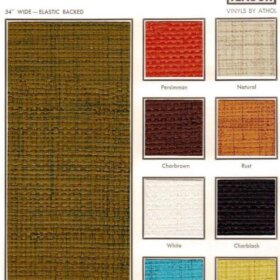
I‘ve been holding off for a while on posting this incredible 1966 wood paneling, thinking I could find some today-sources for this stylish material. Click the images to enlarge and see the wonderful decorative detail. Alas, nothing on the internet. Does anyone have any other ideas…sources?

![]()
It’s so interesting – that this was so popular…then so unpopular. Please don’t rip yours out unless it’s truly pedestrian! When we bought our 1951 “colonial-modern embankment ranch” seven years ago, another of the selling points was its original cherry paneling in the basement. The room itself needed some work – insulation, better heating, lighting, ceiling, carpet…but there was never a doubt about the paneling. Today, it’s the favorite room of my husband and his guy friends — a classic.
Methinks it’s time for paneling like this, to make a comeback.
This post was first published Feb. 19, 2008

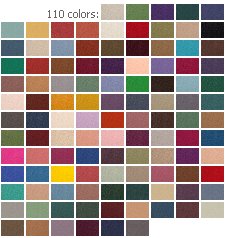


We looked at sheets of paneling at Lowe’s a couple of months ago, when we were considering just about any idea imaginable to deal with our less-than-perfect kitchen walls. We knew that we really didn’t want paneling in our kitchen, but, we did see a few styles that we thought weren’t too bad.
At first I thought that was an Iroquois Impromptu coffee pot, but then I checked and the shape is slightly different. Then I thought, maybe Eva Zeisel? Can anyone identify the china?
Hmmm… we had a back bedroom with paneling. Oak I think. Anyway, I painted (which nearly killed my parents), but I love it better than any plain walls. I would love to have an entire house with white painted paneled walls… looks fabulous to me!
Hi,
I’ve never been a fan of most paneling, as it seems to always suck the light out of a room. Its potential warmth as wood is negated by the cave-like feeling it creates. In my own home (1958 split level) we have the original grass cloth, which has a much nicer effect (though it requires some care).
Re: the china, it isn’t Zeisel or Seibel (Impromptu) (I have quite abit in my store). I think it’s just one of the many “inspired bys”.
Ronn Ives, owner
FUTURES Antiques
Pam, you reference in your birthday announcement (Happy Birthday!) the number of coincidences that arise through this blog. Here’s another one: Your post on wood paneling occurs on exactly the day when I am installing new wood paneling in my condo! I am lining the walk-in closet walls with floor-to-ceiling 1/4 inch birch cabinet-grade plywood that I have finished with a Heywood-Wakefield champagne semi-opaque varnish (bought it on eBay). All of the built-in cabinetry, shelving, and dividers will be HW stained and varnished poplar. The closet is going to be my own blond wood “cave,” to use Ronn Ives term.
Of course you are installing today, Stephan. We are all on the same retro wavelength – constantly! Where did you get the paneling? Sounds like you are very happy with it, in terms of how it took the stain.
Hi again,
BLONDE paneling I could live with!
Ronn Ives
Wow, Stephan’s whole condo is going to be so beautiful, with all of the new paneling, tile, etc. We’ll want to see photos!
We still have some left in my son’s room in pine. It’s not too bad, we’ve considered leaving it as it’s only on one wall!? We still have some remnants in our garage left over from the owners before us. I have nigtmares about laminex wood look panelling though! It was in our hallway & when we tried to remove it it brought off half the plaster, it had been glued & nailed, now that type of panelling was awful! x
http://www.flickr.com/photos/retroppo/
Stephan, I’m curious about your experience using the Heywood-Wakefield stain. I have a wonderful H-W Rio dresser that has a very scratched top, and have wondered about refinishing it using that stain from eBay.
Hi,
I’ve dealt with hundreds of pieces of Heywood. Despite some valiant efforts on the parts of refinishers, I’ve yet to see a re-done piece of Heywood that matches the original finish WHEN PUT SIDE BY SIDE. I say this because it’s become my opinion that when collecting Hey-Wake, collect either prime examples that need zero work, OR, collect all you want in whatever condition, then have one great & valiant refinisher do it ALL at the SAME time with the SAME batch of finish. This way, either situation gives you matching furniture.
Just a thought.
Ronn Ives
FUTURES Antiques
I have pine in my dining room and grasscloth in my living room. I did paint over some heinous paneling filled with pictures of deer, quail and squirrels in my son’s room that was creeping him out.
The paneling, Pam, is actually just cabinetry-quality 4×8 foot sheets of 1/4 inch birch plywood from Lowes. You just have to dig through the stack to find the best pieces that will match. The HW stain, Femme1, has worked very well. It’s not perfect, and you can spot the difference if placing new and old pieces together, but for really damaged HW furniture, it is the most affordable alternative. He sends along two pages of very precise instructions that you have to follow to the letter, but it works! Of course, to do an entire walk-in closet, it took quite a lot of the stuff. Almost broke my bank! Lastly, a message to Ronn: I know of at least two people that refinish HW furniture and do it so well that you cannot distinguish original from refinish, even when they are side by side. One guy runs an antique place on South Broadway in Denver. His prices are high, but affordable. There is also a guy in Orange, CA, a suburb of LA, who does an excellent job but charges an exorbitant price. But I agree with your theory: stick to excellent or mint condition pieces, or refinish several pieces at the same time.
Happy belated birthday Pam!
My bedroom as a youngster was that beautiful 1950s knotty pine paneling – not too dark and not too light – it was just right.
Stephan,
It’s nice to hear someone is artistic enough to have apparently solved the Heywood finish match-up problem. I’m in Virginia, so I’ve never seen either of the shops’ work you mention. Aside from INITIAL matching however, I must add that if the finishes match TODAY, the aging process will “unmatch” them over the years. It’s just one of those situations for which I see no long-term solution, except under the two scenarios I mentioned. As far as my shop goes, I only deal in perfect or near-perfect original condition (with a few fixer-uppers I have in storage for those who want to dabble in their own experiments).
Ronn Ives
FUTURES Antiques
Hmmmmm. The 1950′s home we just bought has the lovely wood panelling in the kitchen.
We were going to prime it and paint but now Im having second thoughts! Its all in perfect condition, it just makes the room really really dark.
Now I dont know what to do lol
I know I’m a bit late weighing in on this subject, but I wanted to share the paneling in our 1953 ranch. My first reaction when I walked into the room was “Ugh, the wood paneling needs to go!” I lived with it for a few days and fell in the love with the incredible texture and warmth it brings to the room. Our wood paneling has a white washed effect that highlights the texture of the grain and lightens the overall effect. It’s now my favorite wall in the house.
My husband and are buying a 1965 custom ranch that has not been touched since built, it seems. There is incredible, real oak paneling in the “summer room” that I first thought would have to go, but we are loving it more and more. We thought about lightening it with a white wash, but don’t want to lose that original look. Any thoughts?
Hi, Jean!
In our 1955 ranch, there’s wonderful thick pine boards on the walls and ceiling in the sun room, still with it’s original dark honey colored finish. I wouldn’t change the color for anything and I love blonde wood.
O goodie. I love wood paneling!
every single room in the 1945 house we just bought is wood-paneled. it’s a bit overwhelming =) most of it is in perfect condition, but dark paneling makes everything feel so gloomy – there’s simply no way to lighten it up enough for me. i hope i can find it a good home – just not mine! there’s also a light (kind of birch-looking) paneling in one room that would be quite pretty, but unfortunately it’s been stained by years of smoking, and was not particularly well-installed.
Jean, one of the things I learned from hanging around here on RetroReno is that many different kinds of finishes were used on wood in the 50s and 60s. A whitewashed finish would still be in keeping with the period, although the honey-colored finish was probably the most popular finish, you do see all kinds of interesting colors—blue and green stains, too. Pam has a post about kitchen cabinet finishes that include that whitewashed look.
You might want to live with the paneling for a while and see if it grows on you before you decide right away, too.
I’m trying to find a solution for my sun room feature wall and I will have to investigate this as part of the list. I was originally thinking wallpaper, now I’m leaning towards a faux stone wall paneling. Pam, do you have any rec’s or posts on feature stone walls?
Hi super kawaii mama, I have never done a post on stone or faux stone walls. I have never researched this. But I tend to think that yes, they were used. Go for it.
I do like that panelling, but only as a feature wall, I think it would be too much to put it on all 4 walls! As for the tableware…according to my Taschen “Decorative Arts of the 1950′s” bible the shape is designed by Carl-Harry Stalhane & made by Rorstrands Porlslinsfabriker (Sweden) x
We have top grade wood paneling in our 1973 Master BR, 350 sq ft room, plan on sanding and whitewashing it. (white stain) Mother-in-law has a 1971 6000 sq ft home of tongue and groove spruce interior walls and ceilings, and has whitewashed ceilings in 2 bedrooms to lighten them, turning out beautiful. I plan on lacquering the finish after whitewashing – for a shine that pops. Grasspaper would cover the quality of the old paneling but I want to save the era.
I’m very interested in using wood paneling in one room in the 1969 home which I will soon buy. I can’t seem to find a resource for really good, authentic looking wood paneling (panels that have the vertical groove, intermittently about every 5 to 8 inches across were popular in 1960s homes.) Any ideas for resouces?
Hello! Were you able to find a source for the wood paneling?
The only problem was that, unlike the cheery rest of the house, paneling was usually dark.
We are buying a ranch style house built in 1948- and the “den” or tv room- is totally wood paneled, with roll-out windows and black and white checkered floor. It also features wood sliding pocket doors. We are leaving is JUST the way it is. Except for the ceiling.
Yay, Marquee!