


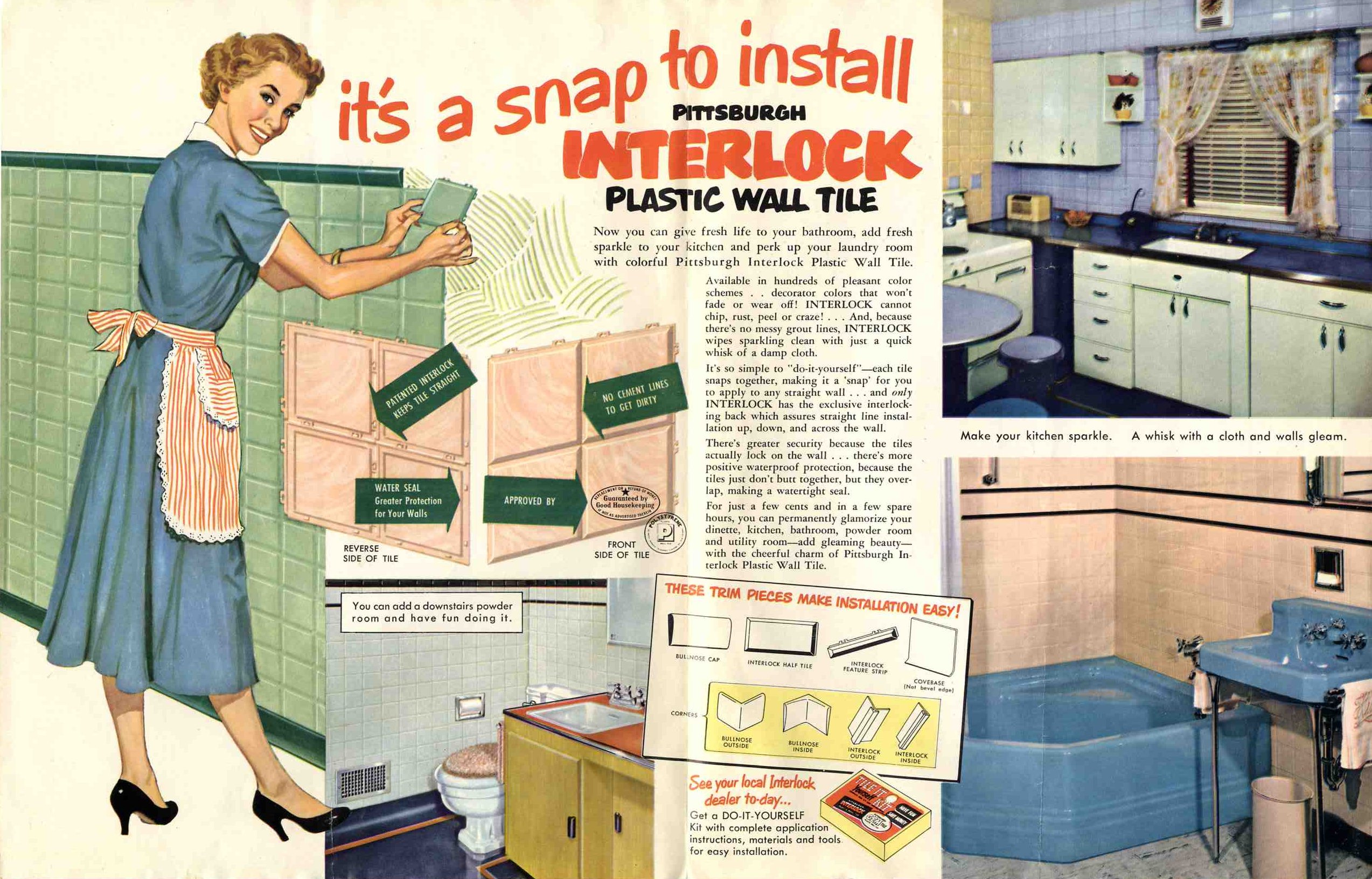
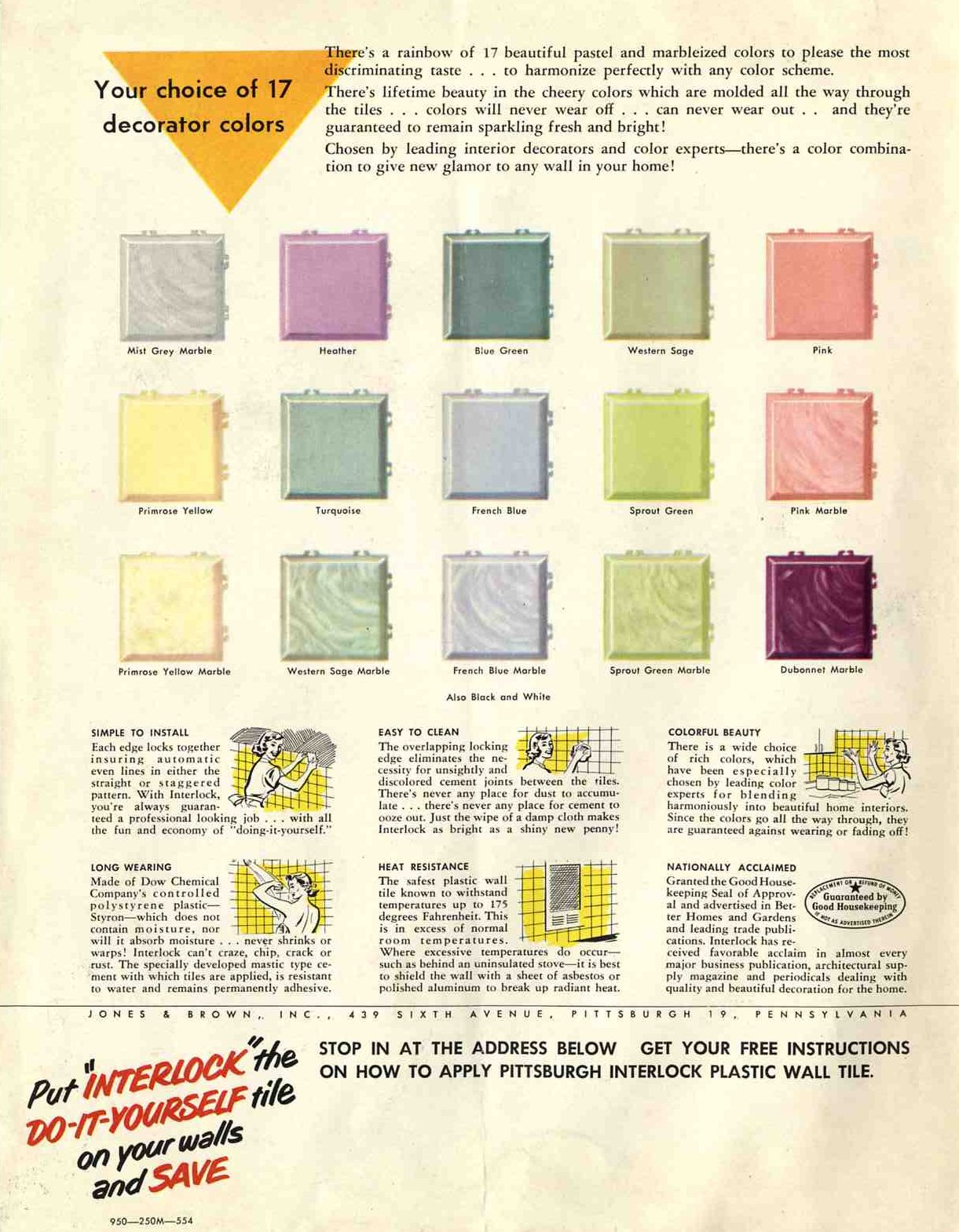
Plastic tiles seem to have been very popular in the 1950s and, my mom tells me, into the 1960s. In estate sale houses, I see them in both bathrooms and kitchens. I attribute their popularity to the fact that homeowners could install them themselves — and we were a very DIY nation at the time. Also, these tiles could be easily installed over existing plaster walls — meaning that they were good for renovating the “imperfect” plaster walls in old farmhouses, Victorians and bungalows and to get that “modern” look.
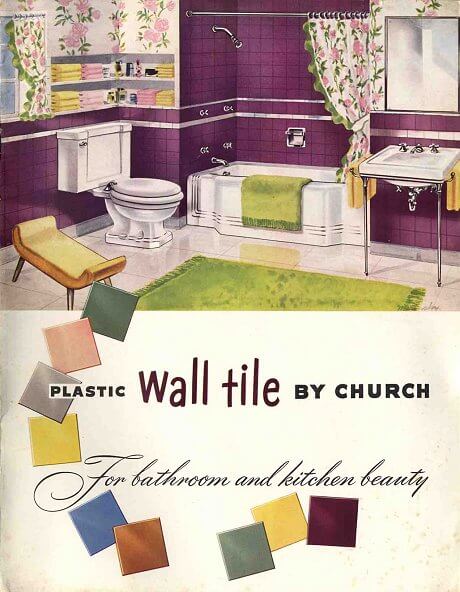
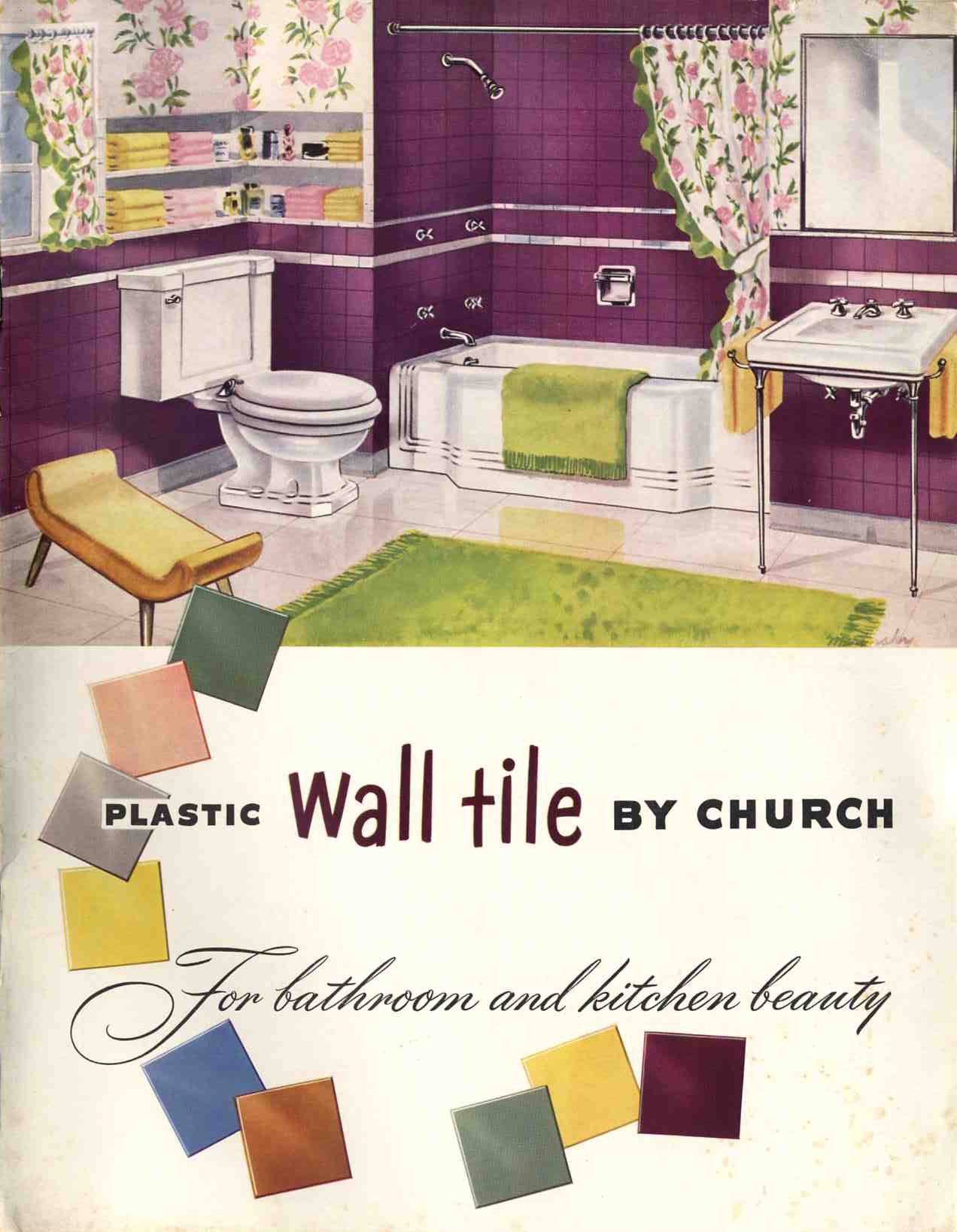
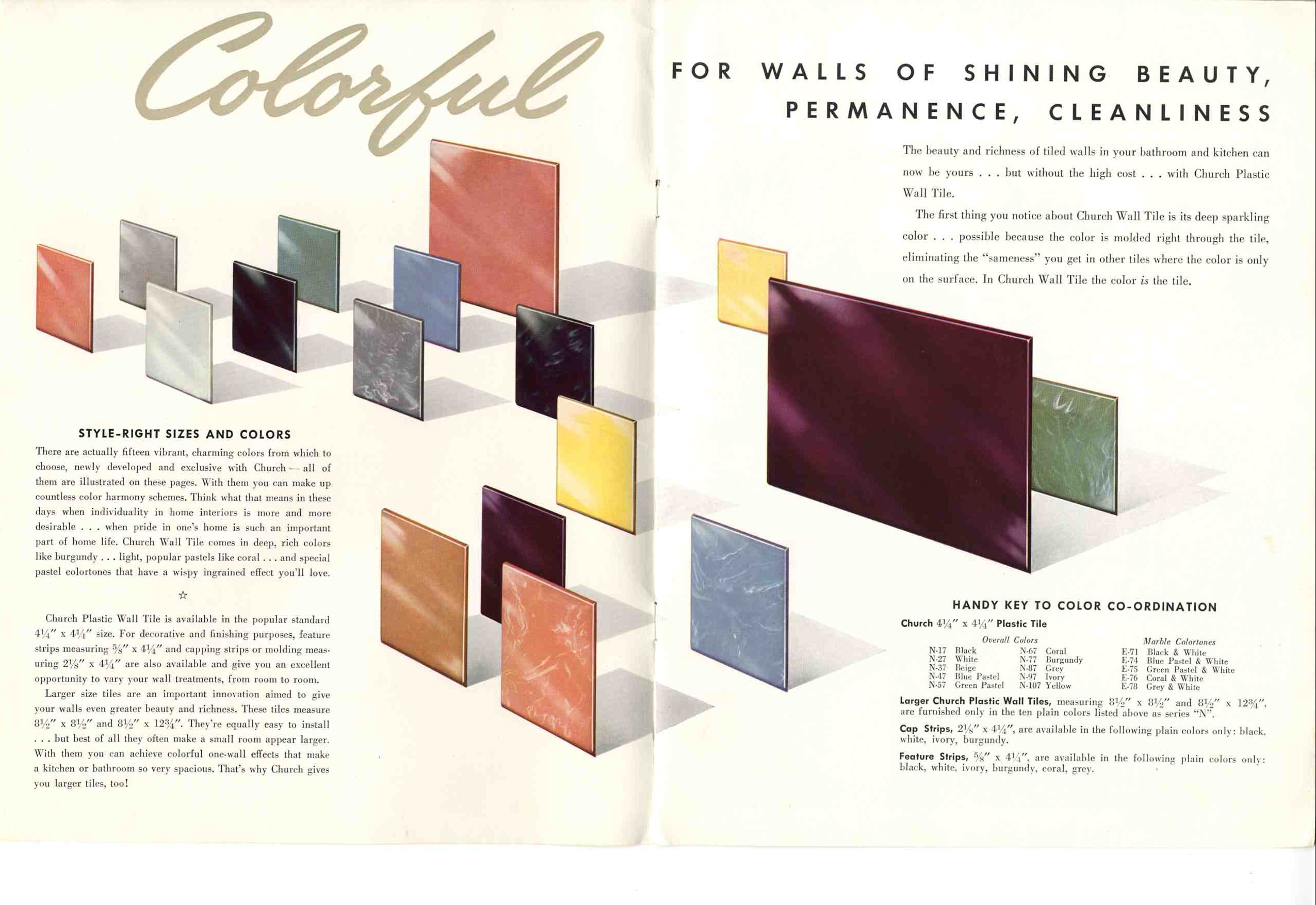
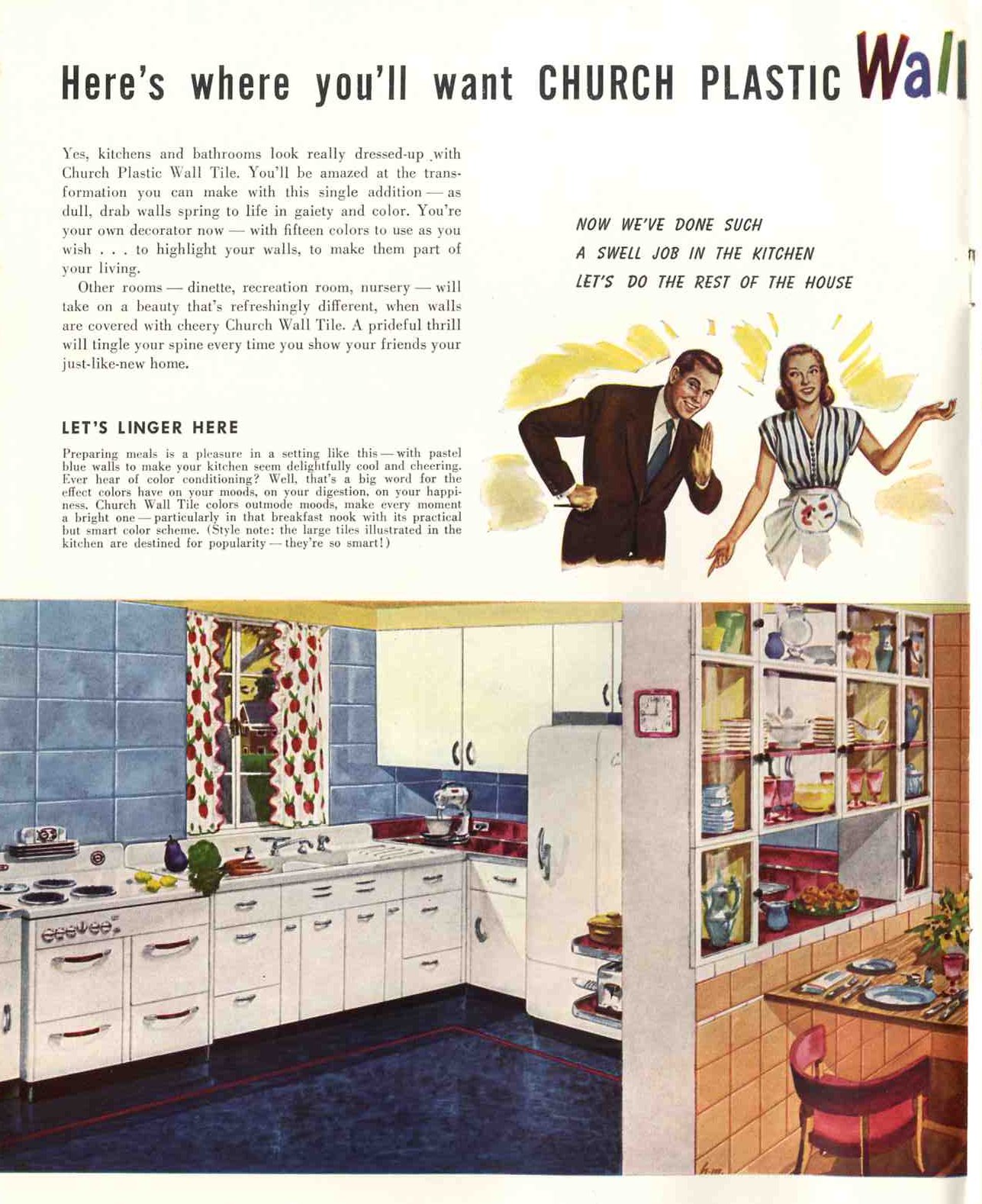
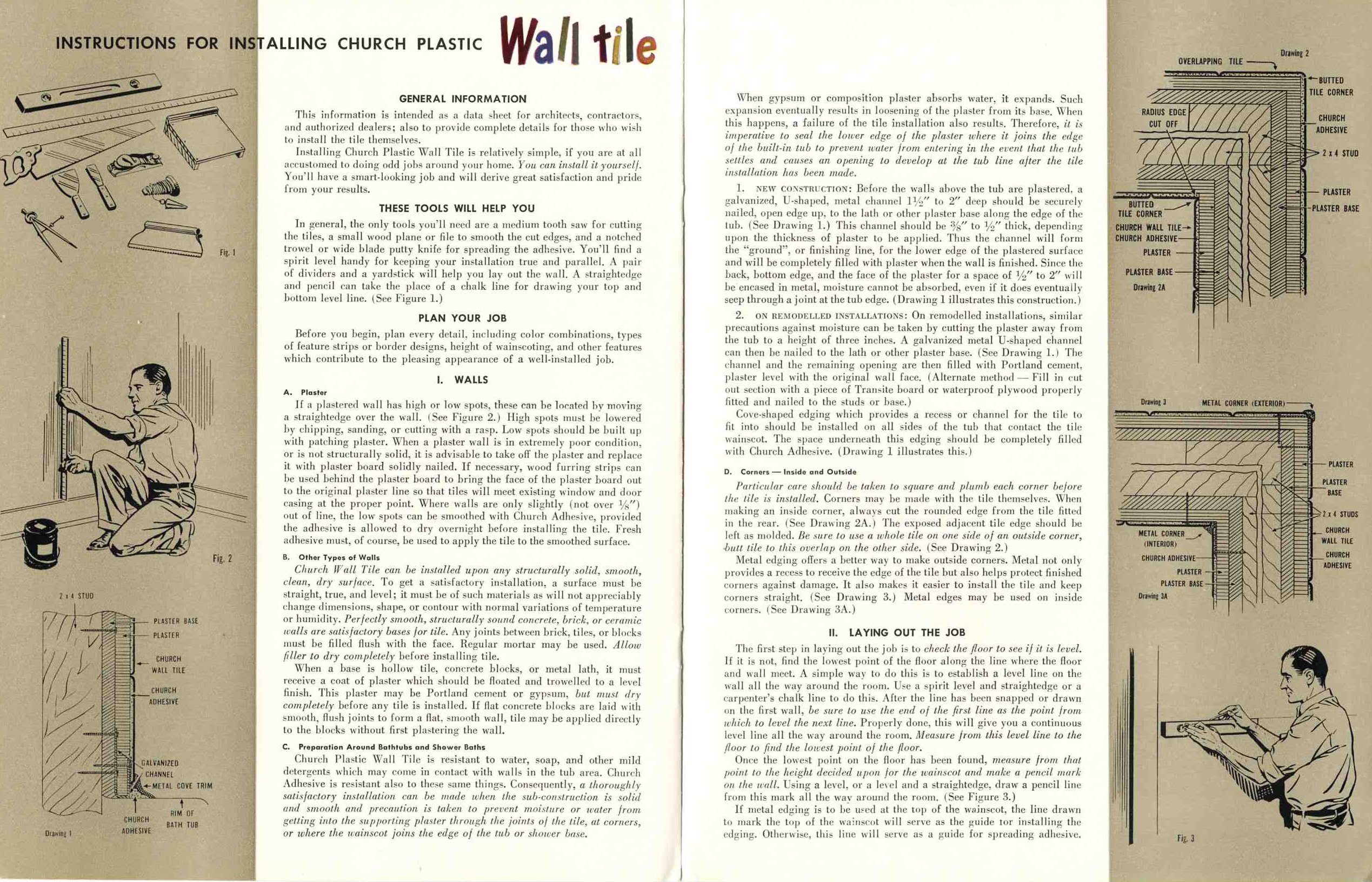
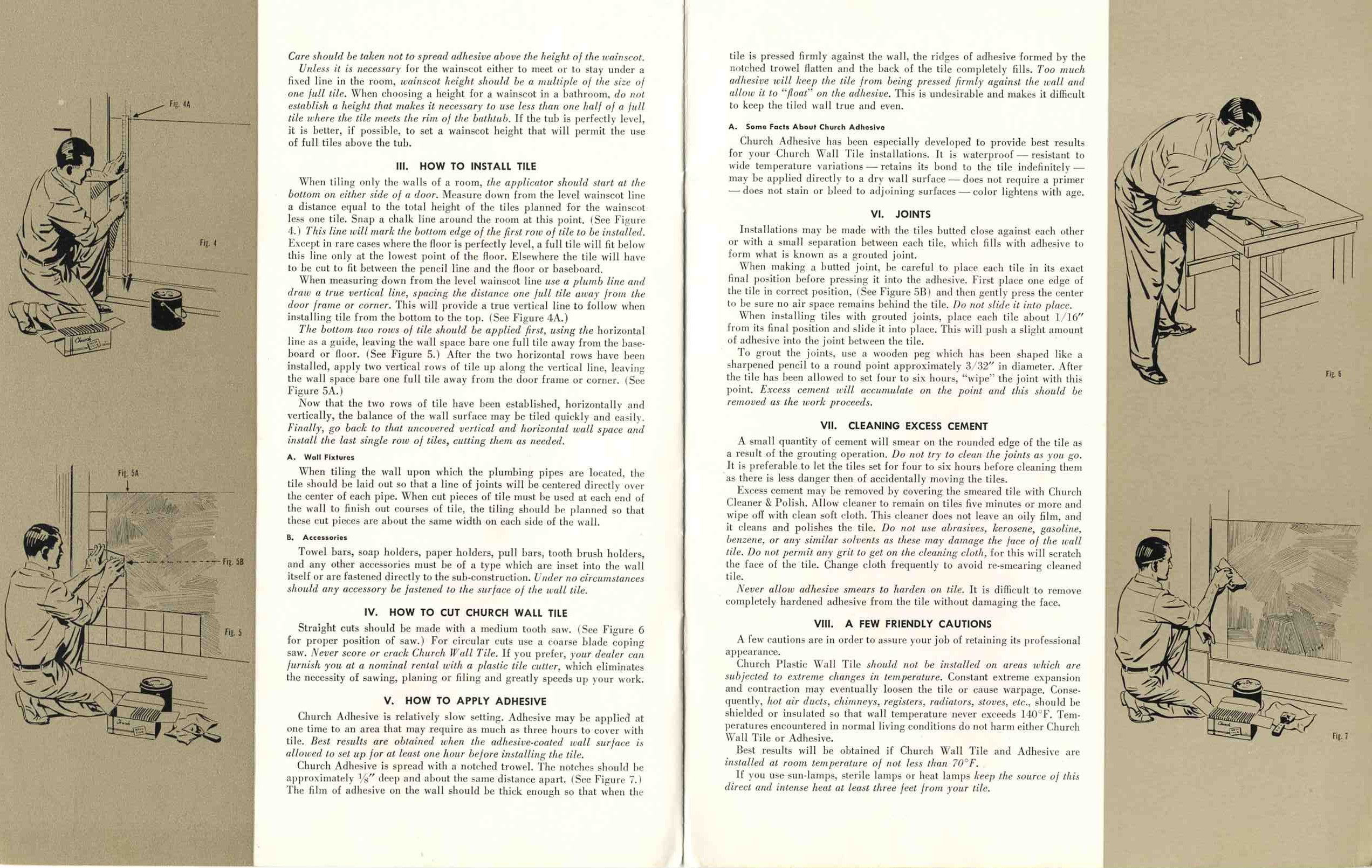
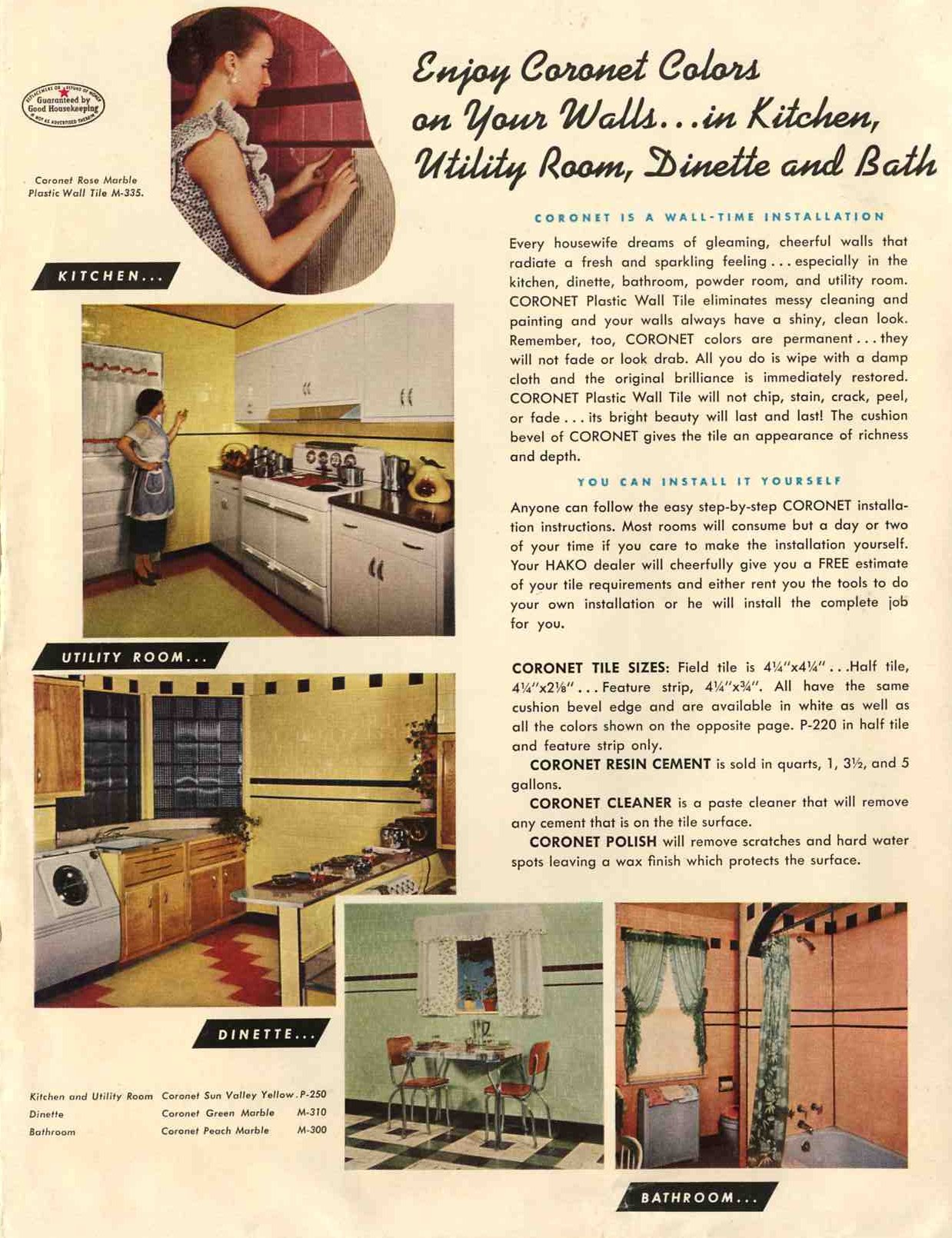
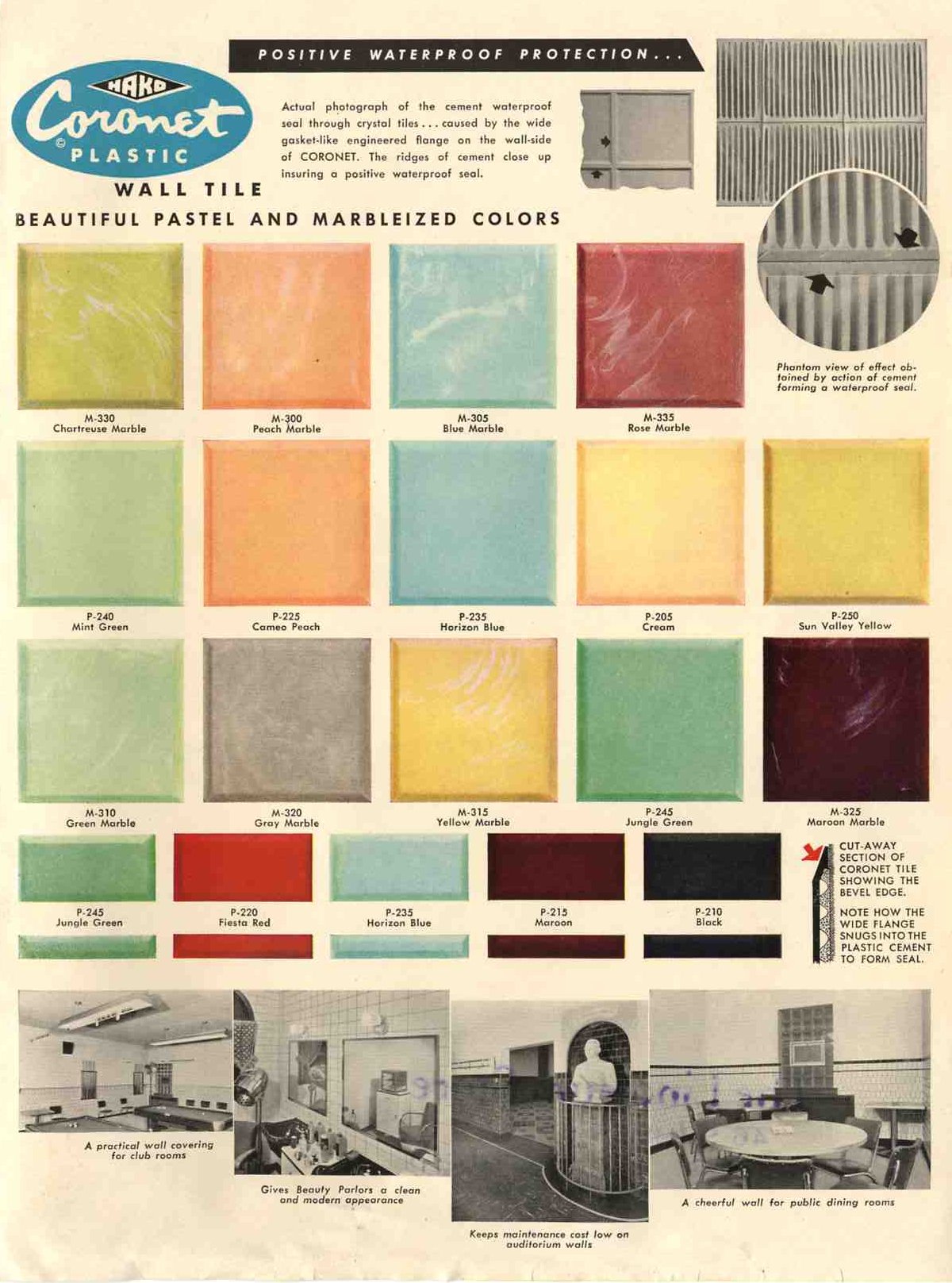
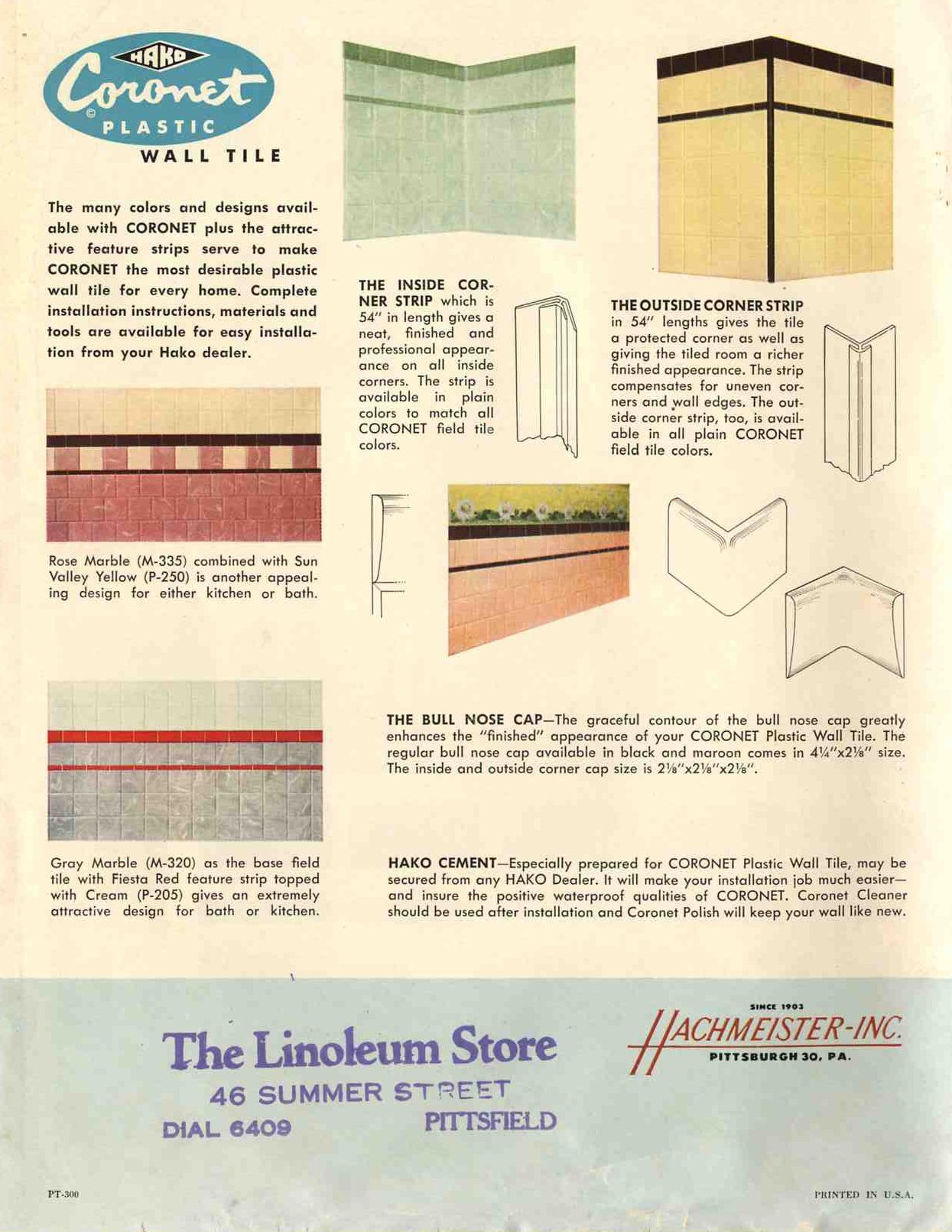
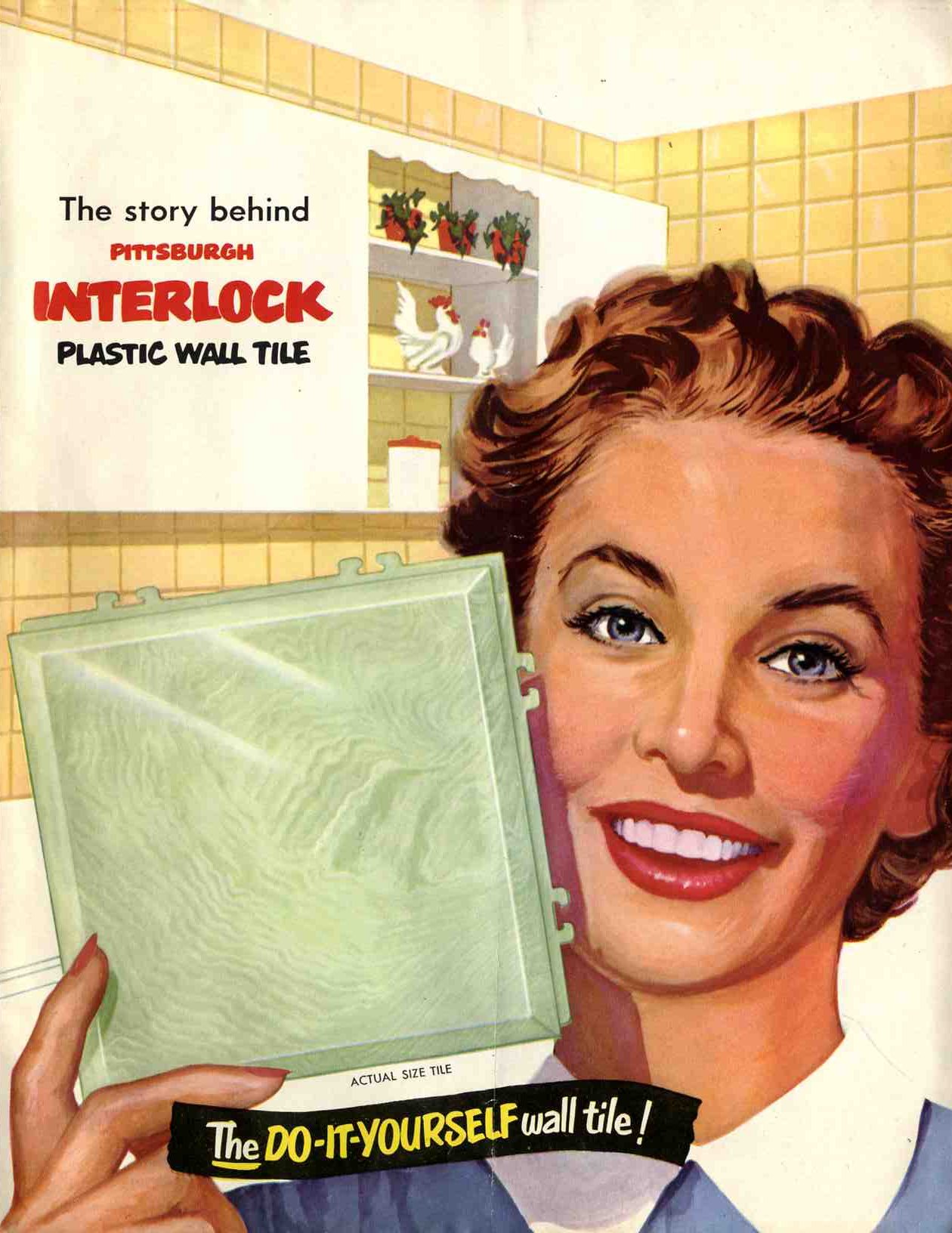
In fact, the benefits of plastic were highly touted during the entire postwar period. I kind of have a feeling folks thought plastic and ceramic were equal in attractiveness? We were fascinated with the lure of the man-made and technology — this is a critical part of the American identity, even still. Also, I am pretty sure it’s a good guess that plastic tiles were significantly cheaper than ceramic tiles, and that must have been part of the allure as well. In my very recent travels I have picked up three vintage brochures — from Church, Pittsburgh and Coronet Tile Companies — and have scanned the prettiness, and info, for all to share.
Check out the complete slide show…. Click on first thumbnail to launch it, then move forward via the arrows below each image:



Mind you:
- I am not necessarily the world’s biggest fan of plastic tile. All three of my bathrooms were outfitted with the stuff. The bathrooms had seen some hard livin’, I think, and the stuff was…. nasty. The plastic tiles in my tub/shower surrounds had all rotted through. So much so that previous owners had then pasted marbleized vinyl panels on top of it. The seams were grucky and moldy and oh, I shudder at the memories…. I had that plastic ripped out with joy in my heart and replaced it with ceramic tile all around. Bottom line: I fear that if plastic tile has not been installed well, and if the bathrooms or kitchens have been used heavily, it may not be worth salvaging. I am all for function, folks, and in a bathroom especially, there is nothing that beats waterproof ceramic tile, in my mind.
- All that said, I did buy a bundle of vintage plastic tile for my kitchen backsplash. Two (gulp) years later, it’s still in a box waiting to be installed. (I’m nerve wracked about how it will look, and yes, simply procrastinating regarding launching yet another house project, one of a gazillion always in the works, or at least, rattling around in my head.) So, you can see, I am not “anti” plastic tile, either.
- And importantly : Precautionary Pam here: If you do decide to rip your plastic tile out, Lord knows what’s in the old adhesive… smart to have it tested.
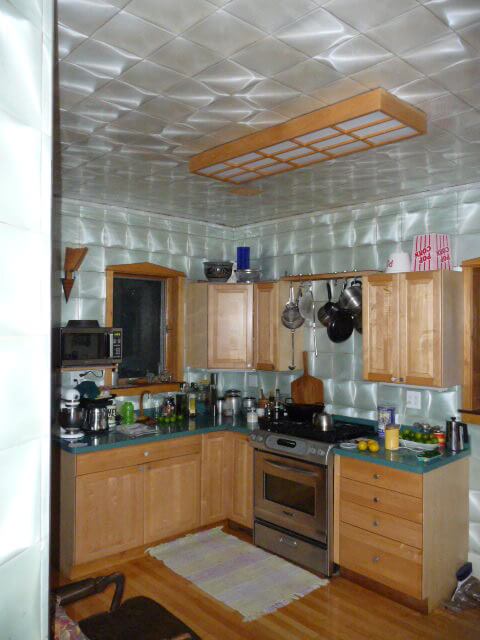
Finally, hey, remember this post? Kurt’s kitchen with the large 8″ tiles all around. Wow!
 !
!


Cassie says
My husband and I are trying to remodel our bathroom. we bought our home (built in 1953) from the original owners, well their children anyway. how do we get the adhesive off?? The tiles pop right off but the adhesive is not going without taking the drywall with it.
pam kueber says
I don’t know but, Cassie, please know that vintage materials can contain vintage nastiness like lead and asbestos. Be sure to consult with a properly licensed professional to know what you are working with and to make informed decisions.
Joe Felice says
You are absolutely correct, Pam. In fact, federal law requires [edited; Pam notes: Readers, consult with your own properly licensed professionals regarding applicable laws and guidelines, etc.]
Adam Kohl says
I just bought my grandparents’ 1957 ranch with aquamarine marbled plastic tile in the bath. We plan to rent the house out, and for a while I thought there was no way anyone could convince me to remove those awesome tiles that reminded me so much of my childhood. But alas, I think I agree with Pam that these are not suited for tub surrounds (even though my grandmother managed to keep them in AMAZING shape for 56 years!). I think a renter wouldn’t know or care how to take care of them and I’d be getting calls about falling tiles and mildew in no time. So thankful for getting the different perspectives in this thread. I think I’ll replace with equally vintage but more durable 4×4 ceramic. Thanks again!
Joe Felice says
Ah, yes–the ’50s! Imitation everything, and what better way to imitate natural products than with plastic? We had a fascination with plastic once uses in the home were discovered. I must say, we were very inventive with it, too! Plastic tiles were popular, but lost their luster (literally) because people didn’t know how to clean them, and cleaning products were more caustic back then. Comet and Brillo pads ruined them, and even the uber-popular Jubilee left them dull after time. Anything with gasoline/naptha will dull plastic, except for laminates.
Speaking of cleaning, I wish they hadn’t taken the lye out of dishwashing detergent. Dishwashers have never been the same, no matter how elaborate the products have become. Is it possible to purchase dishwashing detergent with lye anywhere these days? Maybe commercial suppliers? Remember when we were able truly sanitize our dishes & glasses? Plus, it helped keep the drain lines flowing.
Joe Felice says
Once plastic polymers were discovered and able to mass produced, our fascination went wild. All of a sudden, we could have the luxurious look of earlier times at a fraction of the cost. And nothing was spared – floors, countertops, furniture, tile, you name it. When they got to exterior siding, that’s when they went too far! And then, in the ’60s, the process of extrusion was perfected, and we really went wild. Back then, Americans were busy discovering and inventing things so fast, and we were really taken with what we were able to do, which was seemingly everything! The sky was the limit.
Jules says
I’m in the same boat as Ervin, but the “experts” I’ve consulted so far don’t seem to know what the adhesive is either. In fact, most initially argue with me when I tell them the tile is plastic. Fortunately, there are some spare pieces that I can show them to prove it.
If anyone knows of any cracked ice mint plastic tile out there, please let me know. Unfortunately, the spare pieces are not sizes I could actually use.
Ted says
There’s 2 boxes of the blue marbled (50 sq ft per box) at the thrift store. It opens in an hour and you’ve inspired me to buy them. AT $6 a box. I’m not sure what I’m doing with them yet and wish I had another color for accent.
ervin Beck says
I desperately need to know which solvent will remove the original paste-like cement that remains on the bathroom wall after I tore off plastic tiles. If possible, give me a brand name.
pam kueber says
ervin: Whenever you uncover new layers, I recommend you consult with a properly licensed professional to make informed decisions about what to do next. You need to know what is in those layers. Vintage nastiness like lead and asbestos can be found in vintage materials — including adhesives. Renovate safe.
ahammond says
I bought a home that’s been in my family since the sixties. The kitchen has the marbled turquoise tiles with rectangular black tiles at the top. At some point, someone had wallpapered over them around the sink and cabinets; they put masking tape over the grout lines to hide the indentations. I used a steaming tea kettle, then a hand steamer to melt that off – took FOREVER…but it was something to do while I talked on the phone. The tiles are 99% in good shape, and I love them. Only problem is today there is nothing in existence that matches that color…so I pretend things match. The bathroom was still while plastic tile…pretty yucky. When the bathroom was redone, I noticed something in the trash…under the white tile was the marbled periwinkle/soft blue tiles! They were beautiful…but the workers had thrown them away before I noticed them. I saved five of them.
pam kueber says
Hi ahammond, I love your story and that you are bringing this house back to life. My favorite line: “The tiles are 99% in good shape, and I love them. Only problem is today there is nothing in existence that matches that color…so I pretend things match.”
Barbara Manning says
I have purchased my parents home which was built in 1950. I want to salvage the grey plastic tiles in the kitchen and bath which are in great shape, that is if I can get them off the wall without breaking them, most are falling off the glue is so dry. QUESTION, what do I use this day in age to glue them back on?
Thanks!
pam kueber says
Barbara, this is not specifically a DIY site. I recommend you talk to local experts. Also please know: You never know what is in those old adhesives — best to get the stuff tested for vintage nastiness (such as lead and asbestos) before doing demo. Consult with a licensed professional. Good luck.
Kathy says
We recently purchased an old home with green plastic tiles on kitchen wall.
We want to remove them from wall because the glue underneath makes the whole kitchen stink. I would like to put up wainscot over the area. Removing all the glue is just too time consuming. Is there anything you can put on the glue to cover up the smell?