

Yes, steel is sturdy … steel is modern … and in post-World-War II America, steel was arguably the hottest choice for materials for the home. During the war, America had ramped up tremendous capacity in steel production so that we could produce weaponry. Afterward, all the production had to find a new outlet. Where did it go? To big ‘ole American cars, but also into the American home — for appliances, home construction, and, yes, kitchen cabinets.
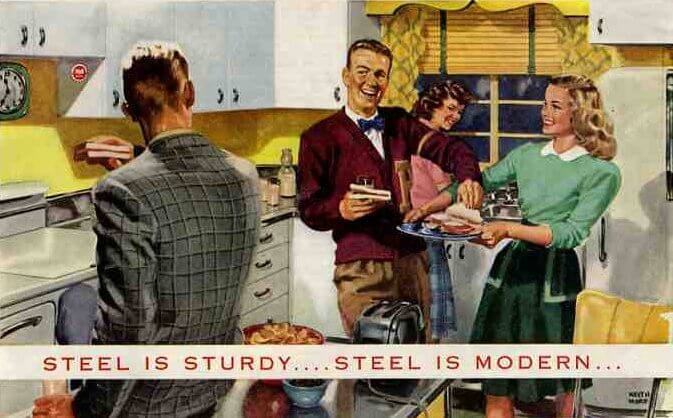
On this page, I’ll share some of the history of steel kitchen cabinets that I have picked up from watching, reading and collecting since 2002. The image above: From a U.S. Steel ad promoting the benefits steel to American consumers. It worked.
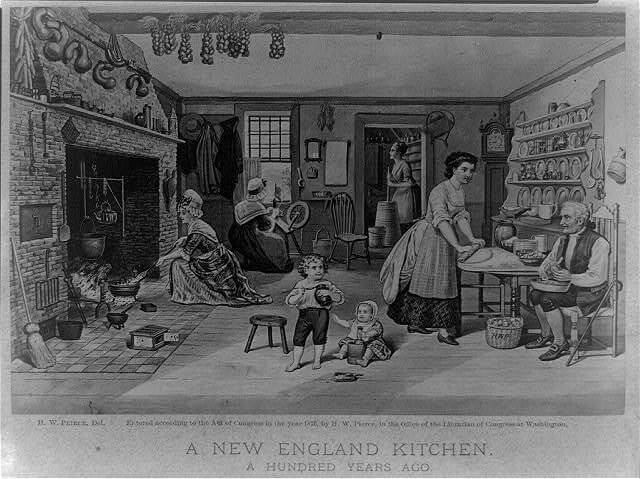
“Vermin-proof”: The history of postwar steel kitchen cabinets in fact starts decades before. I’ve spotted “hoosier cabinets” from as early as the 1920s that were made of steel. These were promoted as “vermin proof.” Cleanliness was a big concern for homemakers in earlier parts of American history. For example, the whole notion of “Sanitary Kitchens” was very important. Remember, we had no vaccine for polio, for example, until the mid-50s, and the flu epidemic in 1914-1918 killed 450,000 people in the U.S. and up to 70 million worldwide. Rats and mice could not eat through steel — so if you had a metal hoosier (or at minimum, a metal flour bin) they couldn’t get into your foodstuffs and contaminate them.
- A separate, related big story: I’m cataloguing all the brands we’ve identified to date in my The Retro Renovation® Encyclopedia of Vintage Steel Kitchen Cabinets.
Fitted steel kitchen cabinets as early as 1926
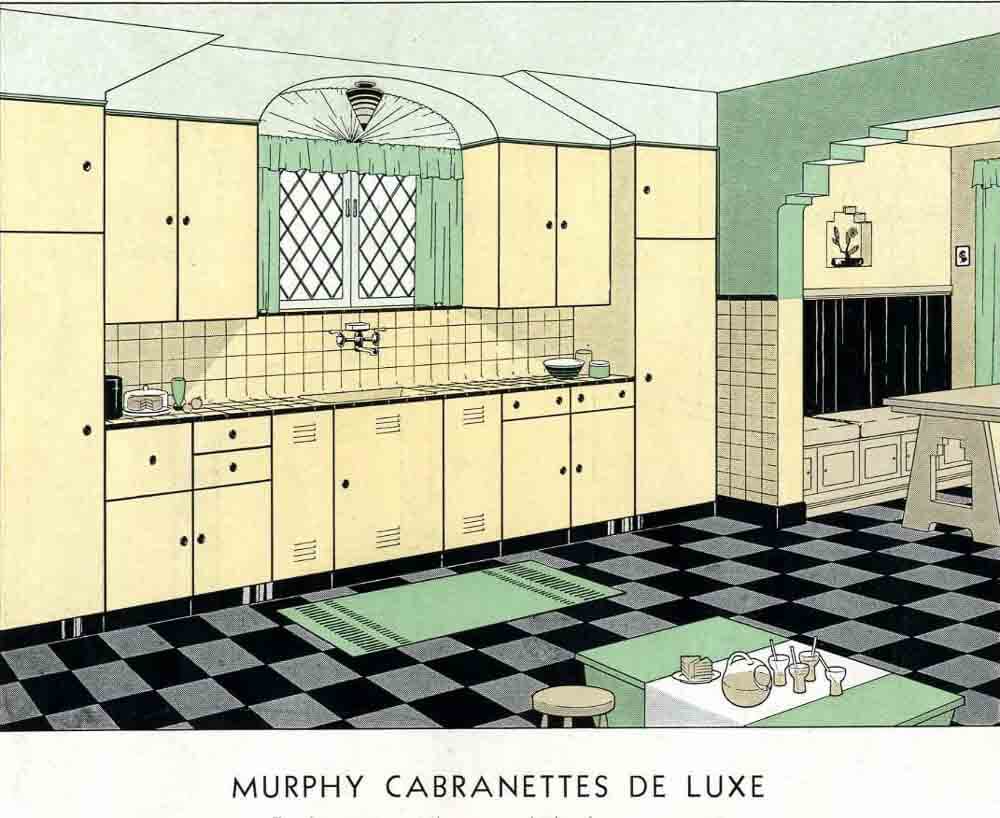
The earliest date I’ve been able to verify for steel kitchen cabinet is 1926 — for Murphy Cabranettes made by the Murphy Door Bed Company. This has been a very important discovery in my research so far — 1926! As you can see, these cabinets are installed into what I’d call a deco or even a bit Arts & Crafts kitchen. Fascinating: There were seven colorway available.
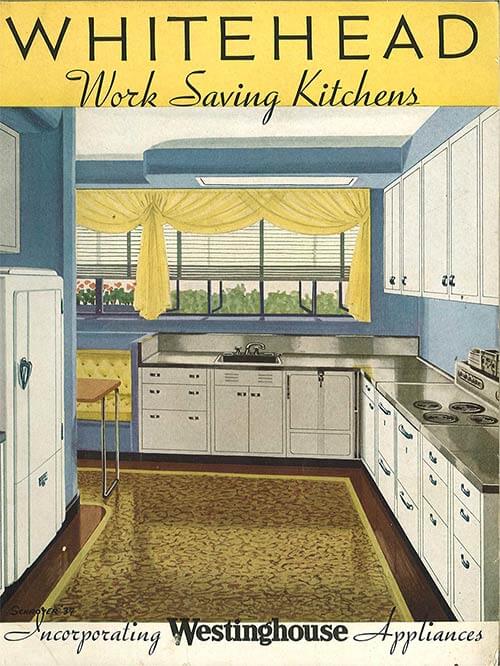
Haute 1930s designs set the stage: Additional early example of fitted or steel kitchens that I have spotted have been in the 1930s, in very high-end homes shown at expositions. Among the very early brands were Whitehead/Monel (c. 1937 shown above), Servel, Elgin, Dieterich, and St. Charles. These cabinets had a deco/streamline look. One of the things that distinguishes many of them from “mid century modern” designs is that doors and drawers were inset, rather than full overlay (although not in all cases.)
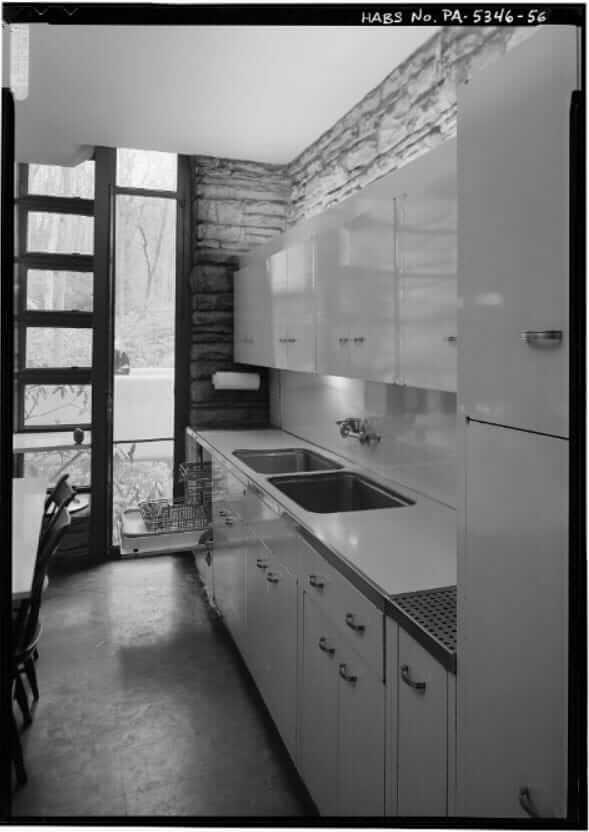
Frank Lloyd Wright was an early fan of steel kitchen cabinets: Frank Lloyd Wright seems to have been a relatively early adopter of steel kitchen cabinets, which certainly must have given steel cabinets a popularity boost. Above: Wright chose St. Charles Steel Kitchen Cabinets. My research indicates that St. Charles cabinets came into being in 1935, when St. Charles bought Janes & Kirtland, maker of the “White House Line” steel “dressers”. Photo from the Library of Congress HABS.
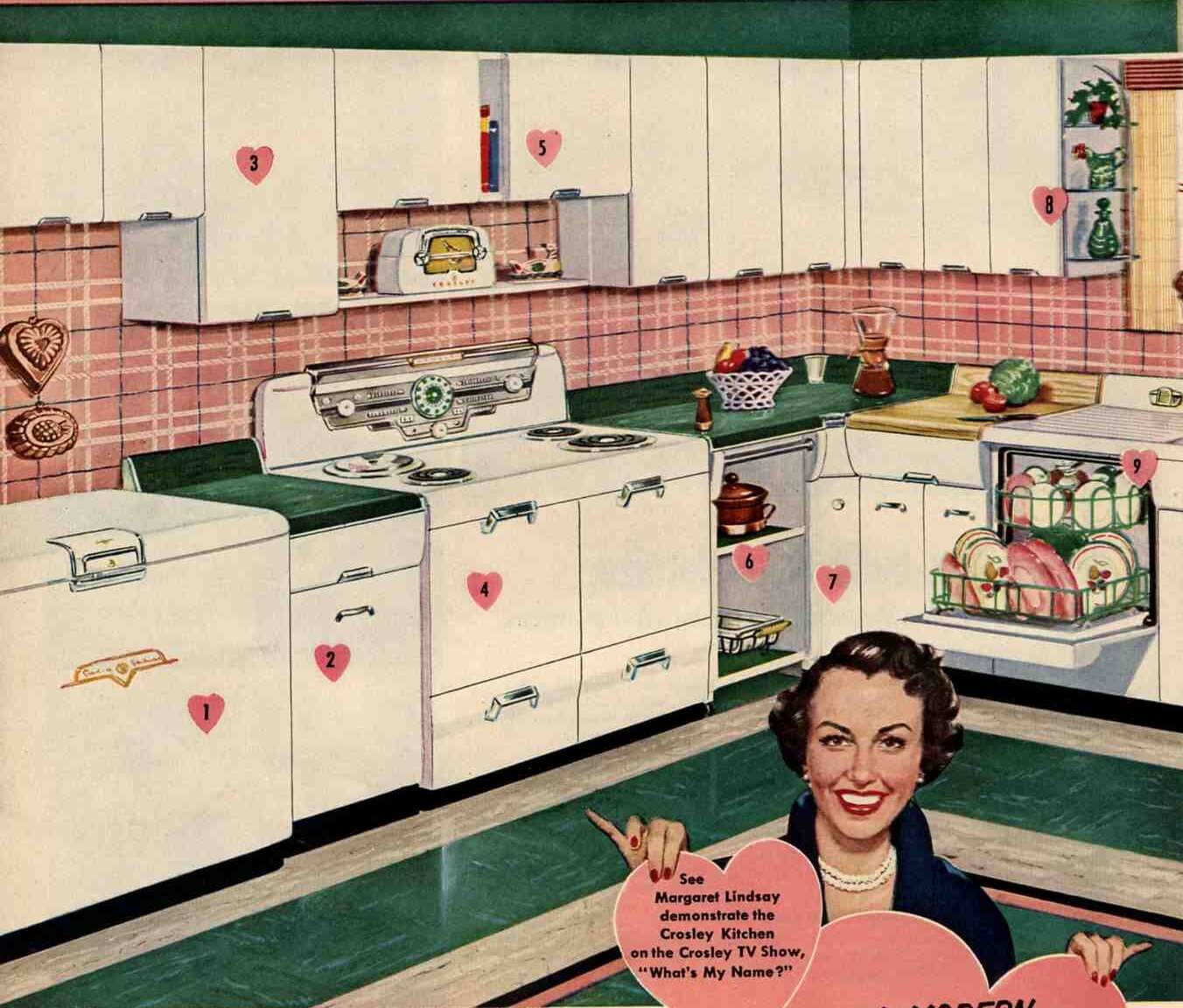
- More name-dropping provenance: Famed industrial designers including Norman Bel Geddes (Servel steel kitchens) and Raymond Loewy (American Kitchens, Crosley All Steel Kitchens) designed for this market.
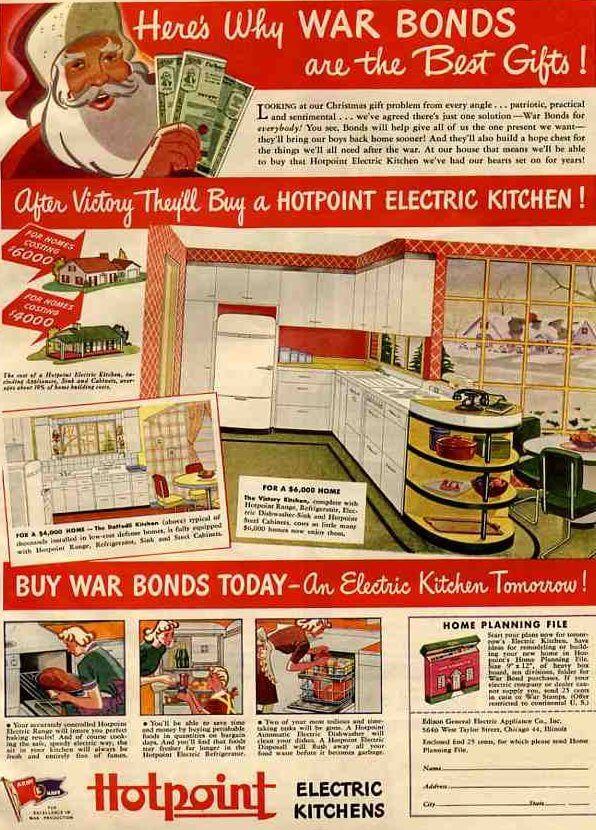
Saving for the American Dream Kitchen: Folks liked these 1930s steel kitchens — they were a huge advancement over the farmhouse and apartment kitchens most people lived with. But prior to WWII, people simply couldn’t afford them, because of the Depression. During the war, though, employment rebounded to support the war effort — but, there was nothing much to buy, due to rationing. So, women and men alike were able to save a lot of money to spend after the war. Manufacturers, meanwhile, had all their factories dedicated to wartime production. But, they knew that after the war, they would return to a consumer-driven marketplace. So they “primed the pump” by running ads like the one above — encouraging American women to save for the dream home they’d always wanted — and that started with the American Dream Kitchen.

Postwar building boom: After the war, steel kitchen cabinets became very popular. They were offered as standard in the famous Levittown houses, for example. My sense is that they were “high end” — but not out-of-reach, at least in the first decade after the war ended. Remember, there was a lot of steel capacity. Interestingly, coming out of the war there were some 6 million people who needed housing. We couldn’t build houses quickly enough. But, the houses were quite small by today’s standards — often starting at 700 s.f. and not much more than 1,000 s.f. And, there continued to be materials shortages due to the demand. I have read, for example, that you could only build one bathroom, unless you got some sort of special dispensation. I have not verified this, though.
How metal kitchen cabinets were sold:
Often, a salesman came to the prospective buyers’ house to talk with them about buying the kitchen. The salesman’s tools included miniature cabinets that could be put together to create a kitchen to fit the homeowners’ space.

Video: My Lyon kitchen cabinets Salesman’s Sample Set
Videa above ^^ These model kitchens — which came in traveling cases — are very collectible. I have about a half dozen different models including this rare set of pot iron Lyon demo cabinets.
I also have an amazing salesman’s sample kit — with the presentation materials — for Republic Steel Kitchen Cabinets. See the set here.
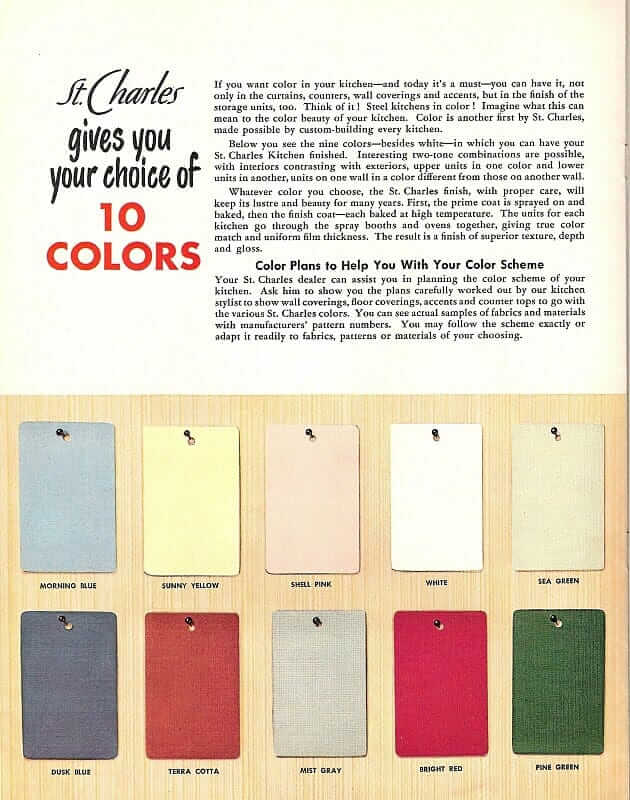
Colors for vintage steel kitchen cabinets:
Kitchen colors in the early post-war years: Before 1953, most steel kitchen cabinets were white, and in fact, we see a lot of patriotic red, white and blue imagery in advertising for these early postwar-era kitchens. Kitchens had a cheery, almost primary-color look. For a late 1940s early 1950s kitchen, I might recommend real linoleum floors and wallpaper with flowers rather than googie atomic graphics. Sweetness.
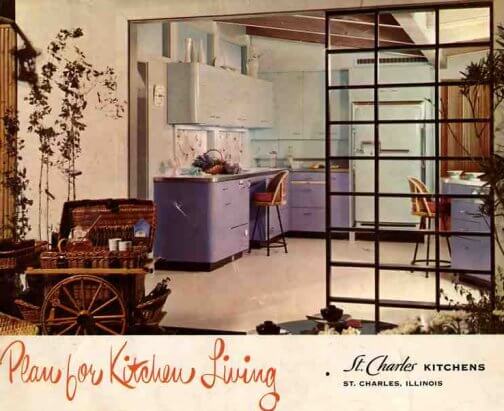
Metal kitchen cabinet colors in from 1953-1963: It wasn’t until about 1953 that things started to settle down, construction-wise, in America. Then, homes started getting bigger, and fancier… and American culture started to get more modern. From 1953 through 1963 — a period dubbed the Populuxe (affiliate link) years in this terrific book, which I highly recommend — we then start seeing pastel-colored kitchens (just like cars). Heading into the 60s, we also saw two-tone kitchens like the 1957 St. Charles, above. Exuberance was the word to describe the Populuxe years, and American kitchens of that period. In fact, I also would describe these as the glory days for steel kitchen cabinets. For 1953-1963 kitchens, I would tend to recommend VCT flooring in tiles or sheets, and wallpaper with atomic references.
The Big Three steel kitchen cabinet companies:
During the glory years, I’d say that there was a “Big Three of metal kitchen cabinets”: 1. Youngstown. 2. Geneva. 3. St. Charles. Please note that this calculation is “anecdotal” based on experience since 2002. Some day I’ll try to figure out where the data are.
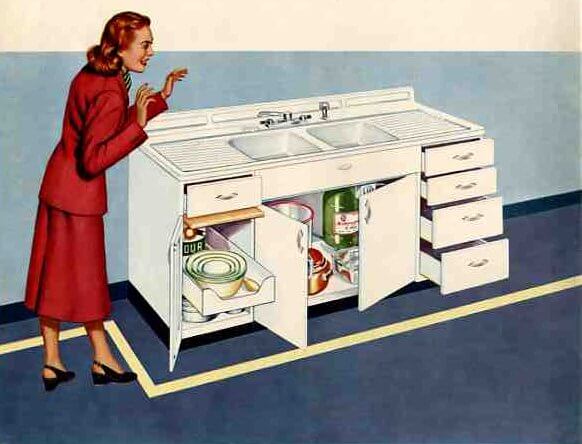
Youngstown Kitchens:
Above: Here is a typical Youngstown sink base. It’s “early years” most likely. Immediately after WWII, a lot of homemakers would just buy this unit, a sink base with integral drainboard sink. The idea was that you could add the additional pieces later. Youngstowns were the biggest sellers in the 50s — they were marketed nationwide. The early Youngstowns have a distinctive pull. And later, they introduced their “Diana” line, which is identifiable because of the big red emblem on the sink with the goddess Diana the huntress figured in. Johnstown steel kitchen cabinets may also have really been Youngstowns with a different label. I don’t know how much of this re-marketing went on, but I suspect there was more of it than just this example. Youngtown cabinets were a brand of Mullins Manufacturing outside Youngstown, Ohio; the brand was later sold to American-Standard. A retro-famous video of the Youngstown “Mullinaires” featured a chorus singing a jingle made for Youngstown and presented at a company dealer convention, I presume.
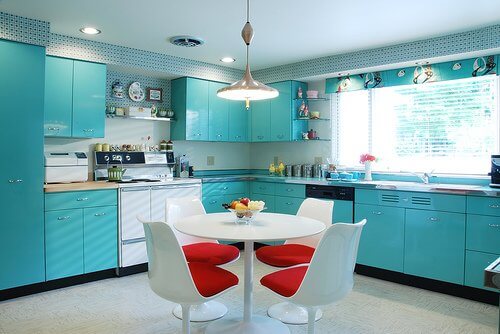
Geneva Kitchens:
Geneva cabinets were #2 in the marketplace, I’d say, judging from what’s for sale in the “used” market today. The early Genevas are very distinctive because their chrome pulls are recessed with a little plastic backplates behind them. Over time these backplates become yellowed, brittle and even broken. There is no known suitable replacement, although I have heard of people 3-D printing them. Later Genevas — like my 1963 aquamarine Genevas above — do not have the recessed/backplate design. Harrison steel cabinets also look suspiciously like Genevas.
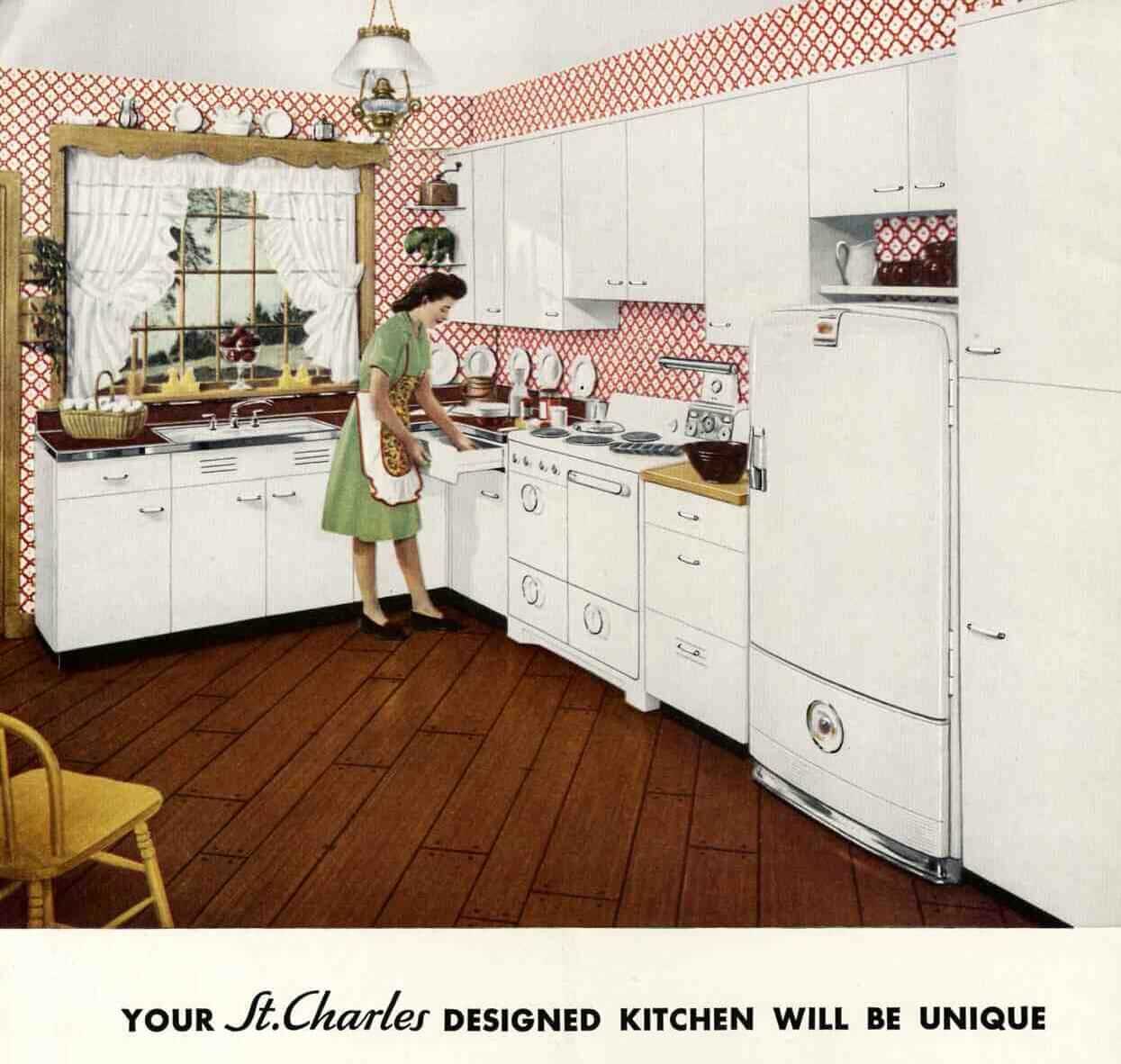
St. Charles Kitchens:
Anecdotally, I have heard that St. Charles kitchens were considered “cream of the crop” within the steel kitchen cabinet market. That said, I think my Genevas are terrific, and I’ve seen other cabinets that look darn nice. (While there surely must have been quality variation manufacturer-to-manufacturer and perhaps even year-to-year, we have no definitive research on this.) St. Charles was the longest running steel cabinet maker. The company ceased to exist for a few years in the 2000’s, but then the Viking Range Company bought the brand and has reintroduced them into the market. But then, they discontinued them.
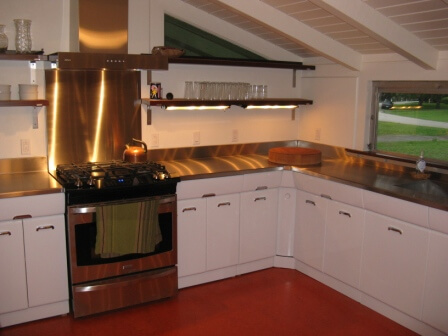
Other brands, from Acme… to Homart (Sears)… to Morton… to Yorktown:
Often with the help of readers — thank you! — I’ve identified 90+ different brand names of steel kitchen cabinets back in the day. Significant nameplates that renovators are actively searching out are: GE, Republic, American, Crosley (pictured above), Beauty Queen, and Morton. It’s my sense that many of the smaller brands were local or regional, from the days when interstate highways and interstate commerce were still young.
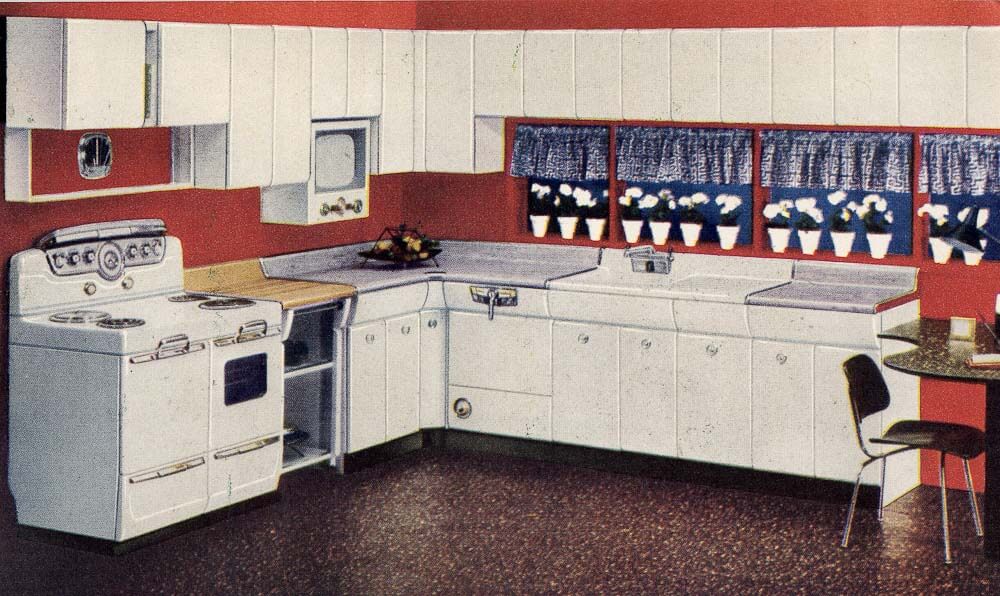
Famed industrial designer Raymond Loewy designed the American brand of kitchen cabinets, shown above, along with all the appliances to with it, I believe. The faucet for that sink can still be found today as a replacement item:
That faucet is a specialty item, and you can still get a replacement today – check Locke Plumbing.
100 brands of vintage steel kitchen cabinets identified!:
- I’m cataloguing all the brands we’ve identified to date in my The Retro Renovation® Encyclopedia of Vintage Steel Kitchen Cabinets

Steel kitchen cabinets for children’s play kitchens too:
Of course, there were miniatures made for the kids, too — like the GE Little Miss Structo kitchen complete with miniature GE cabinettes. Be aware: There may be hazards like lead paint in vintage items. Be Safe/Renovate Safe!
Steel bathroom vanities:
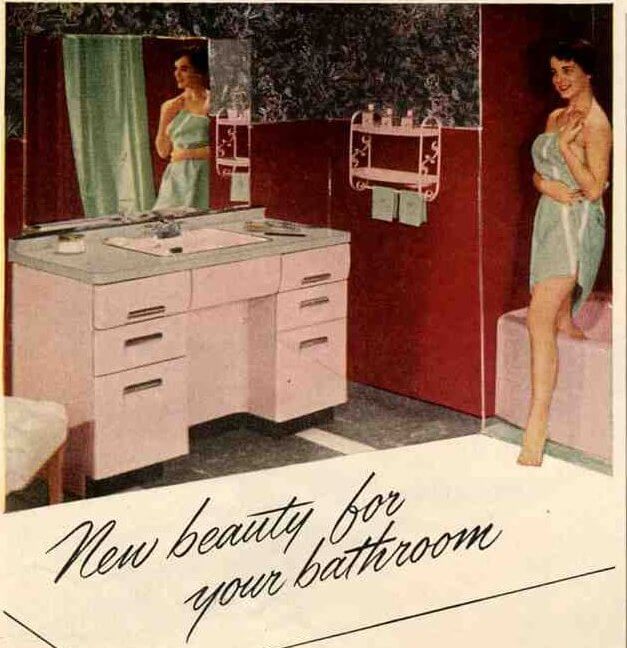
Yes, there were steel vanities for the bathroom, too. This is a Beauty Queen “Lavanette.” We still see a few of them around. Note, a bathroom vanity is generally going to be only 21″ deep. Most of the steel kitchen cabinets are about the same as today’s cabinetry — 24″ deep and 34.5″ tall.
A word on “fitted kitchens”:
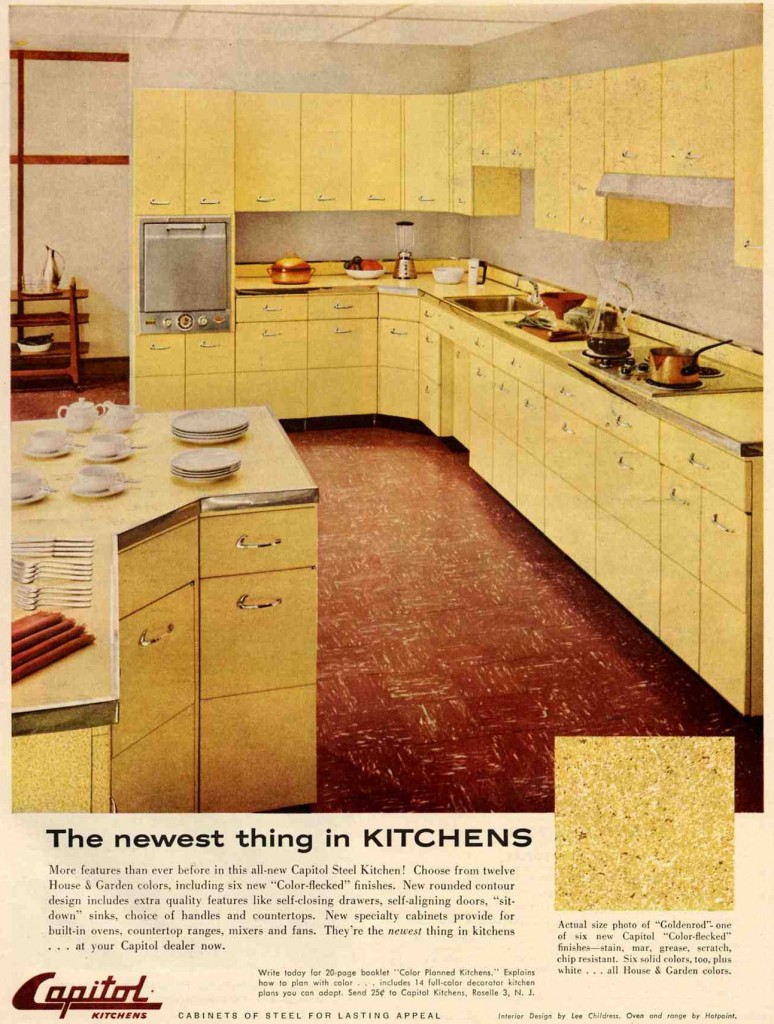
The postwar era was the first time in history when “fitted kitchens” were widely available and affordable to consumers. A “fitted” kitchen means that all the cabinets, stove, refrigerator, dishwasher, and countertop are all seamlessly connected generally in a long, continuous line. This was all a big step forward for the American housewife — she had more working and storage space then ever, as well as modern appliances that made her work easier. She still worked a lot of hours, of course — as household help became a thing of the past and as expectations for cleanliness and doting on the children rose.
Steel kitchens and wood kitchens — at war:
Reading marketing materials from the period, it seems that the steel marketers and wood marketers were always duking it out for supremacy. Toward the late 50s, wood started to win. While steel might last forever, it dented, it could rust, it showed fingerprints, and to get that fabulous, glossy auto-grade finish you really must disassemble your cabinets and take them to the pros for repainting. I also suspect that as steel production found newer markets, it started to get significantly more expensive compared to wood. On the other hand, wood is easy to repaint, and it has a “warm” aspect vs. the antiseptic feel that steel can sometimes convey. As a result of this war, you start to see steel cabinet makers try new things with their designs to bridge the gap. The 1955 Capitol kitchen had a “nubbly” finish to prevent fingerprints; I’ve seen a similar textured finish on Genevas and seen it reference as late as 1977 in St. Charles ads.
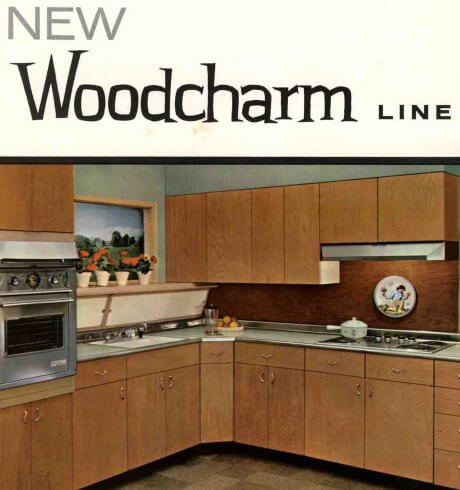
Market leader Youngstown introduced several designs of cabinets with steel boxes and wood doors.

Above: The American brand cabinets have steel boxes with coppertone drawers and wood doors. Kind of “best of both” metal and wood. The coppertone, by the way = reference to Early American decor.
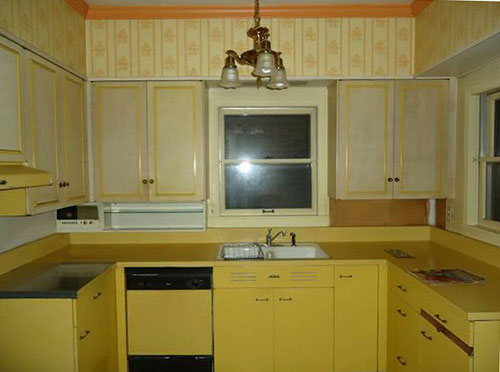
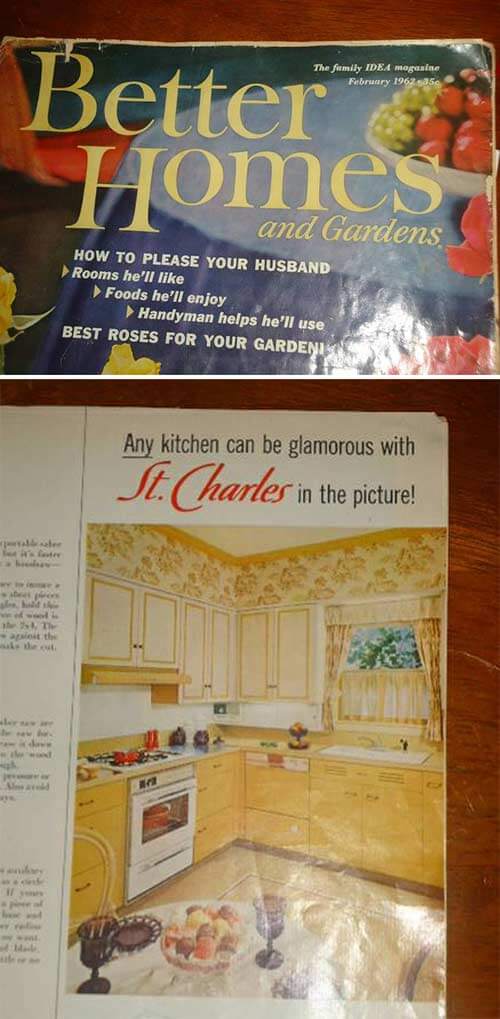
Above: This St. Charles set had painted steel cabinets on the bottom and wood-door/steel-box cabinets up top. In this case, the wall cabinet doors are painted white, with yellow trim. From Craiglist, featured courtesy of seller (link long gone) — this exact kitchen design was actually featured in a St. Charles ad. We’ve also seen them plain maple. Again — evidence of the steel-vs-wood war going on… and the transition to wood cabinetry as the winner in the battle overall.
Open-concept kitchen pushes “furniture-like” cabinetry:
Further explaining the preference swing to wood that was under way in America as we headed toward the 1960s: As the kitchen became increasingly open to the family room, which reflected an increasingly more casual American lifestyle, cabinetry in the kitchen started to be designed to look more like furniture in order to merge with the adjacent space. This also pointed to wood as the material of choice.
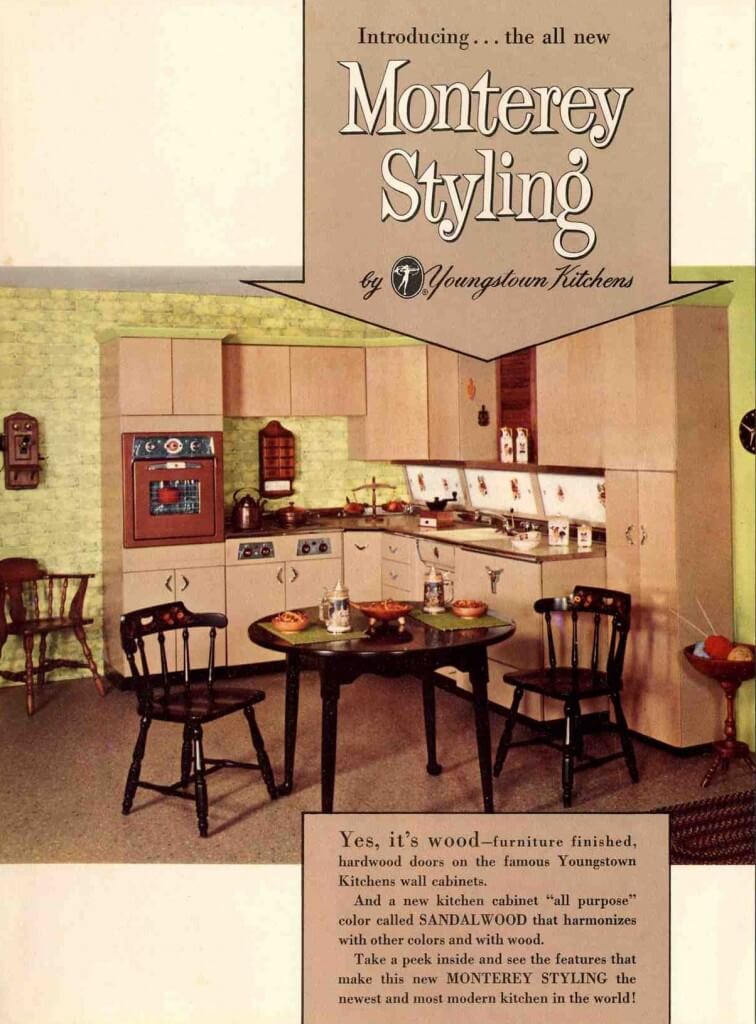
As time went on, heck, steel kitchen cabinet makers started caving altogether and went to wood doors on steel boxes. Above — Youngstowns… see the complete Youngstown Monterey brochure here.
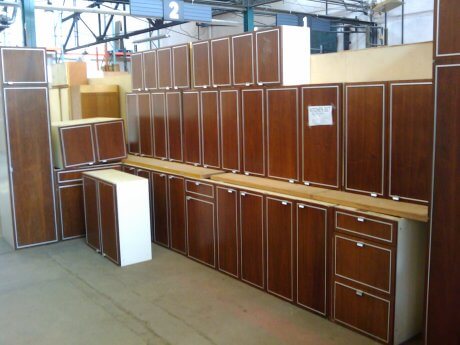
There was a frenzy to get these wood-doored-St. Charles’ when we spotted them and posted them on Retro Renovation. That door trim = apparently it’s stainless steel. Gorgeous.
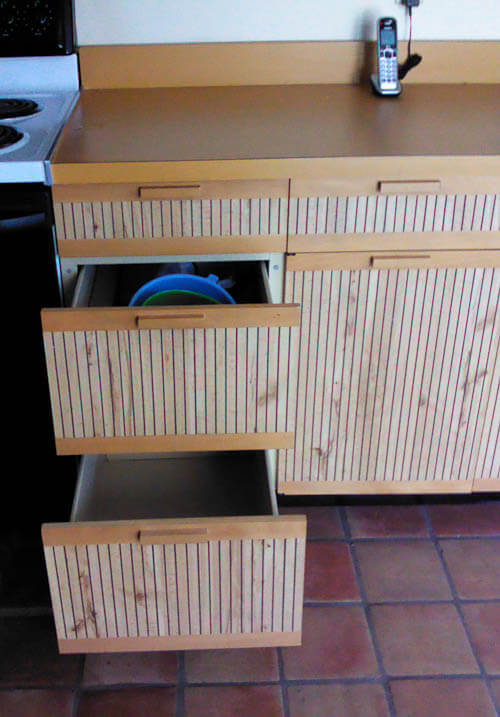
Above: By 1978 we even had St. Charles cabinets with wood doors on steel frames like this.
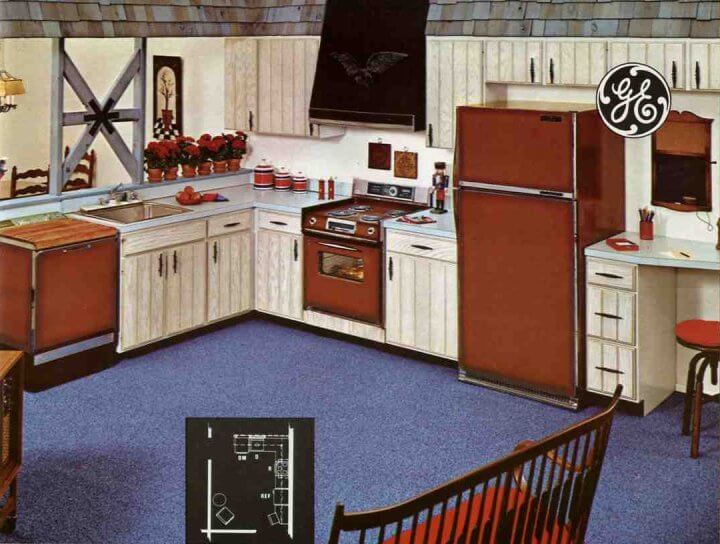
By the mid-60s, for all these reasons and maybe more I haven’t figured out yet, steel cabinets faded as the kitchen cabinets of choice. Of course, there was still groovy steel in the kitchen: In the form of avocado green, harvest gold, coppertone brown and even orange stoves, rangetops, ovens, refrigerators and dishwashers. Thank goodness. Above: 1968 wood kitchen. Heart.
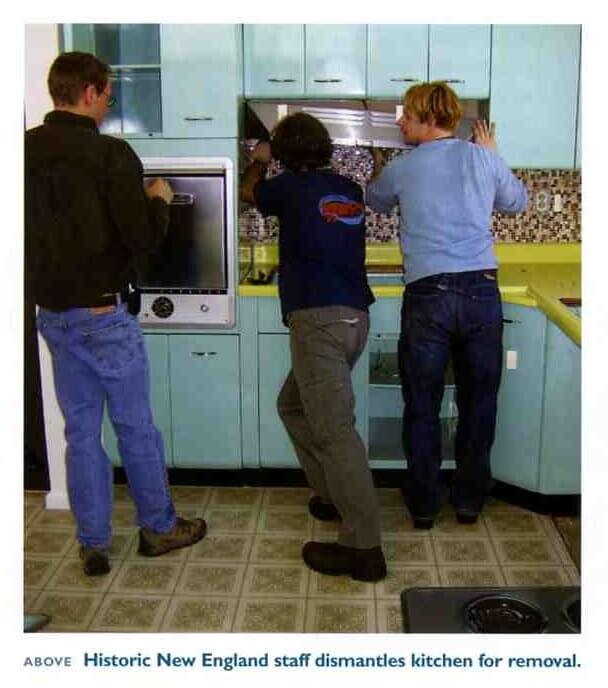
Were steel kitchen cabinets an important part of mid-century design history? Museums think so. Above: Historic New England removed this barely-used upstairs metal kitchen from a home near Boston to put into their permanent collection.
Steel kitchen cabinets today:
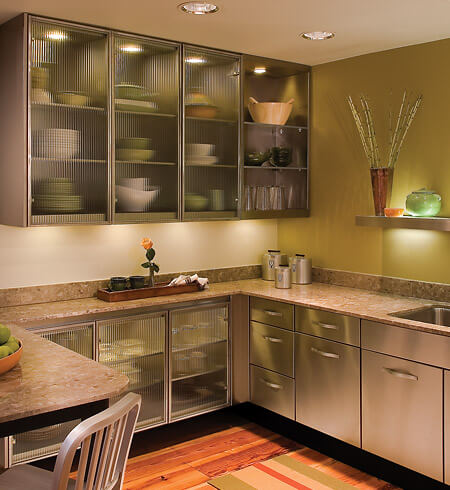
Fast forward 45 years to the 21st century, and steel kitchen cabinets have made somewhat of a comeback. In 2008 the same company that makes Viking ranges re-introduced St. Charles steel kitchen cabinets to the market. They came in 23 powder coated colors and stainless steel (above). But, they did not seem to be targeted at the retro market — they were high-end. I believe that in Europe, steel kitchen cabinets are also available, and like current-day St. Charles, high-end. Viking discontinued the St. Charles brand in early 2012.
Other places to buy steel kitchen cabinets made today: See my story on where to buy steel kitchen cabinets manufactured today here.
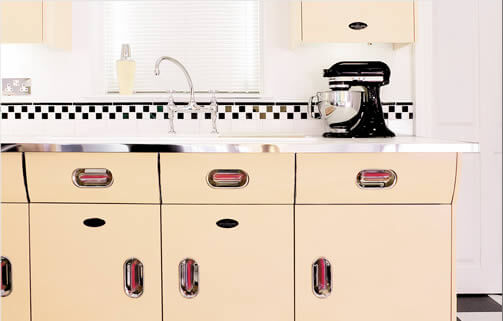
You can also get these WOOD reproductions of vintage “English Rose” cabinets made by John Lewis of Hungerford in England. There also seems to be a market for vintage English Rose’s in the U.K. There are two other British vintage brands I’ve identified: Paul and Anemone.
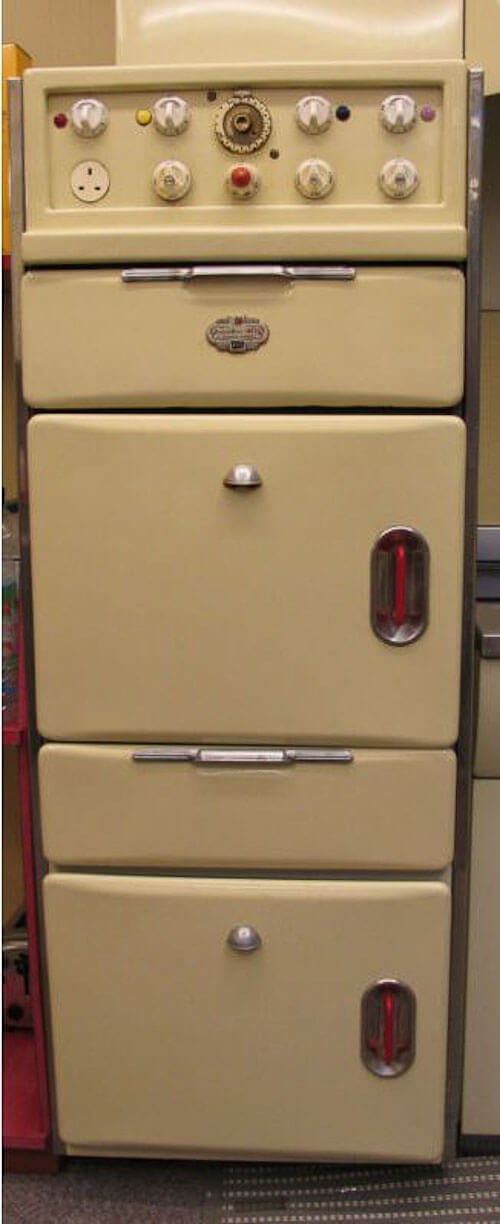
Oh, and look at this vintage English Rose REVO oven that surfaced for sale on ebay in 2012. So interesting to see a built-in oven that is so detailed to look like the cabinets. Such was the inventiveness of the time.
Interest in metal kitchen cabinets is growing:
Here in the U.S. there seems to be a growing community of people trying to collect and restore vintage metal kitchen cabinets. This can be a journey… an endeavor… yes, a trial… because it can take a while to hunt down enough used cabinets to fit the configuration that you need. Some readers have collected three kitchens just to get the pieces they need. Many have driven, like, 15 hours there and 15 hours back to get the sets they want.
The key, if you want to find these cabinets and make them your own: Patience. Doing these kinds of projects is a real hassle… you must have the mindset to take it on… if you do, the results can be very gratifying. It took me FIVE YEARS to find my vintage Geneva steel kitchen cabinets. I almost gave up, and had pursued bids on MDF cabinets to paint aquamarine. Then, at the 11th hour, the retro decorating gods sent me 68 steel cabinets, original aquamarine finish, that had once been used by nuns to teach cooking. My kitchen has been featured in two magazines and all over the intranet. Moreover — the pursuit is what led me to create this blog. Over those five years of searching, I gathered so much info on vintage steel kitchen cabinets and the other elements to pull the kitchen together, that I decided to create the blog to share the info with others.
Want to see and learn even more about steel kitchen cabinets?
See the Steel Kitchen Cabinets Category — which includes all the posts I’ve ever done about metal kitchen cabinets. There are lots.
Whew. That’s it. Now, here is an FAQ.
FAQs:
Buying
- Where can I go to buy or sell vintage metal kitchen cabinets?
- How much are steel kitchen cabinets worth?
- How do I make vintage metal kitchen cabinets fit into my kitchen?
Restoring Vintage Steel Kitchen Cabinets
#1 Renovate Safe: Like other original features in a vintage house, vintage steel kitchen cabinets can contain materials that require environmental and safety precautions. So when undertaking your restoration project, be sure to consult with professionals regarding the materials used in construction and painting of the cabinets, how to deal safely with them, and also about the proper disposal of debris, etc. See our Be Safe/Renovate Safe page… the EPA hosts a complete website on lead in the home and a complete website on asbestos in the home.
Following is some of the experiences shared by other readers.
Professional painting and stripping
- I have not personally tested the various methods of stripping or painting or done extensive research on the topic — I am not an expert in this topic. I will relay some of what’s been conveyed by some readers as background information only. CONSULT WITH LICENSED PROFESSIONALS about what to do for your cabinets. And remember, there may be vintage nastiness in the cabinets such as lead paint so be sure to Be Safe/Renovate Safe — work with licensed professionals to test all materials and layers before messing with them and so you can make informed decisions how to handle.
- Professional methods that readers have used to paint their cabinets include working with local shops that do industrial painting (various methods) and working with auto body shops. Regarding the various possible methods, I recommend you do your own research. A few things that have come up in comments in the past: We’ve heard of doors warping under high heat; one reader said he had been told by powder-coaters that heat in the bake ovens is so high it might cause the stiffener within the doors of his cabinets to catch fire; and ask how they will get the paint off — is there the potential their process will “pit” the doors?
DIY refinishing
- This is not a DIY or fixit site. There are probably a variety of DIY methods you could try, but I am not an expert. Again, CONSULT with PROPERLY LICENSED PROFESSIONALS to assess what you are working with — is there lead paint, for example? And what’s in any filler material? — and then to get informed on how to handle including safe removal of debris, etc. For more info, see our Be Safe / Renovate Safe page… and the EPA hosts a website on lead in the home, etc.
Color choices
- See my page on Paint Colors for lots of authentic mid-century paint color choices, including palettes from vintage St. Charles and Geneva.
Where do I get parts?
- What about countertops and steel / metal countertop edging? Yes, you can get vintage-style laminate and metal edging in either stainless steel or aluminum. See my Laminates and Countertop Edging Page for complete resources. Or try the Search box at the top.
- Where do I get hinges for my metal kitchen cabinets? No known sources. I had hoped one of the “pivot hinges” in this site would work. But I don’t think so. Don’t ever throw out a cabinet until you’ve salvaged the hinges and rollers, too. Dumpster diving, watching trash piles, buying cabinets at salvage just for parts, etc., sound like the route you will have to take.
- Where do I get rollers or parts for the drawers for my metal kitchen cabinets? Same as above – although there might be tricks to this if you are handy.
- Where do I get plastic backplates for vintage Geneva kitchen cabinets? No current source. Scrounge up old ones. Replicate them on a 3D printer…
- Where do I get handles for my metal kitchen cabinets? Key is knowing the “spread” of your pulls. If it’s 3″, it will be relatively easy to replace them. If it’s 2-3/4″, much harder and likely, more expensive. To see all identified options to date – see the Category called “Cabinet Hardware”.
Lots more to learn about vintage steel kitchen cabinets:
- I’m cataloguing all the brands we’ve identified to date in my The Retro Renovation® Encyclopedia of Vintage Steel Kitchen Cabinets, with lots of links to stories by brand.

Kim S. says
I’m going to be staying in a little house with a full, metal cabinet kitchen. I’d like to take an upper cabinet and make it see through. Any suggestions? Thanks!
Pam Kueber says
Can you clarify question — are you wanting to make the front door see-through, or the entire cabinets see-through front and back, that is, it’s a hanging peninsula cabinet?
Sammy says
Ladies- about 1999, my boyfriend and I lived in an apartment on Van Nuys Blvd in the San Fernando Valley. It was/is, a fabulous mid-century “modern” creation, from the giant glass front entry-way, breeze block walls, interior courtyard, and one thing that left the most indelible impression on my memory was the steel kitchen. It was a thing that included everything: sink, countertop, oven even – cupboards, fridge, all one (or combined) unit that took up the entire kitchen wall. Not sure if it was re-painted, but it was a high gloss brown- the same color as the cockroaches, and the carpet also a dark brown. The sink/countertop had a sink strainer deal built in, a countertop with ridges so dishes or whatever could drain right into the sink. It’s design appeared to me maybe early 1950s but I couldn’t tell you. It was very rounded at the edges, like the cars in late ’40s/early 50s. I have no idea whether the steel all-in-one kitchens are still there. I doubt it, as everything in L.A. has been “re-done”. Off topic of steel kitchens, but along the subject of mid-century American home design, my grandparents bought new in 1963 an Eichler home in Hollywood Hills. It was gorgeous, beautifully done. I would not call it “mid century modern” but just a very pleasant and enduring design. My grandparents were old fashioned Europeans. They passed in ’07, and the family put the house up for sale (against my best wishes) and a young couple, wealthy yet lacking in taste bought the house…well, use your imagination. What they destroyed could not be built or replaced today- it just doesn’t exist.
I am so glad you’re writing a book on the steel kitchens- it needs to be written. I wish you the very best & hope that the book sells well.
Pam Kueber says
Hi Sammy, that might have been a GE Wonder Kitchen ? >> https://retrorenovation.com/2013/04/08/ge-wonder-kitchen/
Ralph Weilant says
Outstanding article – a great compilation of historic information!
Thanks for sharing this type of “background” story.
Bernd F. Lunkewitz says
I know two companies in Europe making modern enamelled steel kitchen cabinets.
https://www.tiba-stahlkuechen.ch/
https://www.popstahl.de/
unfortunately they do not sell to the US.
Is there a US company making steel kitchen cabinetry?
Pam Kueber says
Yes: Moya Living.
Pam Kueber says
Hi Bernd, thank you for those links. I just did a story on placed to buy new steel kitchen cabinets in the U.S. today: https://retrorenovation.com/2019/06/04/resources-buy-steel-kitchen-cabinets/
Alexandria Asherbranner says
I’m still hunting information on it but no luck! I will try to post pictures!
Alexandria Asherbranner says
I have a Southern Kitchens metal cabinet for a kitchen sink. I believe that it is from the 1950’s. However, I am not sure of the age because I am struggling to find anything else from Southern Kitchens in my research. Can anyone shed some light on this for me?
Pam Kueber says
Hi Alexandria, I don’t think I’ve ever heard of this brand!
Carrie says
I just bought a house with vintage 1951 kitchen in the mother-in-law suite. I’m not sure of the brand- there are metal cabinets, range, and refrigerator. Everything is in above average condition and works. I admire the look and greatly appreciate the history. However, it is not going to work for me to keep these. I would love for them to go to someone who really wants them. Do you know how to go about that? I don’t want to just sell on ebay. I thought maybe you new of a good salvage / rehaber. Thank you!
Pam Kueber says
Hi Carrie, I don’t know of a good salvage/rehabber. I think that ebay and craigslist are the way to go. Good luck.
Randall Beardsley says
I was born into a home with the first “color” (Gray) St Charles kitchen. It was installed in the fall 1948, with black and white linoleum checked flooring, charteuse linoleum counter tops with stainless edging, and included a roper built in gas range. I do have some photos somewhere, as it was published. St. Charles cabinets had a very solid feeling door, because there were wood battens glued inside the door. No ine knew that, because the soor was welded together. I’m probably one of the few people left who can answer any questions, because my father was on the board of directors and #2 of the firm for decades, and I worked through all aspects of the company until it was sold to Whirlpool in the 1980s.
Pam Kueber says
WOW! I will email you! Thank you for finding us and for commenting!
Nancy says
Hi, Randall! I am trying to remove the doors from my circa 1950s St. Charles kitchen to paint them and am not having luck figuring out how to do it! Do you have any insight? Thanks!
Nancy (nbarton@davenportlibrary.com)
Joe Sehulster says
I have a set of Geneva kitchen cabinets and a porcelain sink. All in very good shape but dull and cold looks. Would like to replace or refinish sink. Any sinks available? I am looking for ideas for painting the cabinets also? Thanks…Joe
Pam Kueber says
Hi Joe, regarding your questions: Check out my farmhouse drainboard sinks page to answer your questions about the sinks. Re repainting your cabinets, I am not an expert. On questions like these I advise consulting with experts. Note, if you go into our Readers and their Kitchens subcategory and/or our Steel Kitchens subcategory you may find some stories in which readers note what kind of painting process they decided to use and also see some of their color choices. Finally, be aware of the potential for hazards in old materials – for more info see my Be Safe/Renovate Safe page.
Robert Boyd says
I’ve just been reading your well-researched and interesting blog. I grew up with metal kitchen cabinets–loved them–but don’t know the brand. Is anyone in the US manufacturing new metal kitchen cabinets now?
Pam Kueber says
Two places that I know of: Moya Living makes all steel cabinets in powder-coated colors. Toro makes steel doors on more common wood or wood composite (not sure) boxes.